The Azteca Meteorological Trap
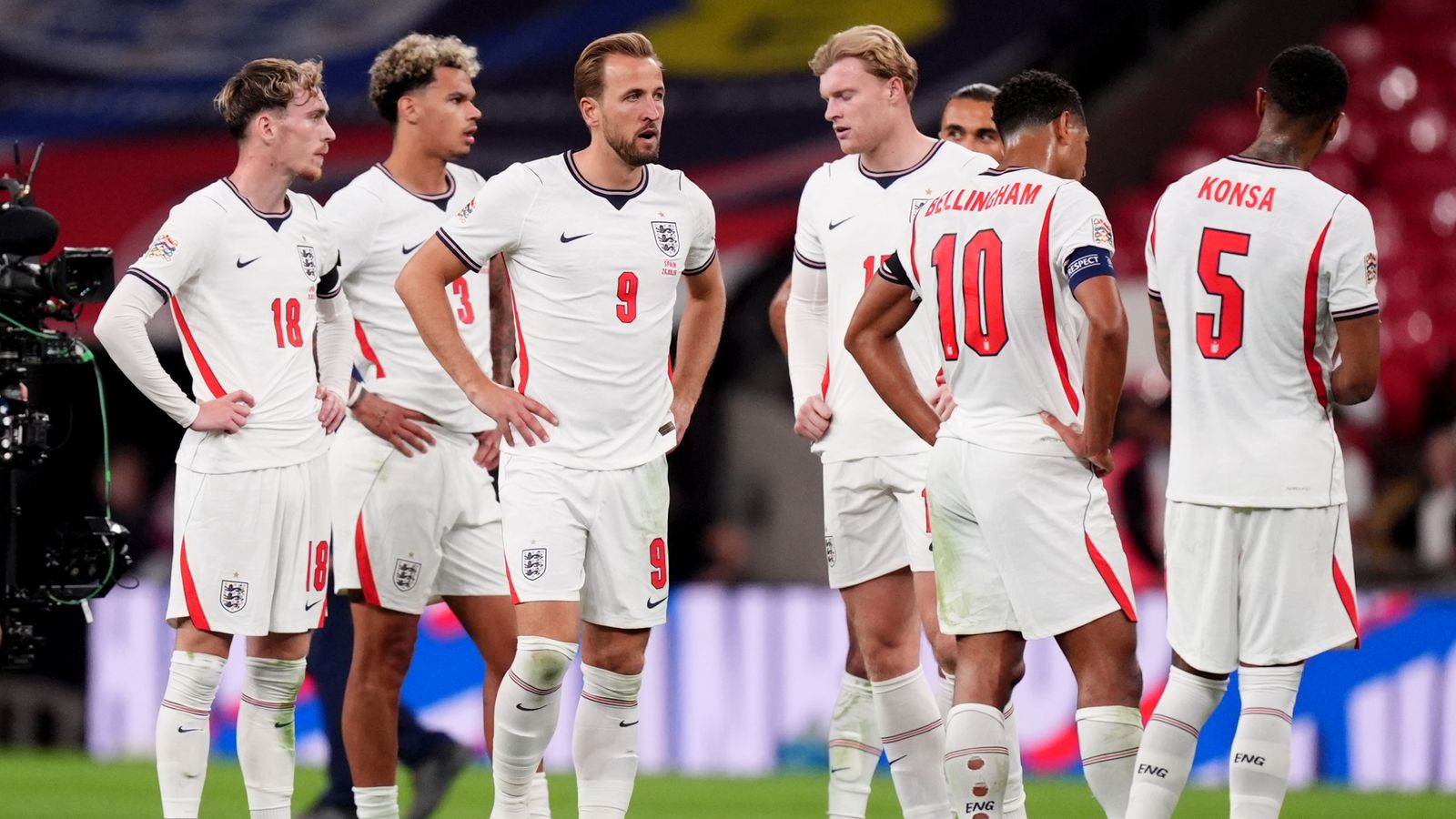
Thomas Tuchel’s plans for the World Cup Round of 16 have been thrown into disarray by a late fixture adjustment. The FA was left in the dark until media reports confirmed FIFA is moving the kick-off forward to 7pm GMT. This means England will walk onto the pitch at the Azteca Stadium at 1pm local time, a midday kick-off in Mexico City that changes the tactical parameters of the tie, as The Mirror reported on Friday evening.
The decision was made to avoid the severe evening storms that regularly flood the Mexican capital in July, but the meteorological shift creates a different set of problems. Playing at 2,200 meters above sea level in the afternoon sun is vastly different from playing under floodlights. Thinner air accelerates ball speed while doubling recovery times between high-intensity sprints.
England must also prepare for the possibility of mid-game interruptions at the roofless Azteca. Under the National Oceanic and Atmospheric Administration guidelines, any lightning strike within an eight-mile radius triggers an automatic match suspension. The players must leave the field, and a restart requires a thirty-minute window without strikes, followed by a fifteen-minute warm-up, disrupting tactical rhythm.
The Left-Wing Dilemma: Rashford vs Rogers
Tuchel’s tactical structure has been defined by his choices on the left flank, where Marcus Rashford has started all four matches while Aston Villa playmaker Morgan Rogers acted as the impact substitute. Rashford offers direct verticality and transition threat, but his defensive output remains a concern. When England lose possession, Rashford’s slow recovery runs leave the left-back isolated in wide channels.
Rogers has been Rashford's deputy, showing creative efficiency when introduced late. His ability to carry the ball inward creates numerical overloads in the half-spaces, which Rogers has handled with composure despite external distractions. However, starting Rogers would give England more defensive structure in a game where physical conservation is paramount.
"We'll take it how it is. Whatever it is, whatever the task is in front of us, whatever problem we face, or different things that might be a bit difficult, we're just going to attack it full front and be ready as a whole team and be together and talk through what can help us, what can be difficult, and just try and overcome it."
Tuchel must decide if he can afford Rashford’s defensive passivity at 2,200 meters of altitude. If England press high, the distances between the defensive line and the midfield must be compact to prevent Mexico exploiting the space behind them. Rogers offers a more disciplined defensive profile, but Tuchel has shown reluctance to start him ahead of Rashford.
The Rest-Defense Failures of the Round of 32
England’s passage to the Round of 16 was far from convincing, with the Three Lions stumbling through a 2-1 victory against DR Congo that required Harry Kane to save them from embarrassment. In that match, England’s rest defense was repeatedly exposed. When central midfielders pushed forward to support the attack, the center-backs were left in isolated two-vs-two duels against physical strikers.
Tuchel's side struggled to manage defensive transitions, allowing DR Congo to progress the ball through vertical passes into the channels. If England defend with the same structural negligence against Mexico, their technical quality in tight spaces will punish the Three Lions. The altitude will amplify any defensive running errors, making positional discipline the primary requirement for survival.
The English players have attempted to downplay the scheduling chaos. Rashford spoke to the media at Swope Soccer Village on Friday, noting the situation is not ideal but insists the squad is ready. Yet, tactical preparation requires predictability, and the FA’s lack of communication from FIFA has disrupted training cycles designed around an evening kick-off.
"I think for us it's the same how we prepare for the game. We have to be focused. We have to be ready for anything. I think it's one of our strengths as a group. Everyone, including the players and staff... we are ready for whatever challenges get thrown at us. So obviously it's not ideal but also it doesn't really matter."
Mexico’s Tactical Identity and Gamesmanship
Mexico will present a far more hostile tactical challenge than England's previous opponents. Under their current setup, Julian Quinones has emerged as the focal point of the Mexican attack, operating on the left wing but frequently drifting inside to occupy the space between the fullback and right-sided center-back. His vertical runs will test John Stones’ positioning and recovery speed under altitude conditions.
Mexico will also utilize gamesmanship to disrupt England's focus, as seen in the Round of 32 when supporters disrupted Ecuador's preparations. As detailed in the Ecuador profile, their clash with Mexico was defined by host nation gamesmanship. If local fans bring that hostility to the Azteca, Mexico will use the atmosphere to fuel a high-tempo press in the opening twenty minutes to force an early error.
To counter this, England must control the tempo of the game through possession, using slow horizontal passes in their own half as a physical necessity. If England engage in a transitional, end-to-end match, they will exhaust themselves by the sixty-minute mark. Control, rather than speed, must be Tuchel’s primary objective.
The MetLife Heatwave Contrast
While England battle the thin air of Mexico City, other teams face extreme temperatures on the East Coast. The Round of 16 fixture between Brazil and Norway is experiencing its own scheduling adjustments due to a severe heatwave, with temperatures in Philadelphia and Washington DC reaching 104F and 103F respectively. Consequently, the match in New York is expected to be moved back, adding to the tournament-wide physical disruption.
The heatwave sets up a physical battle for players like Erling Haaland and Gabriel Magalhaes. As Norway prepare to face Brazil under Carlo Ancelotti, this match has become a grueling test of endurance. Yet, compared to the combination of altitude and potential lightning storms at the Azteca, the East Coast heat is a simpler problem as England face a double-sided physiological and tactical challenge.
Tuchel's bench will be critical in managing these conditions, requiring pre-planned physiological rotations rather than reactive changes. Players like Rogers must be introduced at specific minute marks to maintain defensive energy levels. If Tuchel waits too long to make adjustments, the physical decline will be irreversible.
The Tactical Prediction
Mexico will press aggressively from the kick-off, seeking to exploit England's slow start in the midday heat. England will control possession but struggle to create clean chances in the final third, and a Rashford defensive lapse will allow Julian Quinones to create a goal for Mexico in the first half. While England will improve after the break, the physical toll of the altitude will prevent a late comeback.
England will struggle to sustain their pressing triggers in the second half. Mexico will defend in a low block and exploit spaces on the counter-attack. A late defensive error from England's midfield will seal their exit, leaving Tuchel with serious questions about his tactical structure and selection choices.
Prediction: England 1-2 Mexico
Read Next
- Why the Azteca altitude will expose England's spacing crisis
- Why England's 1am kick-off against Mexico is a tactical nightmare for Tuchel
- Tuchel's rigid tactics will melt under the Estadio Azteca midday sun
- Thomas Tuchel's altitude gamble could break England at the Azteca
- 🏴 England World Cup 2026 — Three Lions Hub
- 🇲🇽 Mexico World Cup 2026 — El Tri Hub