
Donald Trump's phone call is FIFA's ultimate integrity test
The Executive Hotline at the World Cup
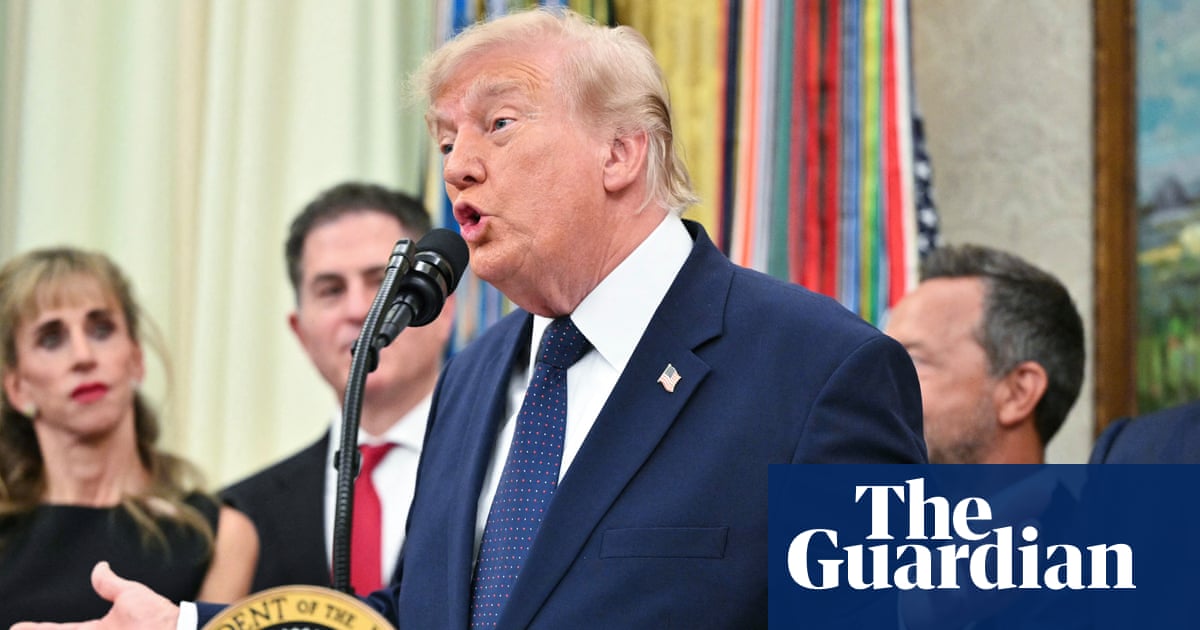
On Monday morning, the theoretical division between global politics and football administration ceased to exist. Donald Trump confirmed that he contacted Gianni Infantino to discuss the red card shown to US forward Folarin Balogun. As The Guardian reported, the US President requested a formal review of the disciplinary decision.
Trump insisted he did not pressure the FIFA president during their discussion. Infantino, however, confirmed the call took place. The conversation represents an unprecedented breach of sporting independence during a major tournament.
It is dangerous. Referees are supposed to be insulated from political pressure. When the leader of the host nation telephones the head of the governing body to lobby for a star player, that insulation melts away.
The message is clear. The tournament's integrity is secondary to diplomatic relations. The call bypasses the established disciplinary channels and establishes a direct line of political influence.
This is not a minor dispute about a single refereeing error. It is a direct test of FIFA's willingness to enforce its own statutes against the most powerful nation on earth. For decades, FIFA has maintained a strict, almost religious stance on state interference.
Now, that policy faces its ultimate contradiction in the middle of a World Cup. The timing of the intervention makes it particularly damaging. Disciplinary committees are designed to operate in isolation, reviewing footage and referee reports without external noise.
By injecting the presidency into the process, the US administration has guaranteed that whatever decision is made will be viewed as political. The committee is now in an impossible position. If the red card is rescinded, the rest of the tournament will look like a fix.
If it is upheld, the host nation will feel aggrieved. The boundary between statecraft and sport has been eroded to the point of irrelevance. The executive suite in Zurich has become an extension of global diplomacy.
This is the natural outcome of the close relationship Infantino has built with political leaders over the last decade. By treating heads of state as VIP partners rather than external entities, FIFA has invited this level of interference. The governing body has traded its independence for political access.
Now, they must pay the price. The credibility of the World Cup hangs in the balance.
Under Article 19 of the FIFA Statutes, member associations must manage their affairs independently. In the past, FIFA has shown no hesitation in wielding this rule. Nigeria faced suspension in 2014 when a court ordered the sports ministry to appoint a civil servant to run the football federation.
The threat of a ban was immediate and uncompromising. Kuwait, Kenya, and Indonesia have all suffered bans when local governments attempted to intervene in their domestic football affairs. In those cases, FIFA argued that the autonomy of the game was non-negotiable.
Yet, when the President of the United States telephones Infantino to demand a review for Balogun, the response is not a swift suspension. When Trump confirmed on Monday that he had called Infantino to review the card, as detailed in The Guardian’s report, he claimed he was not applying pressure. Infantino merely listened.
The double standard is glaring. This discrepancy exposes the transactional nature of the modern game. Infantino has built a presidency based on political alliances, frequently posing with world leaders to secure hosting rights and commercial deals.
When you invite politicians into the boardroom, you cannot be surprised when they start calling the referee's room. The hosting agreement for the 2026 World Cup has tied FIFA's hands. The geopolitical reality is that FIFA cannot afford to suspend the United States during a tournament it is hosting.
The commercial agreements, broadcasting rights, and local logistics are too integrated to disrupt. This financial dependence has created a power dynamic where the host nation can break the rules with impunity. The rules are no longer universal.
Smaller nations are punished for minor infractions, while the superpower is accommodated. This power imbalance threatens the credibility of the entire tournament structure. If FIFA's rules only apply to nations without geopolitical clout, then the rules are meaningless.
The governing body's authority relies on the perception of fairness. That perception is rapidly disintegrating under the weight of this scandal.
Balogun's Red Card and the US Tactical System
Beyond the political theater, the loss of Balogun is a devastating tactical blow for the US national team. Under their current system, Balogun is the single most important component of the attack. His ability to run the channels and drag centre-backs out of position creates the space that Christian Pulisic and Timothy Weah exploit.
Without him, the offensive shape collapses into a static, predictable possession loop. The numbers highlight Balogun's unique value to this team. He averages 0.48 expected goals per ninety minutes, a rate far superior to any backup options in the squad.
His progressive passes received stat sits in the eighty-ninth percentile for strikers in this tournament. He is not merely a goalscorer; he is the focal point of the transition phase. He is irreplaceable.
His work rate off the ball allows the US to press high up the pitch and force turnovers in the opponent's defensive third. If the disciplinary committee upholds the red card, the coaching staff faces a selection crisis. The backup forward options lack the pace to stretch defensive lines.
This forces the midfield to play in tighter spaces, neutralising the ball-carrying strengths of Weston McKennie and Yunus Musah. The US attack becomes easier to press and easier to contain. The tactical alternative is to play a false nine, but this squad lacks a player with the creative intelligence to drop deep and link play.
Playing without a true focal point would force Pulisic into more central areas, removing him from his preferred starting position on the left wing. This tactical compromise would play directly into the hands of their quarter-final opponents, who can defend a narrow attack much more comfortably. The red card itself was a moment of severe tactical indiscipline.
Balogun's reaction to a late challenge showed a lack of emotional control that is unacceptable at this level. The player let his team down. The US coaching staff failed to manage their player's temperament, and now the entire team is paying the price.
This lack of discipline is a systemic issue that has plagued the team throughout the cycle. It exposes a lack of accountability within the squad. No amount of political lobbying can obscure this technical failure.
The Refereeing Crisis and the Zurich Rebellion
Within the refereeing community, Trump's intervention has caused immediate friction. Several senior officials have privately expressed concern that the disciplinary process is being compromised. If Infantino's office pressures the committee to overturn the card, it sets a dangerous precedent.
The refereeing department is furious. Every subsequent red card involving a host nation or a major power will be viewed with suspicion. The referee who made the call is now under an unfair spotlight.
Disciplinary reviews should be based on video evidence and referee reports, not executive orders. By lobbying Infantino, Trump has turned a routine match incident into a diplomatic incident. The pressure on the match officials is immense, and it undermines their authority on the pitch.
This pressure also affects the upcoming matches in the tournament. Referees officiating USA games will feel the weight of political scrutiny. Every fifty-fifty decision in the penalty box will be dissected for signs of bias or intimidation.
The system is broken. The integrity of the refereeing department is fundamental to the legitimacy of the World Cup, and it has been compromised by this phone call. There is also the threat of a rebellion from other member associations.
European and South American federations are watching this situation closely. They will not accept a tournament where the rules are bent for the host nation. If the disciplinary committee shows leniency to Balogun, it could trigger a civil war within FIFA's congress.
The political maneuvering has overshadowed the sporting drama. The focus should be on the tactical battles on the pitch, not the boardroom politics in Zurich. FIFA must act quickly to restore confidence in the disciplinary process before the tournament is permanently damaged.
The Contrast: Football Under Extreme Conditions
We saw a contrast on the pitch just yesterday, when England scraped a victory over Mexico at the Estadio Azteca. In that match, England's pass completion dropped to 62 percent during a gruelling final twenty minutes. That was a pure sporting battle, decided by tactics, altitude, and physical endurance.
It was brutal. The tactical scars from that high-altitude test were earned on the grass, not in a presidential phone call. Thomas Tuchel's side barely scraped a 3-2 victory to reach the quarter-finals, showing the physical toll of playing at 7,200 feet above sea level.
The match was a demonstration of tactical resilience under extreme physical pressure. The players had to suffer to win. England had to adapt their defensive block, dropping deeper and sacrificing possession to survive.
This is the essence of tournament football: adapting to the elements and finding a way to win. If the US team wants to advance, they should do so through similar sporting merit, not boardroom intervention. Allowing political influence to dictate disciplinary outcomes ruins the competitive balance of the World Cup.
The tournament is a test of athletic and tactical superiority, not geopolitical power. If the US cannot win without Balogun, then they do not deserve to progress. The comparison between the two situations is stark.
While England players were gasping for air in Mexico City, US officials were lobbying in Zurich. One team was fighting on the pitch, while the other was looking for a political loophole. The contrast does not reflect well on the host nation's football culture.
The fans want to see matches decided by the players, not the politicians. The drama of the World Cup comes from the unpredictability of the sport, the moments of individual genius, and the tactical battles between managers. When politics interferes, that drama is replaced by cynicism and suspicion.
If FIFA capitulates to Trump's lobbying, they destroy their own credibility. The long-term reputation of the tournament is at stake. The governing body must stand firm and protect the independence of its disciplinary bodies.
They must show backbone. Anything less would be a betrayal of the sport and its fans. The decision on Balogun's red card will define Infantino's presidency.
If he allows political pressure to influence the decision, he will prove that FIFA is a transactional organization where rules are sold to the highest bidder. If he upholds the card, he will demonstrate that the rules of the game apply to everyone, regardless of their political power. The integrity of the sport must be protected at all costs.
The World Cup is the pinnacle of football, and its reputation must not be tarnished by political interference. FIFA must reject the appeal and send a clear message that the game is bigger than any politician. The rules must be absolute.
The tactical fallout for the US will be severe, but it is a challenge they must face on the pitch. They must find a way to adapt their system and win without their star striker. That is the true test of a championship team.
If they fail, they will have only themselves to blame, not the referees or the rules. The tournament is reaching its critical phase, with matches like England's upcoming clash with Norway in Miami promising high-stakes tactical battles. The focus must return to the football.
The phone calls must stop, and the games must be decided on the grass, where they belong. The integrity of the World Cup cannot be traded for political favors. The world is watching.
Roku Express 4K+ | Streaming Media Player 4K/HDR with Smooth Wireless Streaming and Roku Voice Remote Pro
Your front-row seat to every Premier League and 2026 World Cup broadcast.
Frequently Asked Questions
Why did Donald Trump call FIFA president Gianni Infantino?
Which US player's red card prompted Donald Trump's call?
What is FIFA Article 19 and why is it important here?
Which countries has FIFA previously banned for government interference?
Why did Nigeria face a FIFA suspension in 2014?
More Coverage

When even the Swiss abandon you, your FIFA presidency is officially cooked
1 day, 11 hours ago
Aleksander Ceferin is right about Infantino, but UEFA has no plan B
5 days, 17 hours ago
Man City got caught and Mauricio Pochettino wants his lost trophies back
6 days, 13 hours ago
Pedro Gallese collision highlights Cavan Sullivan's fiery US debut
1 week, 1 day agoMan City guilty verdict and England's Wembley wobble (Sep 21–Sep 27, 2026)
1 week, 1 day ago
Folarin Balogun transfer picture grows murky after FIFA World Cup row
1 week, 4 days agoMore Analysis
When even the Swiss abandon you, your FIFA presidency is officially cooked
1 day, 11 hours ago
Aleksander Ceferin is right about Infantino, but UEFA has no plan B
5 days, 17 hours ago
Man City got caught and Mauricio Pochettino wants his lost trophies back
6 days, 13 hours ago
Pedro Gallese collision highlights Cavan Sullivan's fiery US debut
1 week, 1 day agoMan City guilty verdict and England's Wembley wobble (Sep 21–Sep 27, 2026)
1 week, 1 day ago