Pull Up a Stool and Let's Talk France
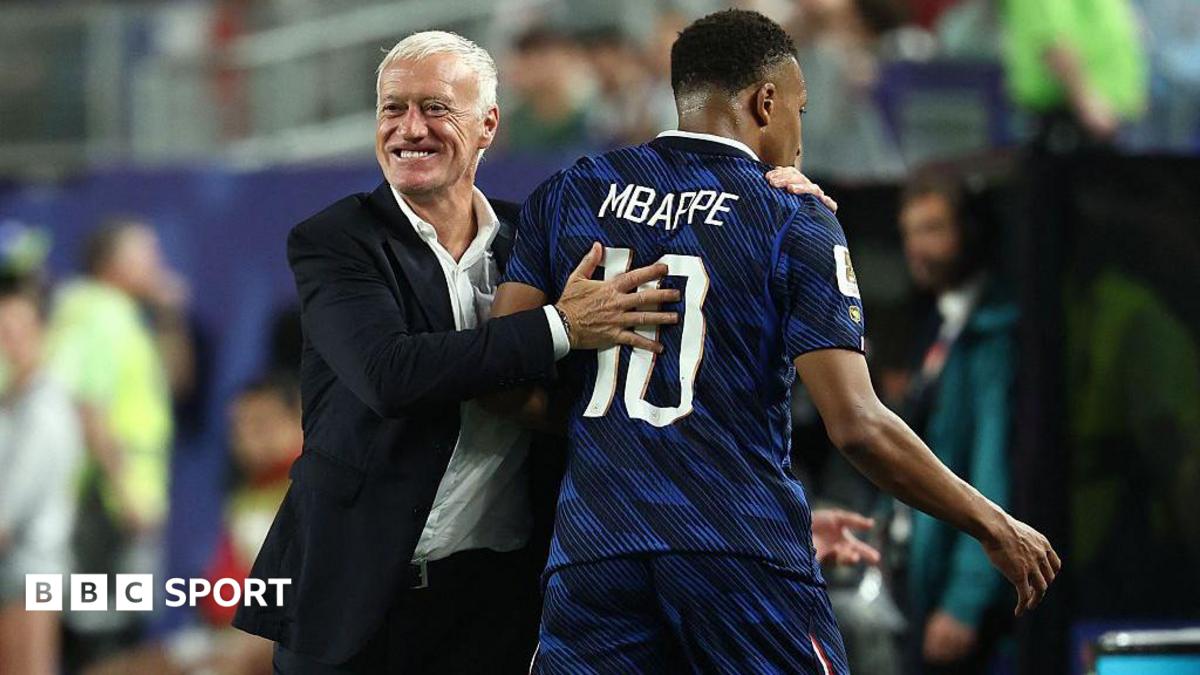
Grab a pint of whatever is cold, pull up a stool, and let’s talk about the absolute circus playing out in the French national team. We are live from a crowded sports bar in New York, and tonight MetLife Stadium plays host to a match that could either cement a legend or end an era. Didier Deschamps is back in the dugout after a week of personal tragedy and tactical triumph, and his final ride with Les Bleus has become the most compelling theater of the summer.
Before we look at the tactical board, we need to respect the human element of this tournament. On June 23, Deschamps had to leave the French training camp following the death of his mother, a sudden blow in the middle of a high-pressure campaign. His long-time assistant, Guy Stéphan, was thrust into the spotlight to run the final group match against Norway.
The Caretaker Masterclass
Most squads would have wobbled under that kind of emotional weight and folded like a cheap lawn chair. Instead, France went out and absolutely dismantled Norway. Stéphan steered the ship to a resounding 4-1 victory that secured top spot in Group I, leaving Norway's star-studded lineup looking like they were running in wet cement.
That victory capped a perfect group stage for Les Bleus. They opened the tournament by beating Senegal 3-1, followed it up by brushing Iraq aside 3-0, and finished by putting four past the Norwegians. Here is how Group I shook out after the dust settled:
- France topped the group with a perfect 9 points from three matches, scoring ten goals and conceding just two.
- Norway took second place with six points after getting dismantled in the final match.
- Senegal squeezed through in third place with three points after beating Iraq.
Now, Deschamps is back in the United States. He rejoined the squad on Friday, June 26, to prepare for today's Round of 32 clash against Sweden. This is it for Didier, as he already announced that he will step down after this World Cup. The stakes could not be higher for a manager who has won it all but still has plenty of doubters to silence.
Let's be honest about the Deschamps era. For years, watching France play football was like watching a guy use a high-end gaming PC to play Solitaire. He had the keys to the most expensive garage in world football and chose to park it in his own half. It was pragmatic, it was defensive, and it was often incredibly boring.
But something has shifted in this tournament. The old manager has finally unlocked the handbrake and let his Ferrari fly. As BBC Sport analyzed, Deschamps' recent tactical changes have turned France into the most dangerous attacking unit in North America. The pragmatist has become a risk-taker, and the results are terrifying.
How Michael Olise Saved France from Boring Football
The catalyst for this sudden offensive freedom is Michael Olise. Antoine Griezmann's retirement from international football before the tournament was supposed to be the death knell for this era. Griezmann was Deschamps' favorite security blanket, the guy who would happily track back sixty yards to slide-tackle a left-back while the rest of the forwards stood on the halfway line.
Instead of trying to replace Griezmann with another defensive workhorse, Deschamps handed the keys of the attack to the Bayern Munich genius. Olise had already shown what he could do in the warm-up matches, dropping a hat-trick on Northern Ireland to secure his place in the squad. He plays with a level of joy and arrogance that has been missing from this French side for years.
Shifting the Chess Pieces
Deschamps originally deployed Olise on the right wing, which is the standard move. But against Senegal, as detailed in the original tournament coverage, the manager made the brave tactical tweak that changed everything. He allowed Olise to drift inside and operate as a central, hybrid playmaker. This position gave him the freedom to exploit the gaps between Senegal's midfield and defense.
It was a masterstroke that unlocked the entire team. Olise is operating in a central role like a kid who found the cheat codes in a video game. With Olise pulling the strings, players like Bradley Barcola and Désiré Doué have flourished. The young attackers are running into space knowing the ball will arrive exactly when they want it.
The system is officially a 4-2-3-1, but it is highly fluid. Out of possession, it quickly reorganizes into a compact 4-4-2 block. But the moment they win the ball, it is a race to the goal. France transitions faster than any other team in the tournament, moving the ball from defense to attack in three passes.
At the center of it all is Kylian Mbappé, who has become France's all-time record goalscorer during this group stage. Mbappé is thriving because he no longer has to drop deep to find the ball. Olise is doing all the heavy lifting in midfield, leaving the captain free to terrorize defenders. It is a simple formula, but nobody has figured out how to stop it yet.
This represents a massive departure from Deschamps' traditional philosophy. He used to demand that every player, including his forwards, track back and defend. Now, he has built a structure that accepts a certain amount of defensive laziness from his stars. He wants them fresh when they win the ball, and it is paying off in spades.
The Beautiful, Chaotic Mess of French Defense
But let's order another round and look at the flip side, because this is not a perfect team. While France has scored 10 goals, their defensive transitions have been incredibly sloppy. They conceded only twice, but they allowed Senegal and Norway to create far too many quality opportunities. The double pivot of N'Golo Kanté and Aurélien Tchouaméni has looked exposed at times.
Kanté is still running around like he's three people at once, but even he cannot cover a gap the size of the Hudson River. Midfielder Adrien Rabiot did not mince words when speaking to the press. He warned that while the attacking display is entertaining, the team must make defensive adaptations for the knockout phase. You cannot give up these kinds of spaces when the games are single-elimination.
Enter Graham Potter
Sweden is exactly the kind of team that can exploit these defensive gaps. They are coached by Graham Potter, the master of losing to mid-table teams while winning the expected goals battle. Sweden had a weird group stage, losing 5-1 to the Netherlands but also crushing Tunisia 5-1 and drawing with Japan.
Potter's teams are tactically flexible and excellent at keeping the ball. If France does not press cohesion, Sweden will pass right through their midfield. Sweden will look to isolate Alexander Isak against France's center-backs, and that is a matchup that should make French fans nervous. If the double pivot does not shield the back four, it will be a long night in New Jersey.
This is the first time these two nations have ever met in a World Cup tournament, which feels like a fake stat you'd read on Twitter at two in the morning. France has the better historic record, but Potter will not care about history. He will look at the spaces behind Dembélé and Olise and tell his wingers to run. The battle in the half-spaces will decide who moves on to the next round.
So what does Deschamps do tonight? Does he stick to his brave new world of attacking football, or does he panic and revert to type? If he benches one of his creative stars for a more defensive midfielder, he risks losing the dressing room. If he goes all-out attack, he might get caught out by a clever Swedish counter-attack.
That is the drama of knockout football. Deschamps is playing a high-stakes game of poker with his own legacy. He can either go out as the coach who finally learned to love beautiful football, or he can fail by abandoning his instincts. The whistle is about to blow, so take a sip of your drink and enjoy the show.
Read Next
- Why Sweden's high line will be destroyed by Didier Deschamps' tweaks
- Why Sweden's high-risk style will play right into French hands
- Why Bukayo Saka at right-back is England's best option against DR Congo
- Koeman's five-back gamble has Dutch fans stressing before Morocco clash
- 🏆 World Cup 2026 — Full Coverage Hub
- 🇫🇷 France World Cup 2026 — Les Bleus Hub