The New York New Jersey Stadium stands ready to host a Round of 32 clash that carries the distinct scent of tactical chaos. France enters the knockout rounds having dismantled Group I with three straight victories, scoring 10 goals. Meanwhile, Sweden crawled into this stage as a third-placed side, carrying the heavy psychological scar of a five-goal humiliation by the Netherlands.
Deschamps and the Art of In-Game Adjustments
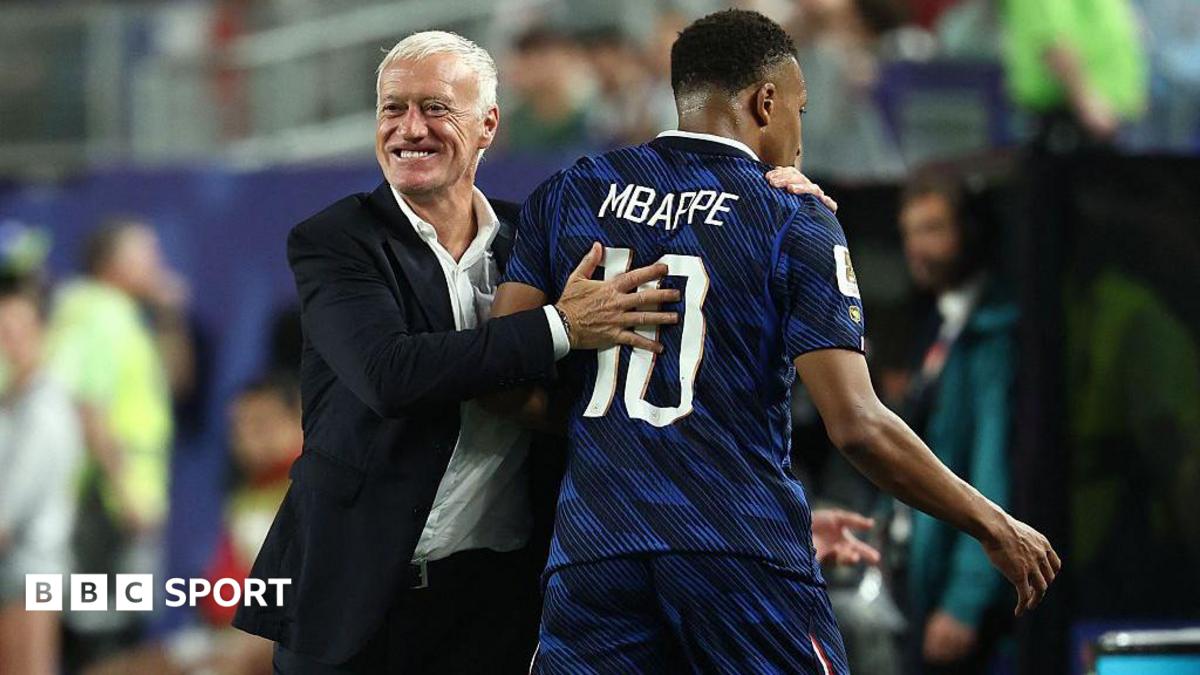
For Deschamps, this tournament is a final lap as he prepares to step down after this World Cup campaign. Rather than retreating into his usual conservative shell, the veteran manager has embraced a level of tactical fluidity that few expected. His ability to alter the shape of his team mid-match has transformed France into a dynamic, shape-shifting monster.
France's attacking engine has been completely supercharged by these structural adjustments. We saw this in their opening 3-1 victory over Senegal, where Kylian Mbappé operated with total freedom to drift inside. The French captain exploited the space between Senegal's right-back and center-back to score in the 24th and 78th minutes.
The asymmetry of Deschamps' system is anchored by the contrasting roles of his fullbacks. While Theo Hernandez is given license to join the attack as a flying wing-back, Jules Koundé tucks inside to form a back three during possession phases. This mechanical shift provides defensive security against central counter-attacks while letting Mbappé play without defensive burdens.
The introduction of Michael Olise into a hybrid creative role has been the catalyst for this tactical evolution. As highlighted in reports on how Deschamps' in-game tweaks have unlocked the squad, Olise starts on the right but regularly drifts into the half-space. This rotation creates a central numerical overload that forces opposition midfielders into impossible decisions.
France showcased the peak of this pattern during their final group stage game, a 4-1 victory over Norway. Ousmane Dembélé thrived in the space opened by Olise, scoring a first-half hat-trick with strikes in the 17th, 31st, and 43rd minutes. France completed 86.4% of their passes in that match, maintaining complete control over the tempo of the game.
Yet, this attacking brilliance has come with significant defensive costs. France's high-pressing structure regularly leaves their double pivot of Aurelien Tchouameni and Eduardo Camavinga isolated. Senegal exposed this in the 41st minute of their match, bypassing the midfield press with a rapid transition to score.
To mitigate these defensive risks, the double pivot must be flawless in their lateral coverage. Aurelien Tchouameni acts as the central anchor, screening the center-backs and scanning the space between the lines. Beside him, Eduardo Camavinga uses his press-resistance to carry the ball out of tight spaces, connecting the defense directly to Olise.
Sweden's path to MetLife Stadium has been far more turbulent under Graham Potter. Appointed in October 2025 to replace Jon Dahl Tomasson, Potter has attempted to install a possession-based, back-three system. Their opening 5-1 win over Tunisia showed promise, featuring a 7th-minute opener from Yasin Ayari alongside goals from Viktor Gyökeres and Mattias Svanberg.
However, Potter's insistence on playing out from the back was brutally exposed during a 5-1 defeat to the Netherlands. The Dutch press squeezed Sweden's center-backs into 14 turnovers in their own half. Brian Brobbey and Cody Gakpo ran riot, exposing Sweden's sluggish lateral rotations and structural fragility.
Sweden's midfield pivot of Hugo Larsson and Mattias Svanberg has struggled to protect their backline. During the transition phase, they are often caught too high up the pitch, leaving a massive gap between them and the defense. This separation was precisely how Cody Gakpo found space to turn and run at Sweden's back three in their group stage match.
Their final group game against Japan ended in a 1-1 draw, stabilizing the defense but offering little attacking spark. After Daizen Maeda scored for Japan in the 56th minute, Sweden needed Anthony Elanga to rescue them with a 62nd-minute equalizer. Elanga won the Player of the Match award, but his individual brilliance cannot mask the team's structural imbalance.
In attack, Sweden relies heavily on Viktor Gyökeres to hold up the ball and create space for Alexander Isak. Gyökeres has shown immense physical strength, but he will face a different tier of opponent in William Saliba. Saliba's ability to defend in isolated one-on-one situations will test whether Sweden can establish any sustained possession in France's half.
The Tactical Battlefield in East Rutherford
The core battle of this match will take place in the wide areas, where Sweden's wing-backs must cope with France's asymmetric wing play. In Potter's 3-4-2-1 system, the wing-backs cover immense distances to provide both width in attack and defensive cover in a back five. Ludwig Augustinsson's defensive duties against Dembélé will likely disconnect Sweden's midfield from their front three, leaving Viktor Gyökeres and Alexander Isak isolated against William Saliba and Dayot Upamecano.
Furthermore, the midfield battle will be dictated by how Sweden chooses to press. As noted in reports on how France superstars thrive under Deschamps' in-game tweaks, the French pivot drops deep to form a temporary back three. This draw-and-release pattern will allow Olise and Mbappé to receive the ball in transition with space to run.
Potter must decide whether to remain stubborn or adapt his principles for this single knockout match. A low block might limit the space behind Sweden's defense, but it goes against everything Potter has coached since taking the job. Sitting deep would invite sustained pressure from a French team that generated 3.21 expected goals (xG) against Norway.
This tactical choice is further complicated by Sweden's vulnerability to wide rotations. Ousmane Dembélé's tendency to drop deep to receive the ball before driving inside will pull Sweden's left-sided center-back out of position. If this space opens up, Antoine Griezmann or Olise will immediately exploit the gap behind them.
A Confident Prediction
This match will not be a close contest. Sweden's defense is simply too fragile to withstand the movement of Mbappé and Dembélé for 90 minutes. Expect Deschamps to target Sweden's right side, using Mbappé's diagonal runs to isolate Carl Starfelt and control the tempo.
France will assert their dominance early, scoring twice in the first half to put the game beyond Sweden's reach. The final score will be a comfortable 3-0 victory for France, sending them into the Round of 16 with their title credentials firmly established. Sweden's World Cup journey will end here, leaving Graham Potter with major questions to answer about his tactical dogmatism.
Read Next
- Didier Deschamps has finally unlocked France's terrifying attack
- Why Sweden's high-risk style will play right into French hands
- Why Bukayo Saka at right-back is England's best option against DR Congo
- Koeman's five-back gamble has Dutch fans stressing before Morocco clash
- 🏆 World Cup 2026 — Full Coverage Hub
- 🇫🇷 France World Cup 2026 — Les Bleus Hub