The Hype Train Hits a Concrete Wall in Houston
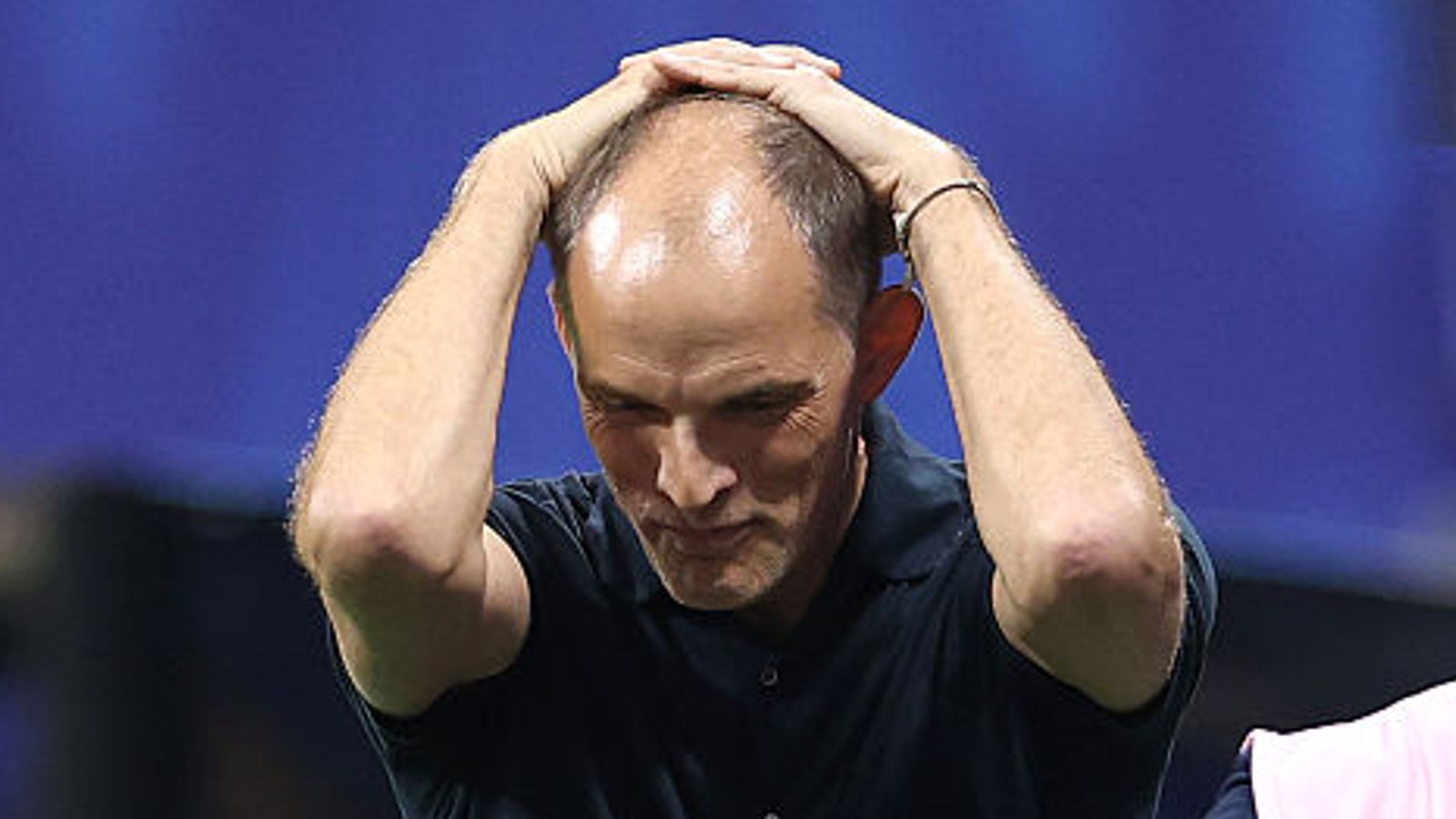
Pull up a barstool, grab a cold lager, and look at the absolute carnage that just went down in Texas. If you bought into the hype that Canada was going to roll into the quarterfinals of their own World Cup, I hope you kept the receipt. The co-hosts got a massive, ice-cold bucket of reality dumped over their heads by a Moroccan team that does not care about your friendly North American narratives, as highlighted in the BBC video analysis.
Before the match, the vibe from Halifax to Vancouver was borderline hysterical. Fans were convinced that defeating South Africa in the previous round meant this team was ready for the big time. They were planning parades and talking about historical legacies.
Then they walked into the NRG Stadium in Houston, and it turned into an absolute nightmare. It did not help that Alphonso Davies was ruled out before kickoff due to injury. Trying to run Jesse Marsch's high-speed system without Davies is like trying to play lead guitar with two broken fingers.
No Davies, No Party
You can still make noise, but it is going to sound awful. Marsch also had to bench Derek Cornelius because of a hamstring issue, leaving Moïse Bombito and Luc de Fougerolles to anchor the defense against one of the smartest counter-attacking teams on the planet.
Marsch was talking a big game before the match, insisting his squad's endurance would wear down Morocco. He wanted chaos. He wanted the Atlas Lions to panic under the Texas heat, but instead, it was his own backline that melted. When you leave a twenty-two-year-old like Luc de Fougerolles isolated against seasoned European pros, you are just asking for trouble.
The Press, the Illusion, and the Jesse Marsch Special
For the first forty-five minutes, you could actually fool yourself into thinking Canada had a plan. Marsch did what Marsch always does: he told his players to run until their lungs collapsed.
Niko Sigur and Ali Ahmed chased red shirts like they owed them money. On paper, it looked like Canada was dominating the tempo.
The stats will tell you Canada out-shot Morocco by an eight-to-four margin in the early phases of this clash. But if you actually watched the game instead of just staring at a spreadsheet, you saw the trap. Morocco was happy to let Canada run themselves into the ground.
The Atlas Lions sat back, organized their lines under Walid Regragui, and waited for the inevitable fatigue to set in. Even with Canada's early pressure, they never looked like scoring. They lacked the final pass, the clever run, the basic composure in the box.
When your entire attacking game plan relies on chaotic energy rather than technical quality, you get exactly what Canada got. That is how you end up with a pathetic 0.79 xG despite having more shots on target. It is the classic Jesse Marsch experience: all gas, no brakes, and ultimately no steering wheel.
The Larin Problem
Let's look at how Canada actually set up. They tried to pack the middle, using Niko Sigur to shield the defense while Ali Ahmed pushed forward to link up with Cyle Larin. On paper, it was supposed to create a numerical advantage. In reality, it just left massive highways on the wings for Achraf Hakimi to exploit.
Then there is the Larin problem. The forward spent ninety minutes running into blind alleys and getting pockets picked by Redouane Halhal. He looked completely isolated, a lone island in a sea of red shirts. When your main outlet is playing like he is wearing concrete boots, your offense is dead on arrival.
Let's talk about Morocco's defensive setup. Bono did not even have to sweat in the first half. Achraf Hakimi and Noussair Mazraoui locked down the flanks so hard you would think they had keys to the stadium gates.
Redouane Halhal and Pape Diop turned the box into a no-fly zone, clearing away every desperate cross Canada sent in. Morocco did face a brief setback when Ismael Saibari had to go off injured. The midfielder, who recently completed a massive transfer to Bayern Munich, limped off the pitch looking devastated.
But Morocco's depth is ridiculous, and Benjamin Bouchouari stepped right in without the team missing a single beat. He immediately stabilized the midfield, showing that the Moroccan machine has no weak links.
The Azzedine Ounahi Show
The second half began, and the illusion of Canadian competitiveness evaporated in about five minutes. It started in the 50th minute, and it was a sequence that should be taught in schools as a warning against defensive laziness.
Achraf Hakimi stood over a free kick, looking like a quarterback surveying a broken defense. He spotted Azzedine Ounahi hovering near the edge of the box, completely ignored by the Canadian midfield.
Hakimi slid a simple pass, and Ounahi let fly with a right-footed shot that bypassed three lunging defenders, a strike featured in the BBC match highlights. The ball flew past Maxime Crepeau before the keeper could even blink. Suddenly, all that high-pressing energy looked like a team running in quicksand.
Ounahi was not done making the Canadian midfield look like amateur hour. He was playing like a man among boys, gliding through challenges and picking passes like he was playing in his backyard.
While Canada was busy fouling and arguing with the referee, Ounahi was orchestrating a clinic. He showed exactly why he becomes a superstar every time he puts on the national team jersey.
The knockout blow arrived in the eighty-second minute. Brahim Diaz carried the ball forward, attracting three Canadian defenders who apparently forgot that you have to cover other players on the pitch. Diaz slipped a gorgeous, no-look pass to Ounahi, who was completely unmarked.
Ounahi took one touch to set himself and curled a beautiful shot into the far corner to make it 2-0. It was a moment of sheer footballing intelligence that highlighted the massive gap between these two teams.
Canada's defenders looked like they were trying to solve a Rubik's cube while Morocco was playing speed chess. You cannot leave a player of Ounahi's caliber that much space in a knockout game and expect to survive.
Walid Regragui deserves a ton of credit here. The Moroccan coach saw Marsch's players starting to gasp for air around the hour mark and immediately instructed Brahim Diaz to start running at the tired Canadian center-backs. It was a masterclass in tactical patience.
And Diaz was more than happy to oblige. Every time he touched the ball, Canadian defenders started backing away like they were encountering a wild animal. His quick feet opened up the spaces that Azzedine Ounahi exploited so ruthlessly. It was a beautiful, devastating partnership that completely dismantled Canada's defensive structure.
A Brutal Reality Check for Canadian Soccer
If the second goal was the knockout punch, the final moments of the match were just Morocco playing with their food. Jesse Marsch threw everyone forward in a desperate attempt to find a consolation goal. It was tactical suicide.
Morocco's defense absorbed the pressure, won the ball back, and launched a counter-attack that was almost cruel in its execution. In the 98th minute of play, Soufiane Rahimi put the final nail in the Canadian coffin. He broke free behind a high line that had completely quit, rounding the keeper to slot home Morocco's third goal.
The final score read 3-0, and honestly, Canada was lucky it was not five. The fans who had traveled from Toronto and Montreal to Houston looked like they had just watched their childhood pets get run over.
Let's look at a list of the hard truths Canada must face after this disaster. This was a clear wake-up call for the national program.
- The high press is a gimmick if you do not have the technical quality to back it up when teams beat the first line.
- Alphonso Davies is the only world-class player this country possesses, and without him, they look like a glorified MLS squad.
- Jesse Marsch's inability to adjust his tactics mid-game is a massive liability in tournament football.
Let's not sugarcoat this. Canada's run to the knockout rounds was a great story for the local papers, but it also masked some serious structural issues. They struggled to score goals against quality opposition throughout the group stage, and their defense was held together by tape and hope. When they finally faced a team with genuine pedigree, the house of cards collapsed.
Morocco, on the other hand, is proving that their semi-final run in Qatar was no fluke. They play with a level of confidence and tactical discipline that Canada can only dream of. If they continue playing like this, the winner of France and Paraguay is going to have a massive problem on their hands.
Meanwhile, Morocco is marching on to the quarterfinals where they will face the winner of the clash between France and Paraguay. They have become the first African country to reach the World Cup quarterfinals more than once, and they look like a team that could actually win the whole thing.
They have structure, they have flair, and in Ounahi, they have a midfielder who turns into prime Zinedine Zidane the moment the World Cup anthem plays. For Canada, the party is over, and the hangover is going to be brutal.
They got exactly what they deserved for believing their own hype before playing a team that actually knows how to win. Pull up a barstool, indeed, because the rebuild starts tomorrow, and it is going to be a long, painful ride.
Read Next
- Why Morocco will not survive their quarter-final clash with France
- Canadian fans are losing their minds before the Morocco World Cup clash
- Why Jesse Marsch benched Alphonso Davies against Morocco
- Why Jesse Marsch was right to turn his back on US Soccer
- 🏆 World Cup 2026 — Full Coverage Hub
- 🇨🇦 Canada World Cup 2026 — Les Rouges Hub
- 🇲🇦 Morocco World Cup 2026 — Atlas Lions Hub
- 🇧🇷 WC 2026 Group C — Brazil, Morocco, Scotland, Haiti

.jpg)