The Sterile Dominance of Group G
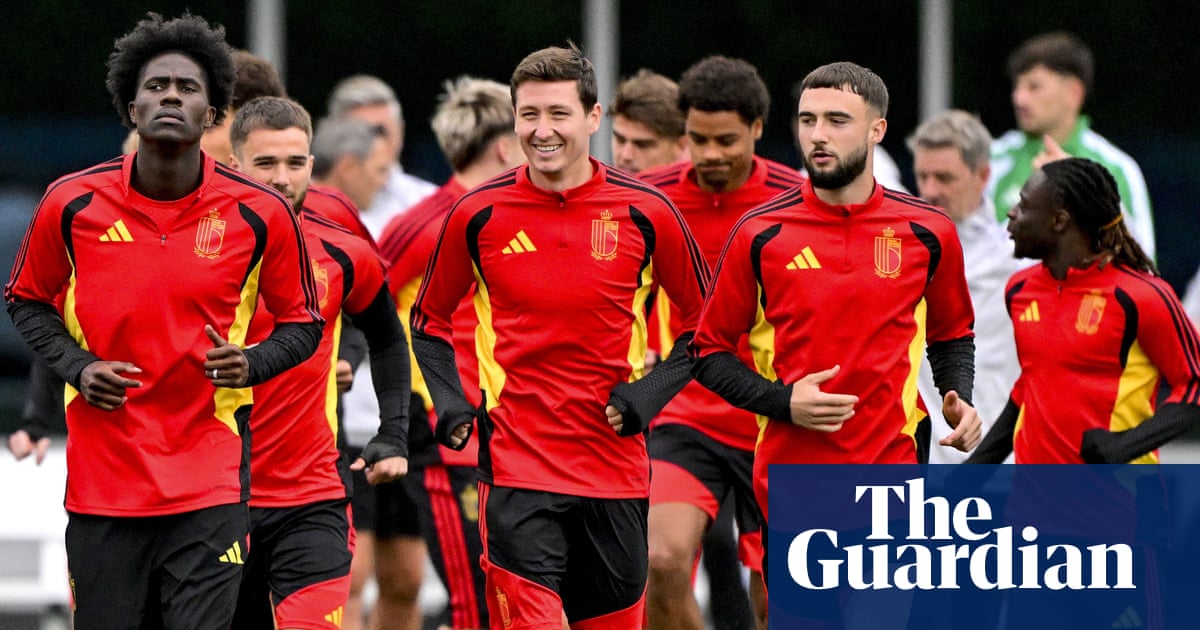
On paper, Belgium cruised to the top of Group G with five points, culminating in a 5-1 routing of New Zealand. Yet, the underlying numbers reveal a far more concerning reality for a team that qualified with a negative non-penalty goal difference if you strip away that final match. In their opening two fixtures—a sluggish 1-1 draw against Egypt and a sterile 0-0 draw with Iran—Belgium accumulated 38 shots but found the net exactly zero times from open play.
Their only goal in those first 180 minutes of tournament play came via a Mohamed Hany own goal in the 66th minute against Egypt. This is not the profile of a tournament favorite. Following the scoreless draw with Iran, the Belgian press was quick to locate the knives.
French-language newspaper La Libre ran a scathing review of Belgium's veteran core, singling out Kevin De Bruyne. They compared the midfielder to a "washed-up Hollywood actor" who "accepts any role to continue to exist in Hollywood." It was a brutal characterization, but one grounded in the data.
Against Iran's low block, De Bruyne completed just 71% of his passes in the final third, far below his career tournament average of 83%. His inability to break the defensive lines left Romelu Lukaku isolated, registering only 14 touches before being substituted in the 78th minute. When Nathan Ngoy received a red card in the 66th minute, the tactical plan collapsed entirely, forcing a retreat into a defensive shell.
Garcia was combative in Seattle, defending his team against the "has-beens" tag. He argued in The Guardian's match preview that public skepticism was unwarranted.
When a nation has players of that calibre, you support them.
But support does not alter the geometry of the pitch. Against Senegal's defensive structure, Belgium cannot rely on the sterile possession that plagued their early outings. They must address the disconnect between their build-up phase and their forward line, or risk a premature exit in the Pacific Northwest.
The Illusion of the New Zealand Explode
The Vancouver Illusion
Opta's post-match analysis of the 5-1 victory over New Zealand suggested a return to form, but a closer look at the tracking data indicates it was a tactical mirage. Belgium registered 35 shots in Vancouver, racking up 3.69 expected goals. Leandro Trossard flourished, scoring twice in the 28th and 50th minutes by exploiting the space between New Zealand's center-backs.
But New Zealand's defensive shape was incredibly naive. Their defensive line averaged a height of 48 meters from their own goal line, a suicidal tactic against De Bruyne's passing range. When De Bruyne scored in the 66th minute, he had five yards of space to turn—a luxury he will not receive in Seattle.
Aliou Cissé’s Green Wall
Senegal will present a completely different defensive challenge. Under Aliou Cisse, Senegal's defensive block sits much deeper, averaging 32 meters from their goal line, as reported by Ben Fisher. They do not press high; their PPDA in their defensive third was 14.2 during the group stage, compared to New Zealand's aggressive 8.6.
This deep block is designed to deny the exact space that Trossard and Charles De Ketelaere enjoyed in Vancouver. If Belgium plays with the slow tempo seen in their first two matches, they will find themselves passing sideways in front of a green wall, unable to feed Lukaku in the box.
Moreover, Belgium's defensive transition remains highly vulnerable. New Zealand, despite generating only 0.25 expected goals, managed to break Belgium's counter-press three times. Elijah Just's 84th-minute goal was a direct result of midfielder Amadou Onana failing to track a runner from deep.
If New Zealand can exploit these gaps, Senegal's elite transition players will do so with far greater lethality. Garcia's decision to play a high defensive line with aging center-backs looks increasingly risky against African opposition built for the counter-attack.
Senegal’s Direct Transition Weaponry
Senegal's path to the last 32 was chaotic, but their offensive output was formidable. They scored 8 goals in Group I, more than Belgium's total of 6. While their defense conceded 6 goals—three against France in a 3-1 opening defeat and three against Norway in a 3-2 thriller—their transition play was elite.
Senegal's direct speed is their primary weapon. In their 5-0 demolition of Iraq, they recorded five direct attacks, defined as possessions starting in their own half that end in a shot or touch in the opposition box within 15 seconds. Habib Diarra opened the scoring in just the 4th minute from such a transition.
The Sarr Counter-Threat
The primary threat comes from Ismaila Sarr. The winger scored three goals in the group stage, including a brace against Norway in the 53rd and 90+3rd minutes. Sarr's tracking data shows he reached a top speed of 35.4 kilometers per hour during the group stage, making him one of the fastest players in the tournament.
He excels at exploiting the space behind advancing full-backs. With Belgium's Timothy Castagne frequently pushing high to provide width, Sarr will have a run at Belgium's left-sided center-backs. If Arthur Theate is left isolated against Sarr in wide areas, Belgium will concede high-value chances.
Pape Gueye’s Engine
In central midfield, Pape Gueye provides the physical presence and passing range to launch these transitions. Gueye scored twice against Iraq and won 68% of his defensive duels in the group stage.
His ability to recover possession and immediately play forward passes bypasses the opposition press. If Onana and Youri Tielemans cannot disrupt Gueye's distribution, Senegal will repeatedly release Sarr and Iliman Ndiaye into the channels. Senegal's conversion rate of 18.6% in the group stage suggests they do not need many opportunities to punish defensive errors.
The Tactical Battleground in Seattle
Garcia’s Midfield Conundrum
The outcome of this match will be decided by how Rudi Garcia configures his midfield. If Belgium retains possession without verticality, they will play directly into Senegal's hands. They need De Bruyne to occupy deeper positions to pull Senegal's midfielders out of their shape, creating space for Trossard and De Ketelaere to operate in the half-spaces.
However, this leaves Belgium even more exposed to the counter-attack if possession is lost. It is a delicate tactical balance that Garcia has struggled to find throughout his tenure.
Norway’s Blueprint
Senegal's defensive vulnerability lies in their lateral organization. While their central block is compact, Norway exploited their lack of coverage on the opposite flank during the 3-2 victory. Erling Haaland's goals in the 48th and 58th minutes came from crosses delivered from the half-spaces.
If Belgium can switch play quickly through De Bruyne, they can isolate Senegal's full-backs. But this requires quick, precise passing, not the sluggish circulation that defined Belgium's draws with Egypt and Iran.
Bookmakers have Belgium as favorites, but the metrics suggest an upset is highly possible. Senegal's offensive firepower and directness are perfectly suited to exploit Belgium's structural flaws. If they fail to adapt, the "has-beens" label will stick, and a talented generation will make a quiet exit from the world stage.
Read Next
- Asia's World Cup expansion has exposed its deepest tactical flaws
- Top 10: France
- Forest Green Rovers just made the most desperate bet in non-league football
- Rangers are making a massive mistake by replacing Jack Butland with Ivor Pandur
- 🇧🇪 Belgium World Cup 2026 — Red Devils Hub
- 🇸🇳 Senegal World Cup 2026 — Lions of Teranga Hub