The PSR accounting trick that leaves Rangers exposed
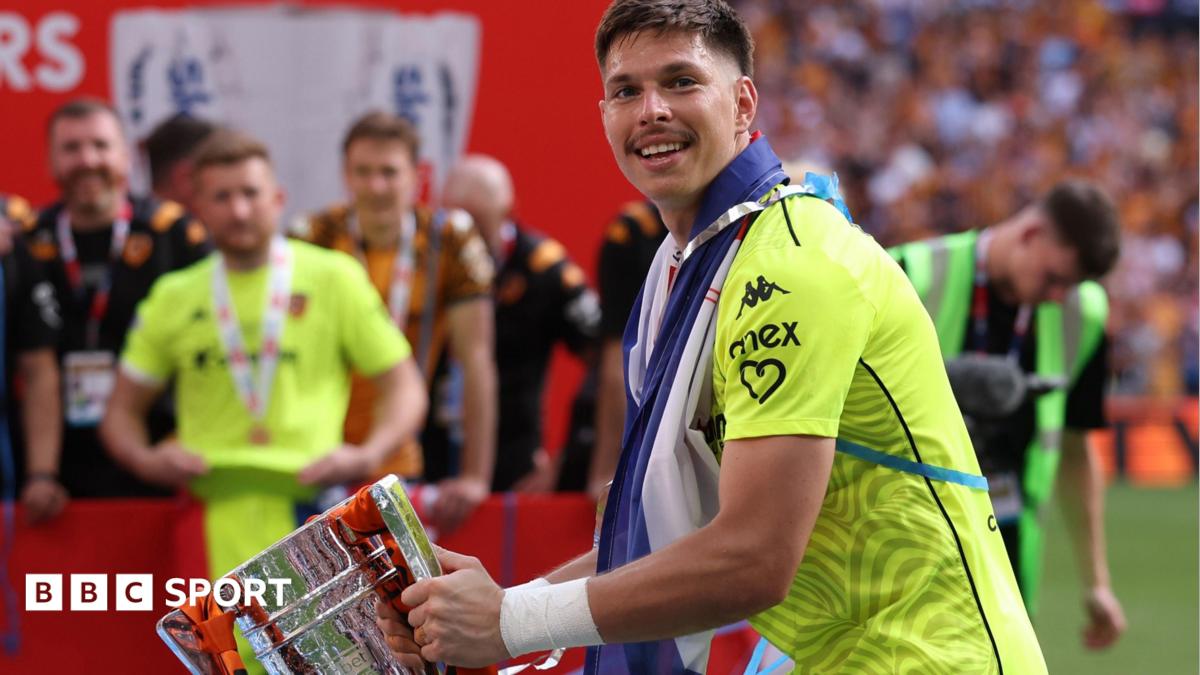
On June 30, 2026, Rangers officially announced the signing of Ivor Pandur on a four-year contract, as goalkeeper was confirmed to be signing from Hull City. The Croatian goalkeeper arrives from Hull City for a fee of £6 million.
In a separate deal, Jack Butland moves to the newly promoted Premier League club for £3 million. This swap is presented as two independent transactions to satisfy financial regulators.
While the accountants at Ibrox are celebrating this financial engineering, the football staff should be deeply worried. This is a net spend of £3 million that actively makes the starting eleven weaker.
The two deals were structured separately to satisfy profitability and sustainability rules. This neat accounting trick allows Rangers to balance their books for the current financial year.
But football matches are won on the grass, not in the ledger. Rangers are trading a proven, aerially dominant goalkeeper for a smaller, high-risk Croatian sweeper-keeper. This is a gamble they did not need to take.
Trading a bedrock for a gamble
Jack Butland was the absolute bedrock of the Rangers defence last season. He started all 38 Scottish Premiership matches, keeping 12 clean sheets and recording a 69.6% save percentage. In the Europa League, he was equally impressive with a 61.1% save percentage over eight appearances.
His presence in the penalty area gave his central defenders the confidence to hold their positions. Butland's 1.96m frame allowed him to dominate his box on set pieces and crosses.
Hull City recognized they needed this experience for their Premier League survival campaign. They were willing to trade their starting goalkeeper and pay a fee to secure Butland.
For Hull manager Sergej Jakirović, this is a massive upgrade in goal. For Rangers, it represents a massive regression.
The statistical reality of Ivor Pandur
Ivor Pandur spent the 2025/2026 season as the undisputed number one at Hull City. He made 48 appearances in all competitions, keeping 14 clean sheets.
Hull fans will point to the Championship play-offs as proof of his quality. He kept three clean sheets in those matches, including a shutout in the 1-0 final victory against Middlesbrough.
Underlying data reveals Championship fragility
But that play-off run masked a highly volatile regular season in the Championship. Hull City conceded 65 goals in their 45 league games before the play-offs. That is a staggering number of concessions for a team that achieved promotion.
Pandur's save percentage during the league campaign was just 68.6%. These are not the numbers of an elite goalkeeper.
Pandur's career before Hull City also shows a pattern of inconsistency. He started at HNK Rijeka, making 20 appearances before moving to Hellas Verona in 2020.
In Italy, he struggled to establish himself, making only 7 appearances. His most notable moment was saving two penalties in a Coppa Italia shootout. Verona quickly loaned him out to Fortuna Sittard.
In the Eredivisie, Pandur played 47 matches for Fortuna Sittard, showing flashes of potential but failing to show elite consistency. Hull City took a gamble on him, but his single season as their starter in the Championship was far from perfect. He has never played in a high-pressure environment like Glasgow.
The tactical friction under Derek McInnes
Tactically, Pandur is a completely different player from Butland. He is smaller, standing at just 1.87m tall. This lack of height is a significant disadvantage in physical leagues.
Pandur is a proactive goalkeeper who likes to sweep behind his defenders. He frequently comes off his line to intercept long balls and narrow shooting angles.
A clash of sweeper tendencies and deep blocks
While this sweeping style works in a high-pressing team, it requires excellent distribution. Pandur does not possess this. His pass completion rate at Hull City was just 54.88% last season.
When pressed by opposing forwards, he frequently panics and kicks the ball out of play or directly to opponents. This technical limitation makes playing out from the back a high-risk strategy.
Furthermore, scouting reports from the Championship identify high claims as his primary weakness. Pandur struggles to judge the flight of crosses in crowded penalty areas.
He often chooses to punch the ball weakly rather than catching it cleanly. This weakness will be ruthlessly targeted in Scotland.
Why Scottish football will target Pandur
The timing of this transfer is also bizarre given the managerial change at Ibrox. Derek McInnes was appointed Rangers manager on June 24, 2026, signing a three-year contract. McInnes replaced Danny Röhl, who left the club to join RB Salzburg.
McInnes is a well-known defensive pragmatist. His teams defend in a compact, deep-lying block. They compress the space between the lines and force opponents to play wide.
This system relies on a goalkeeper who can dominate the penalty area and catch crosses. McInnes does not want a goalkeeper wandering out of his box.
Pandur's natural instincts conflict directly with McInnes' tactical philosophy. The Croatian wants to play a high line and sweep.
McInnes wants his goalkeeper to stay on his line and command the box. This tactical friction will create defensive panic early in the season.
Opposition managers in the Scottish Premiership are already drawing up plans to exploit this mismatch. Teams like Celtic, Hearts, and Motherwell will pack the six-yard box on set pieces. They will place physical forwards directly in front of Pandur to block his movement.
With his known struggles on high claims, he will concede soft goals from corner kicks. Celtic will be particularly pleased with this transfer.
Their high-intensity attacking style will put Pandur under constant pressure. In the first Old Firm match, Celtic will press him high to exploit his 54.88% pass completion rate. Rangers will struggle to build possession from the back.
The Verdict: A costly goalkeeping regression
This transfer will be remembered as a costly mistake for Rangers. Replacing Butland with Pandur is a massive step backward. The board has prioritized accounting compliance over tactical suitability.
They have spent £3 million net to acquire a goalkeeper who does not fit their manager's system. It is a costly piece of bad planning.
Our firm prediction is that Pandur will cost Rangers the league title. He will make multiple high-profile errors in his first ten matches. By November, the pressure on McInnes to bench his signing will be overwhelming.
Rangers will finish the season trophyless. Meanwhile, Hull City will survive in the Premier League thanks to Butland.
Read Next
- Why Derek McInnes is already changing the Rangers vs Celtic dynamic
- Frank Lampard is taking a £17.2m defensive gamble on Aurèle Amenda
- Manuel Ugarte's injury is about to wreck Man United's transfer window
- Asia's World Cup expansion has exposed its deepest tactical flaws
- ⚽ Scottish Premiership 2025-26 — Celtic vs Rangers Hub