Forest Green’s cynical gamble on Savage’s direct style
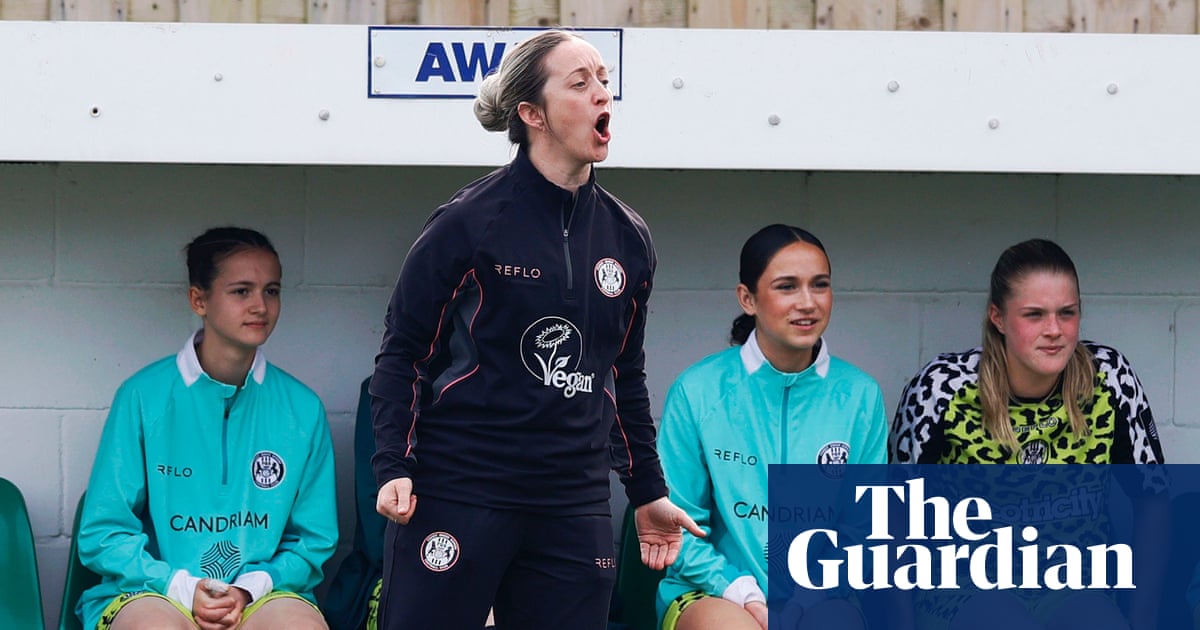
Forest Green Rovers have made their intentions clear for the upcoming season, and the cost is devastating. On June 30, 2026, the club announced it will scrap its women's side for the 2026-27 campaign. The official line from Chairman Dale Vince is that the club must concentrate its resources on returning the men's first team to the English Football League.
This is a cynical, high-stakes gamble that places an immense burden of expectation on manager Robbie Savage. After the men's team was relegated to the National League in 2024, the club has struggled to find its footing. By abandoning a women's team that finished second in the South West Regional Women's Football League Premier Division last season, Vince has traded local goodwill for a desperate roll of the promotional dice.
It is a move that has drawn fierce criticism from supporters and local partners alike. The club is also stepping back from its joint involvement with Hartpury's Elite Training Centre for girls aged 9 to 16. What was once a beacon of progressive, community-focused football now feels like a standard, cut-throat operation desperate to escape the non-league wilderness.
The tactical price of Savage's rigidity
To understand why this decision is so risky, we must look at the product on the pitch at The New Lawn. Under Robbie Savage, Forest Green Rovers finished a disappointing seventh in the National League last term. Their campaign ended in tactical failure, culminating in a play-off quarter-final defeat where Boreham Wood easily dismantled Savage's direct 3-5-2 system.
Savage's tactical blueprint is built on physical dominance and rapid vertical progression. He relies heavily on target man Christian Doidge to win long aerial balls and create second-phase opportunities. Last season, Doidge won 6.8 aerial duels per 90 minutes, but the lack of dynamic runners off him meant these knockdowns rarely led to high-value shots.
When the opposition mid-block sits deep, Forest Green’s build-up play becomes painfully slow and predictable. Cian Harries, playing on the left of the back three, acts as the primary ball-player. He averaged 72 passes per 90 minutes last season, yet the vast majority of these were low-risk lateral passes or predictable diagonals to the wing-backs.
Opponents quickly figured out that if they pressed the wing-backs Tre Pemberton and Sean Long, FGR's ball progression stalled. Boreham Wood exploited this trigger perfectly in the play-offs. They allowed Harries time on the ball but locked down the half-spaces, forcing FGR into 24 speculative crosses, only three of which found a green shirt.
Defensive fractures and structural imbalances
The defensive transition is alarming. Savage demands a high-intensity, man-oriented press in the middle third of the pitch. This approach requires elite mobility and seamless communication, neither of which FGR possesses in defensive depth.
Ryan Inniss is a commanding presence in the air, but his lack of lateral quickness is a massive liability in a high defensive line. When FGR’s press is bypassed, Inniss is often forced to defend in open space against quick, agile forwards. This structural mismatch cost them dearly last season, contributing to the club conceding 58 goals across their 46 league matches.
The defensive issues are compounded by spacing errors in the central midfield. Liam Sercombe, who arrived to provide veteran leadership, simply lacks the physical capacity to cover the vast territory Savage's system demands. At 36, Sercombe is a liability when forced to track runners in transition, leaving defensive midfielder Harvey Bunker completely isolated.
The disconnect was laid bare. Boreham Wood’s midfielders regularly found pockets of space between FGR's midfield pivot and the defensive line. FGR conceded an expected goals (xG) of 1.84 in that match, a figure that reflected their complete loss of structural control.
A squad ill-equipped for the pressure
If the club is redirecting funds to support Savage, the recruitment must target specific profile mismatches. FGR desperately needs a dynamic box-to-box midfielder who can run the channels and protect the defensive transition. Without this profile, FGR will continue to struggle against teams that deploy a quick counter-attacking 4-3-3.
Up front, Savage must find a way to get more out of Kairo Mitchell and Harry Cardwell. Relying on Doidge's physical presence is a short-term solution that limits their offensive ceiling. FGR averaged just 1.28 non-penalty xG per match last season, a return that shows their struggles to create clear openings.
The pressure on these players will be intense from the opening day. Every missed chance, every dropped point, and every defensive lapse will be viewed through the lens of the decision to disband the women's team. The squad is not just playing for promotion; they are playing to justify a highly unpopular corporate restructuring.
The cost of walking away from Gloucestershire's youth
Stepping back from the Hartpury partnership is perhaps the most self-destructive element of this plan. By cutting ties with the Elite Training Centre for girls, Forest Green has severed its connection with local youth development. This decision alienates a generation of young players and families in Gloucestershire who once saw the club as a community asset.
Vince’s statement suggested the move was necessary to secure the club's long-term sustainability. However, the financial savings from mothballing a regional women's team are minimal compared to the wage bill of a National League men's squad. It is a drop in the ocean that comes at a massive reputational cost.
Louise Fensom's side were incredibly competitive, missing out on promotion by just one point to Torquay. They deserved better. Dismantling a team on the cusp of promotion to concentrate resources on a struggling men's team is a regressive step that undermines the growth of the women's game.
Prediction: A high-stakes campaign destined for disappointment
The National League is a brutal division that does not respect reputation or historical EFL status. Clubs like York City, Barnet, and Oldham Athletic have built balanced, tactically fluid squads that do not rely on one-dimensional direct play. Savage's tactical rigidity will continue to hold Forest Green Rovers back in these high-stakes matchups.
Redirecting funds will not solve the fundamental tactical flaws in Savage's system. Unless he shows a willingness to adapt his pressing triggers and introduce variation in build-up, FGR will remain vulnerable. Opposing managers have already written the playbook on how to neutralize their predictable attacking pathways.
We predict another season of frustration at The New Lawn. FGR will struggle to maintain consistency, particularly away from home where their defensive transitions are most exposed. They will squeak into the play-offs once again but will ultimately fall short in the semi-finals, leaving the club's reputation tarnished and their EFL dream unfulfilled.
Read Next