
Argentina have crawled, brawled, and conjured their way into another World Cup final. The defending champions will face Spain at the MetLife Stadium on Sunday after pulling off yet another escape act in their semi-final against England. It is a matchup defined by contrasting geometry, where Spain's structural rigidity will test Lionel Scaloni's chaotic survivalism.
The stakes are historically massive in East Rutherford. Argentina aim to become the first nation to win consecutive World Cups since Brazil achieved the feat in 1962. Scaloni's men are playing with fire, but they keep finding ways to win when the numbers suggest they should buckle.
Spain represent the ultimate test of control, a side that suffocates opponents through possession and immediate counter-pressing. They have marched through the tournament with tactical authority, whereas Argentina have relied on emotional recovery and individual rescues. This clash will decide if Scaloni's tournament strategy can withstand Spain's systematic precision.
The tactical wreckage of Atlanta and the road to New Jersey
To understand how Scaloni's side reached Sunday's showcase, one must analyze the tactical autopsy of Wednesday's semi-final in Atlanta. England led in the 55th minute through Anthony Gordon, but Thomas Tuchel made the fatal decision to retreat. The German manager pulled Gordon for center-back Ezri Konsa, shifting his side into a passive mid-block that surrendered the central spaces.
This defensive retreat welcomed Argentina on and gave Lionel Messi the freedom to control the tempo. England paid for their passivity, conceding the equalizer in the 85th minute when Enzo Fernandez smashed home from the edge of the area. Worse was to follow as Lautaro Martinez headed home Messi’s cross in stoppage time to seal a 2-1 comeback.
It was a familiar story of tactical collapse for an England side that held 62% possession in the first half but managed a meager expected goals (xG) rating of zero point four two. Tuchel's negative approach was panned by fans and pundits alike after the final whistle. Yet the manager, who extended his contract through to Euro 2028 before the tournament, insisted he has no regrets.
Tuchel took full responsibility for the tactical shift, claiming that criticism is simply the nature of the game when you lose. Dan Burn defended the manager's decisions, arguing that England's dressing room brotherhood had carried them further than anyone expected. However, Kane admitted that trying to hold on to a narrow lead at this level is never enough.
A human tragedy behind the microphone in Atlanta
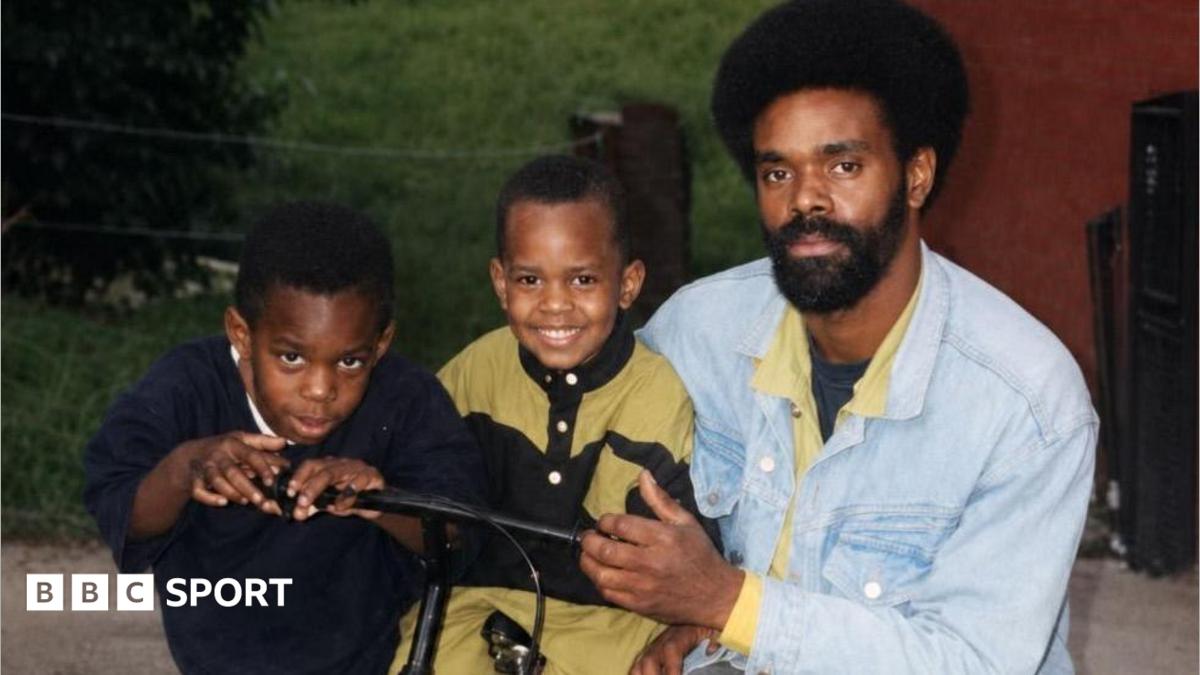
The semi-final clash in Georgia was played under a heavy cloud of personal tragedy for the broadcasting team. BBC pundit Micah Richards learned of the unexpected death of his father, Lincoln Richards, just moments before going live on air. Lincoln was a proud old-school Yorkshireman who had been Micah's greatest fan, taking him to games throughout his childhood.
Despite the devastating news, Richards chose to proceed with the broadcast. He worked through the emotional shift alongside colleagues Wayne Rooney and Joe Hart in Atlanta. Richards felt his father would have wanted the show to go on, and so it did.
His professionalism earned widespread respect across the footballing community. Former Manchester City teammate Joe Hart and CBS Sports colleague Jamie Carragher were among those to send their condolences. The news emerged publicly shortly after the show went off the air, adding a somber note to England's World Cup exit.
Lincoln Richards barely missed a game during Micah's professional career, acting as his constant source of inspiration. Micah shared that his father was the proudest parent possible, always supporting him from the sidelines. The pundit's dedication during such a difficult moment showed the deep personal sacrifices behind the tournament coverage.
Scaloni's emotional engine against Spain's structural press
Argentina's tournament has been a series of dramatic escapes rather than tactical control. Scaloni's men needed extra time to beat Cape Verde and a ten-man Switzerland side earlier in the knockout stages. They also had to score three late goals to squeeze past Egypt 3-2 in the round of 16.
This chaotic route has relied on emotional recovery rather than structural dominance. As Sky Sports reported, Scaloni rejected claims of arrogance, pointing to his team's heart as their defining quality. Yet Spain will represent a far more disciplined challenge than any opponent Argentina have faced so far.
Spain's tactical system is built around high-intensity pressing and quick vertical progression. They will target Argentina's midfield pivot, trying to isolate Enzo Fernandez before he can feed the forward line. If Spain can bypass the initial press, they will find space behind Argentina's aging full-backs.
The central battle will pivot on how Spain handles Messi's spatial economy. Messi continues to walk through matches, averaging just over four kilometers of movement per game to preserve his energy. Yet, his final-third passing accuracy remains elite, hovering around eighty-eight percent throughout the tournament.
Spain must designate a defensive midfielder to shadow Messi, preventing him from picking up the ball in the half-spaces. If Messi is allowed time to turn, his vertical distribution will unlock Spain's defensive line. The Spanish backline will need to stay compact to deny him these passing lanes.
To carry Messi's lack of defensive work, Scaloni relies on Rodrigo De Paul. De Paul acts as Messi's tactical bodyguard, running twelve point four kilometers against Switzerland to cover the vacated space. If Spain can isolate De Paul on the counter, they can break this defensive rotation.
The bench factor and the physical toll of New Jersey
Physical recovery will play a major role in Sunday's outcome in New Jersey. Argentina have logged heavy minutes in consecutive matches, while Spain's possession-based style has allowed them to conserve energy. The humid air at the MetLife Stadium will test the endurance of both midfields.
Scaloni possesses a major weapon off the bench in Lautaro Martinez. Martinez, who escaped a FIFA suspension after a controversial celebration in the Swiss match as Metro reported, remains the ultimate second-half threat. His direct running will test tired Spanish center-backs in the final half-hour.
Spain's defense has shown vulnerabilities when forced to defend deep crosses. Argentina will look to exploit this by overloading the wide areas and crossing to the back post. Scaloni will need his wingers to track back and support the full-backs to prevent Spain from dominating the flanks.
If the match becomes a war of attrition, Argentina's emotional resilience could give them the edge. They have shown an ability to win ugly, grinding out results when they are second-best on the pitch. Spain must remain tactically disciplined to avoid falling into Argentina's emotional traps.
The tactical verdict and prediction
We predict a 2-1 victory for Spain in extra time. Spain's superior physical conditioning will wear down Argentina's midfield in the final stages. Messi will create the opener with a trademark vertical pass, but Spain's relentless pressure will eventually tell.
A late equalizer from Spain will force the match into extra time. In the additional period, Spain's fresh bench options will exploit the space vacated by Argentina's exhausted players. Scaloni's luck will finally run out against the tournament's most complete side.
Read Next
- England vs Argentina: The tactical reality of stopping Lionel Messi
- England vs Argentina is the World Cup semi-final we feared
- Thomas Tuchel's England selection dilemma: The tactical gamble ahead of Argentina
- England faces the ghost of 1998 in a grudge match that stays personal
- 🏆 World Cup 2026 — Full Coverage Hub
- 🇦🇷 Argentina World Cup 2026 — Defending Champions Hub
- 🇪🇸 Spain World Cup 2026 — La Roja Hub
- 🏆 World Cup 2026 Final — MetLife Stadium Hub





