
The Atlanta crossroads for Tuchel
England arrives in Atlanta for Wednesday’s semi-final with a squad built for mechanical efficiency. Thomas Tuchel has moved away from the experimental phases of earlier rounds, settling into a rigid 4-2-3-1 that shifts into a 3-2-4-1 during build-up. The inclusion of John Stones as a progressive passer who vacates the backline to assist Declan Rice confirms the intent: command central territory and minimize turn-overs in the defensive third.
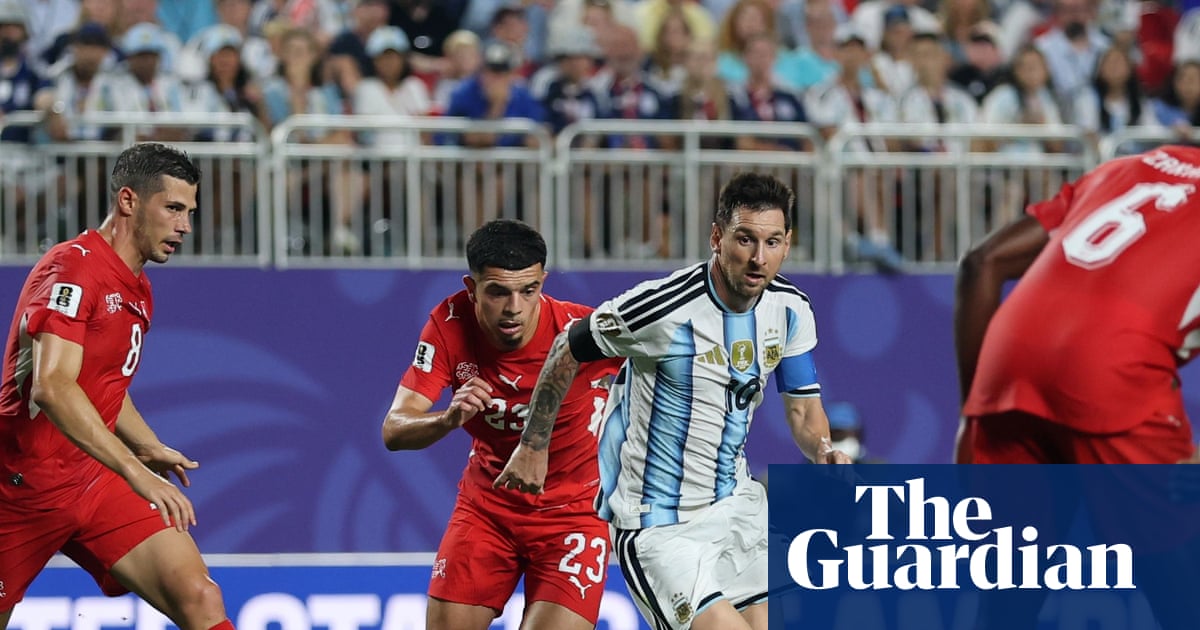
Yet, this deliberate structure meets an opposing force that defies standard statistical analysis. Lionel Messi, at 39, remains a ghost in the machine. As recent data from The Guardian highlights, Messi’s tendency to operate as a walking presence for long stretches is a deliberate energy-preservation tactic. He conserves resources specifically for bursts that expose teams holding a high, aggressive rest-defense line.
The danger of the walking ghost
The most common error scouts note is dismissing Messi’s inactivity as a decline. Data suggests otherwise. Against high-caliber opposition, his efficiency levels spike. He isn't just a passer; he is a threat who dictates the tempo of the opponent by simply existing in the space between the midfield pivot and the center-backs. If Stones or Marc Guéhi lose their defensive spacing, Messi strikes.
Egypt provided the blueprint for 79 minutes earlier this tournament by prioritizing a compact block that refused to be pulled out of shape. They essentially forced Argentina to go through wide channels, where England’s fullbacks technically hold an advantage in speed. However, holding that discipline requires an extreme psychological toll. As Oliver Holt notes, playing Argentina is as much about surviving the nation's battered psyche as it is about tracking runs.
Tactical vulnerabilities and the Messi factor
Tuchel’s system relies on the double pivot to guard against the counter, but it remains susceptible to the diagonal ball played into the right half-space. Messi excels here, effectively turning the game into a chaotic scramble by drawing markers out of position before releasing the ball into the vacated zone. England’s reliance on Declan Rice to cover lateral space is a liability if Argentina’s midfield drags him toward the touchline.
Critics point to the lack of clinical output against mid-tier teams as a major flaw in England's current iteration. They struggle to break down low blocks, and against a team as cynical and organized as Argentina, a single defensive lapse in the 75th minute could prove fatal. The squad’s reputation for coming up short in high-pressure tournaments looms, and these players are now tasked with exorcising those ghosts.
The decisive margin
Messi has scored 8 goals in this tournament, none coming from aerobic exhaustion. He waits for the structural failure of his opponent, then exploits the micro-second of hesitation. Unless Tuchel instructs at least one of his holding midfielders to man-mark the Argentine captain during defensive transitions, England will likely find themselves over-extended.
This is a tactical game of chicken. If England plays too conservatively, they hand the momentum to Argentina; if they push too hard, they leave the keys to the kingdom open for Messi to stroll through. I expect England to dominate the possession metric, but Argentina to secure the final, finding the net in the 82nd minute via a classic counter-attack as England commits too many bodies forward.
Read Next
- Thomas Tuchel is two games away from a geopolitical nightmare
- Why England's semifinal with Argentina is a tactical trap
- Top 10: Defining Moments of the 2026 World Cup
- England versus Argentina: The weight of ghosts in Atlanta
- 🏆 World Cup 2026 — Full Coverage Hub
- 🇦🇷 Argentina World Cup 2026 — Defending Champions Hub
- 🏴 England World Cup 2026 — Three Lions Hub






