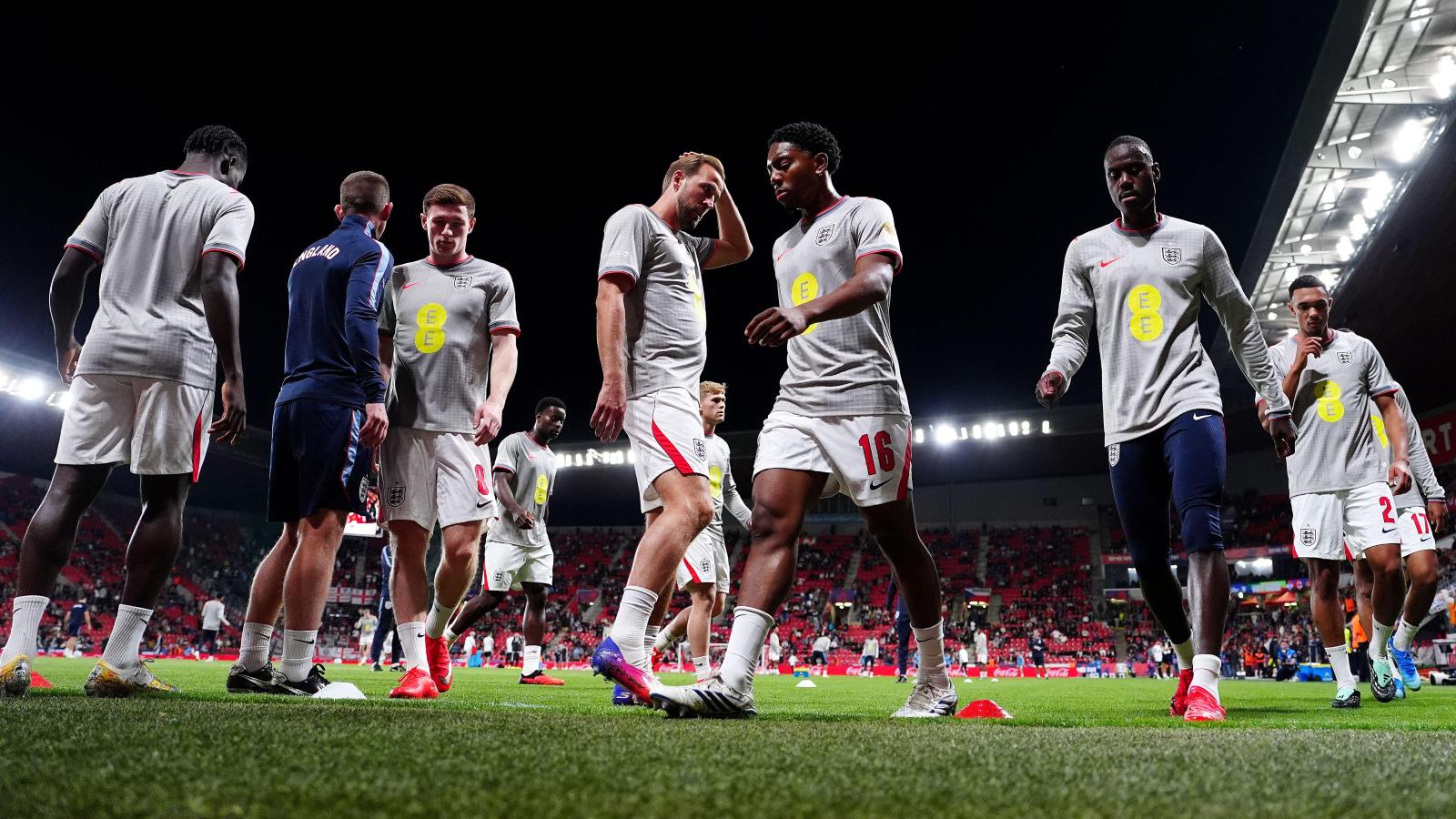
Tactical friction in the semi-final
The path to the final became significantly more treacherous on Wednesday evening. Julian Alvarez delivered a moment of pure individual brilliance in the 112th minute, effectively ending Swiss resistance and cementing Argentina's place in the final four. This wasn't a masterclass in controlled dominance, though. It was a grind.
Lionel Scaloni’s side survived large chunks of sustained pressure throughout the match, particularly after the Swiss shifted to a high-press mid-block in the second half. Argentina’s defensive line looked vulnerable during the transition phases, with the midfield pivot often caught too far upfield. They relied heavily on individual duels to prevent clear-cut scoring opportunities. Against England, who thrive on verticality, that structural gap is a death sentence.
The Thomas Tuchel effect
England arrives at this junction carrying the weight of a team undergoing a major identity shift. Under Thomas Tuchel, the side has moved away from the aimless possession cycles that plagued the Gareth Southgate years. We saw this refinement clearly against Norway, where the team operated in a rigid, low-block defensive shell that favored structure over expansive play.
It is not a system designed for aesthetics, but it is one designed for tournament survival. England’s ability to concede little while relying on set-piece danger zones has been their hallmark. The concern remains Jordan Pickford. His distribution remains a point of contention for analysts watching the build-up play, as he frequently bypasses the midfield to launch long-balls that result in a sub-50% completion rate under pressure.
The clash of styles
When these two sides meet, the game will be won in the space between the midfield and the defensive line. Argentina likes to overload the half-spaces through the middle, creating triangles that force markers out of position. If England maintains their tight, low-block discipline, they will force Argentina to play wide, where they lose their primary creative engine.
However, Argentina’s transition speed is elite. If an English player loses the ball in the final third, the recovery pace of Argentina’s back four will be tested immediately. There is a glaring lack of depth in the Argentine defensive pivot rotation, which could be exploited by a late-match tactical substitution from Tuchel. The manager has proven he isn't afraid to shift formations mid-game to disrupt the opponent's rhythm, a trait that recent reports suggest made the difference in the quarter-final.
The verdict
Do not expect a goal-fest. This is a game of marginal gains and psychological warfare. England's discipline will hold for long stretches, and they will likely stifle Argentina’s creative rhythm in the opening hour. But the quality in the Argentine attack is simply too sharp to remain contained for 90 minutes.
I expect England to blink first. Argentina will shade this 1-0 in regulation, largely because they have players who can manufacture a goal out of essentially nothing, even when their tactical structure is failing. It’s not the most graceful way to reach a final, but at this stage of the competition, efficiency beats style every single time.
Read Next
- The World Cup 2026 is hurtling toward a chaotic conclusion
- Top 10: Defining Football Moments of the 2026 Cycle
- Argentina survive Switzerland scare to reach World Cup semi-finals
- Argentina's scrape past Switzerland was an absolute circus
- 🇦🇷 Argentina World Cup 2026 — Defending Champions Hub
- 🏴 England World Cup 2026 — Three Lions Hub