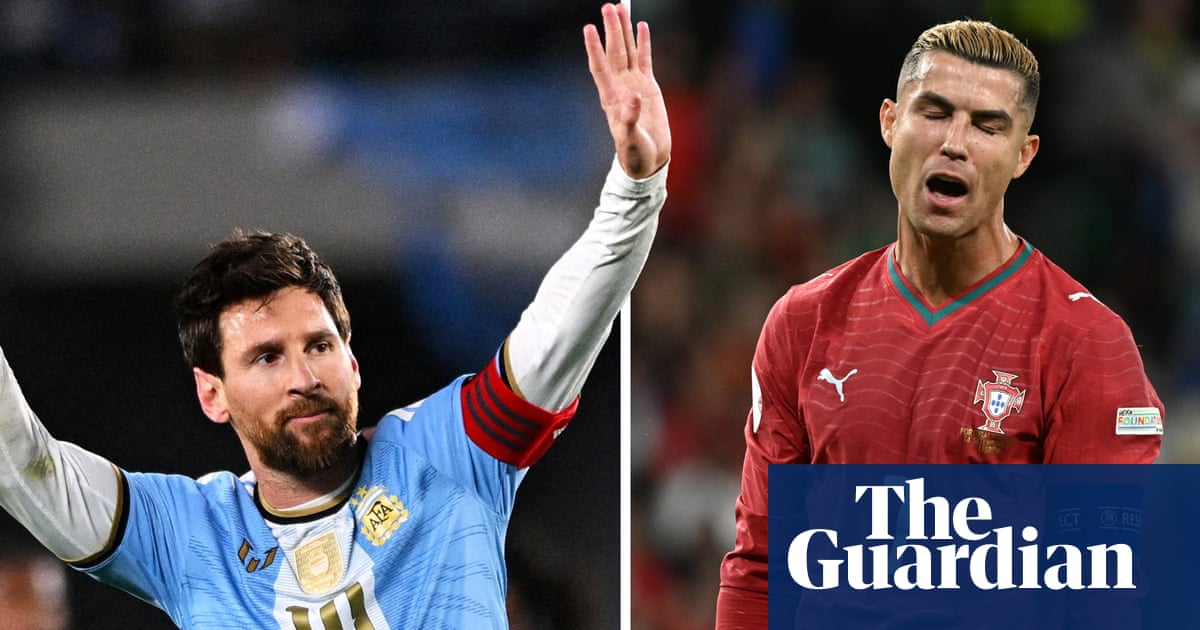
The transition of power in international football
Lamine Yamal just completed football at 19 years old. The image of a tearful Lionel Messi watching the final whistle in the 2026 World Cup final serves as an aesthetic bookend for a sport that spent two decades revolving around his orbit.
While the press focuses on the romance of a changing guard, the actual 90 minutes of the final told a different story. Spain did not win because of sentiment; they won because their mid-block rigidity suffocated Argentina’s transition play, reducing Messi to a peripheral figure by the 72nd minute.
Tactical rigidity against legendary improvisation
Spain dominated the midfield by utilizing Marc Cucurella as an inverted pivot. This pushed Rodrigo De Paul deep, forcing him to track runners rather than dictate tempo from the center circle.
As the BBC reported, the outcome feels like a final betrayal of the momentum Argentina built throughout the knockout stages. Their defensive shape broke down when Enzo Fernandez lost his marker during a set-piece sequence that defined the match.
The criticism remains valid though. Spain’s insistence on short build-ups, even when facing a high press from Julian Alvarez, looked reckless at times. They surrendered four clear-cut opportunities in the first half because their centre-backs were caught standing too high when the press was bypassed.
The math behind the trophy
Statistically, this final was a masterclass in controlled chaos. Spain maintained a 68% pass completion rate in the final third, a figure that is almost impossible to sustain against a low block like the one Argentina employed after the hour mark.
Lamine Yamal’s movement pulled the Argentina defensive line out of shape, creating the half-spaces that eventually led to the winning goal. It was not a fluke move. It was the result of a deliberate pattern that saw Yamal drift right to isolate the full-back, creating a v8 isolation situation that forced a defensive rotation errors.
Looking past the trophy presentation
History will remember the celebratory photographs, but the tactical reality is that international football is veering toward extreme specialization. Coaches are no longer looking for balanced squads; they are hunting for specific profiles to break down compressed blocks.
Spain succeeded where others stumbled because they accepted the risk of vulnerability. They conceded, they panicked, but they refused to abandon the high line. It was a strategy that required nerves of steel and some luck with the refereeing decisions that frustrated the Argentine bench.
A final note on legacy
Messi’s final major tournament ended not with a bang, but with an tactical checkmate. He stood in the center circle as the Spanish bench emptied, looking exhausted rather than defeated.
He played 90 minutes and touched the ball only 42 times, the lowest volume of his tournament. The data points toward a clear conclusion: Argentina lacked the tactical flexibility to pivot when their primary route to goal was effectively closed.
Going forward, the global game faces a void. If the 2026 final proves anything, it is that individual brilliance is increasingly subservient to these complex patterns of press-baiting and high-line management. Spain played the game better, but they played a colder, more surgical version of it.
Read Next
- The tactical vacuum behind the 2026 World Cup final
- The 2026 World Cup final is a $20 million heist disguised as a football match
- Spain vs Argentina: The tactical battle that will decide the World Cup
- Spain just killed the superteam era and the internet needs to cope
- 🏆 World Cup 2026 — Full Coverage Hub
- 🇦🇷 Argentina World Cup 2026 — Defending Champions Hub
- 🇪🇸 Spain World Cup 2026 — La Roja Hub