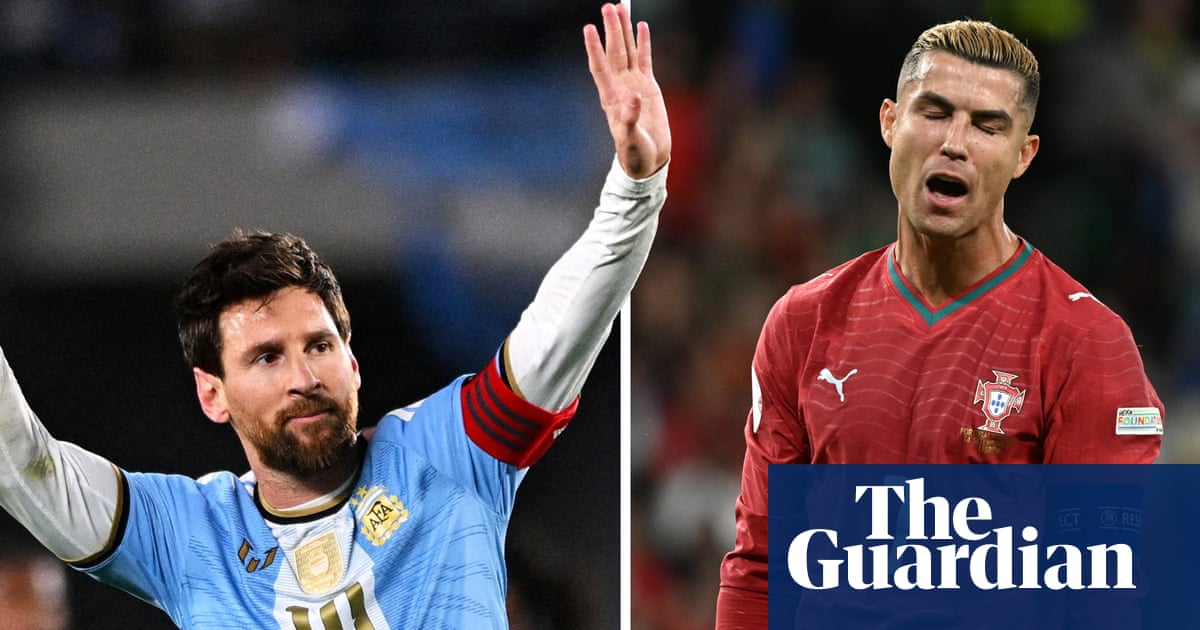
The MetLife Stadium in New Jersey hosts a final that feels like a collision of two distinct styles. Spain arrives with a suffocating counter-press and relentless territorial dominance. Argentina counters with vertical transitions designed to exploit the briefest moments of defensive disorganization.
This is the ultimate test of structural discipline against individual roaming gravity. For the winner, the physical prize is a solid gold trophy valued at over $20 million, as fans track the build-up on the Mirror's valuation report. Yet the tactical legacy of this 2026 tournament will be decided by who controls the tempo in the central third.
Luis de la Fuente has built a Spain team that does not merely keep the ball for the sake of it. They squeeze opponents. Their tournament-leading PPDA of 8.2 shows how quickly they restrict space when possession is lost.
Under Lionel Scaloni, Argentina has evolved into a chameleon. They do not mind defending in a mid-block for long periods. They wait for the precise trigger to strike, relying on their midfield triangle to play through pressure.
The Battle for the Half-Spaces
Spain's offensive system relies on creating numerical superiority on the flanks before attacking the box. Nico Williams and Lamine Yamal stay glued to the touchlines, stretching the opponent's back four. This spacing opens up vital channels for Dani Olmo to exploit.
When the ball moves wide, Spain's interior midfielders make diagonal runs into the penalty area. Argentina must counter this by dropping Rodrigo De Paul into the defensive line to form a temporary back five. If De Paul fails to track these runs, Spain will overload the back post.
Rodri remains the undisputed heartbeat of Spain's build-up play. He is currently averaging 85 passes per match with an accuracy rate of 92.4%. Slicing through his zone is the primary challenge for Argentina's pressing structure.
Argentina will likely deploy a compact 4-4-2 out of possession. Alexis Mac Allister and Enzo Fernández will sit deep, clogging the passing lanes into Olmo. They must remain disciplined, refusing to be lured out by Rodri's lateral circulation.
If Argentina's double pivot steps too high, Spain's wingers will immediately tuck inside. This movement creates a box midfield that Spain uses to isolate opposition center-backs. It is a slow, agonizing suffocation that wears down opponents over ninety minutes.
Spain's Overload-to-Isolate Mechanics
Look at Spain's opening goal in their 2-1 semifinal victory over France. Yamal received the ball wide, drew three defenders, and then slipped a reverse pass to the overlapping fullback. This pattern is not accidental; it is a designed mechanism to isolate the far-side winger.
Nico Williams thrives in these isolated situations. When Spain switches play rapidly, Williams is left one-on-one against a retreating defender. If Nahuel Molina does not get constant cover from De Paul, Williams will dominate the left flank.
Argentina must prevent these rapid switches of play. This requires Enzo Fernández to shadow Rodri closely, blocking his ability to spray diagonal balls. If Rodri is given time to look up, Spain will dictate the terms of the match.
Argentina's Central Blockade
To stop Spain's central progression, Argentina relies on a narrow defensive shape. Their wingers tuck inside, forcing Spain to play around the block rather than through it. This tactic invites cross after cross, which Cristian Romero and Lisandro Martínez are happy to defend.
Romero has been immense in the air this tournament, winning 72% of his aerial duels. Spain does not possess a traditional target man up front, with Alvaro Morata acting more as a pressing forward. This gives Argentina's center-backs a distinct physical advantage in the box.
However, this narrow shape leaves Argentina vulnerable to cutbacks. Spain excels at low, driven crosses toward the penalty spot. If Argentina's midfielders fail to track back, they will leave a massive pocket of space for oncoming runners.
The Messi Paradox and Transition Triggers
The tactical puzzle of Lionel Messi remains unsolved. At 39, he no longer contributes to Argentina's defensive press. He wanders, waiting for his team to regain possession before exploiting the spaces left by Spain's advancing fullbacks.
This defensive passengerhood forces De Paul to run double shifts. De Paul must cover the right half-space while also pressing Spain's left-back. It is a demanding role that often leaves him exhausted by the seventy-minute mark.
When Argentina wins the ball, the transition is immediate. Messi is the primary target, dropping deep to receive the first pass. He averages 0.42 expected assists per 90, showing he is still deadly when given space.
Rest Defense vs. Roaming Threat
Spain's rest defense will determine whether they can contain this threat. Aymeric Laporte and Robin Le Normand must step up aggressively to intercept passes before they reach Messi. If they drop off, they give Messi the time to turn and slide passes in behind.
Julian Alvarez will play a critical role here. His diagonal runs behind Spain's center-backs are designed to drag them away from Messi. This movement creates a massive gap in the central corridor for Messi to exploit.
Spain must avoid committing too many players forward. If both fullbacks push high simultaneously, Argentina's counter-attack will slice through them. A balanced rest defense is the only way to neutralize Argentina's transition threat.
Weak Links and Structural Exploits
No team is flawless, and both finalists have clear vulnerabilities. Spain's high defensive line is a constant gamble. Against swift counter-attacking sides, they have looked exposed when their initial press is bypassed.
We saw this in the group stage when Italy repeatedly found joy with direct balls over the top. Le Normand lacks the recovery speed to chase down elite forwards in open space. If Argentina can bypass Rodri, their direct attackers will have a clear run at goal.
On the other side, Argentina's left flank remains a concern. Nicolas Tagliafico has struggled against quick, tricky wingers. Lamine Yamal will look to exploit this matchup from the opening whistle.
If Yamal can consistently beat Tagliafico, Argentina will be forced to slide a center-back over to help. This shift will disrupt their central defensive compactness. Spain will then look to exploit the space left in the middle of the box.
De Paul's Double-Edged Sword
Rodrigo De Paul is Argentina's engine, but his aggressiveness can be a liability. He often lunges into tackles, leaving his zone completely vacant. A disciplined midfield opponent can exploit this by passing directly into the space he vacates.
Dani Olmo will be watching De Paul's movements closely. If De Paul gets dragged out of position, Olmo will occupy the space behind him. From there, Olmo can combine with Morata or take direct shots on goal.
Argentina's coaching staff must instruct De Paul to play with more restraint. He cannot afford to chase lost causes against a team that circulates the ball as quickly as Spain. A single missed tackle could open the floodgates.
Prediction: How the Final is Won
This match will be decided by who controls the transition phases. Spain wants to keep the game slow and controlled, while Argentina thrives in chaos. The team that successfully imposes its preferred tempo will lift the trophy.
Spain's superior structural cohesion should give them the edge. They have shown a collective understanding that is difficult to break down. Even if Messi produces a moment of magic, Spain's overall control will likely wear Argentina out.
Expect a tight, tactical chess match that opens up late in the second half. Spain will find the breakthrough via a cutback from the right wing, converted by Olmo. Spain wins 1-0, cementing their place as the dominant team of the decade, with fans checking the live updates on the Sky Sports live coverage.
Read Next
- The 2026 World Cup final is a $20 million heist disguised as a football match
- Spain versus Argentina: Tactical breakdown of the World Cup final
- Argentina versus Spain is a tactical masterclass in a bloated format
- Spain and Argentina meet in a final defined by two different philosophies
- 🏆 World Cup 2026 — Full Coverage Hub
- 🇦🇷 Argentina World Cup 2026 — Defending Champions Hub
- 🇪🇸 Spain World Cup 2026 — La Roja Hub