The Clock is Ticking in Fort Lauderdale
It is March 30, 2026. The humidity is already starting to cling to the training pitches in South Florida. The FIFA World Cup kicks off in exactly 73 days across North America. The stadiums are ready. The marketing campaigns are locked in. The entire soccer universe is holding its breath, waiting for a single man to make up his mind.
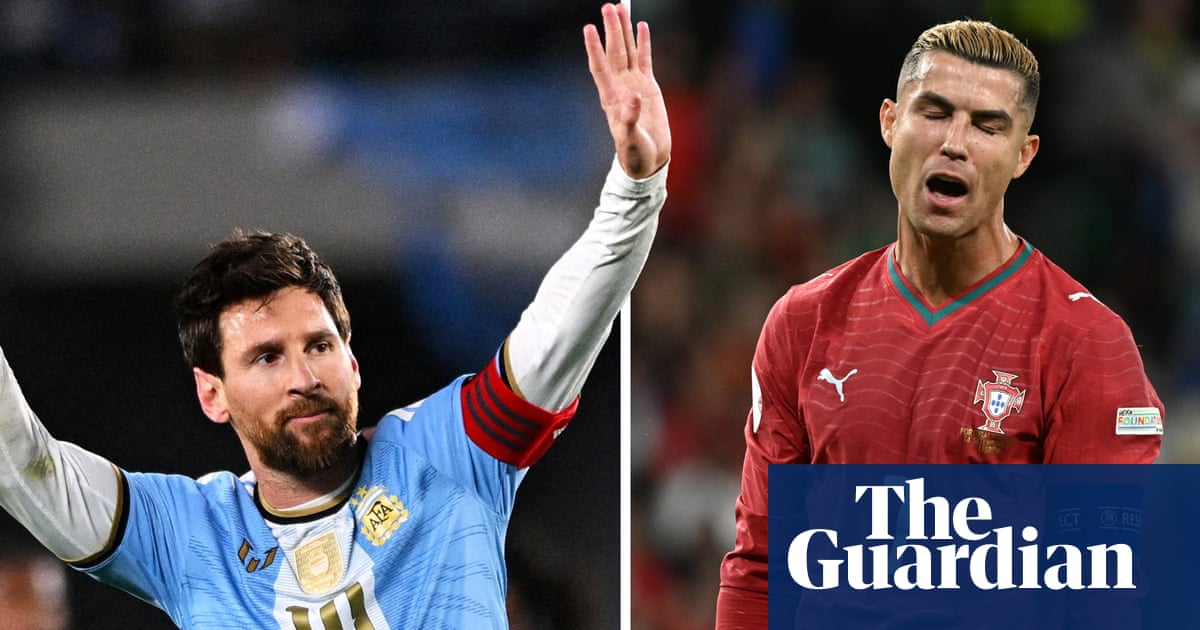
Lionel Scaloni, the architect of Argentina's triumphant 2022 campaign in Qatar, recently stood before the press and admitted what nobody in Buenos Aires wanted to hear. The national team is waiting on a decision from their talisman. There is genuine doubt about whether Lionel Messi will play in the 2026 World Cup.
This hesitation feels profoundly different from the past. It is not the emotional, reactionary retirement he announced after missing a penalty in the Copa America Centenario final in 2016. That was the response of a broken heart. This is the calculated, quiet reflection of a man who understands the unforgiving nature of time and the physical demands of tournament football.
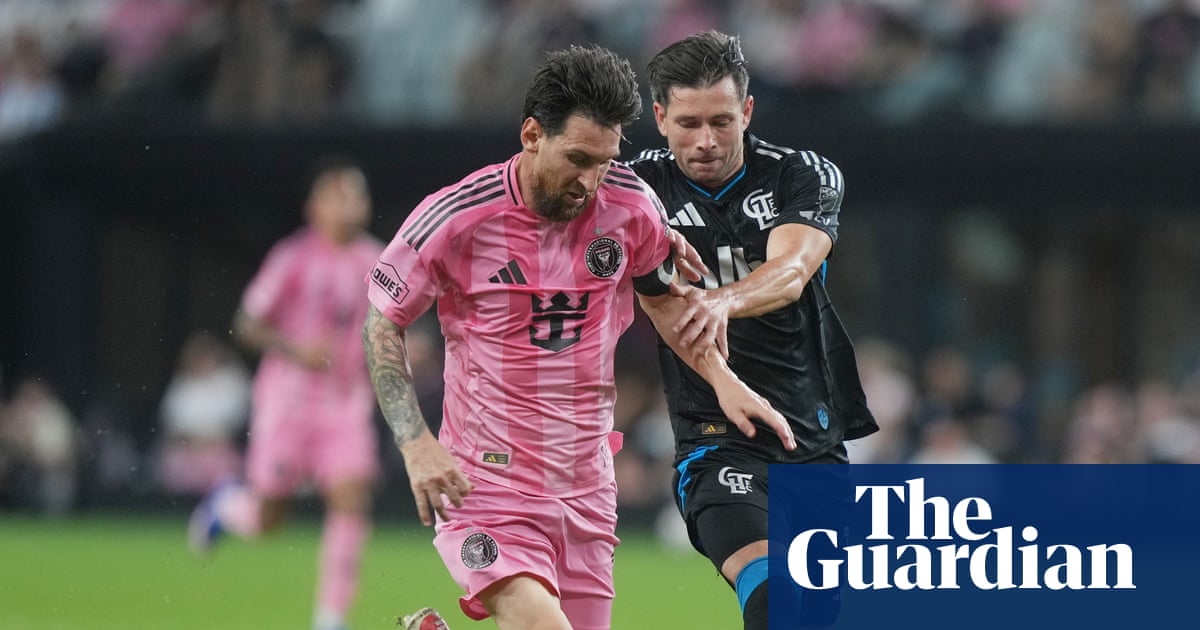
He is currently playing out his golden years in Major League Soccer. Inter Miami recently took the extraordinary step of naming a stadium stand after him. He is the sun around which the entire league orbits. Yet, the competitive gravity in the United States is shifting. Antoine Griezmann just signed a massive deal with Orlando City, injecting a dose of World Cup-winning pedigree directly into Miami's fiercest rivalry. The league is getting harder, not easier, for an aging genius who is increasingly managing his minutes.
The Ghosts of Paris and the Tactical Burden
To understand the hesitation surrounding the summer of 2026, you have to look backward. The narrative of Messi’s late career is often painted as an uninterrupted victory lap following his departure from Barcelona. The reality is far more complicated, and occasionally, quite ugly.
Just this week, Mauricio Pochettino angrily reignited a feud with Thierry Henry on live television. Pochettino accused Henry of spreading lies about his management of Messi at Paris Saint-Germain, claiming he was made a scapegoat for the team's Champions League failures. But the truth of that PSG era remains an uncomfortable stain on Messi's resume.
In Paris, Messi was a luxury the team could rarely afford against elite European competition. He conserved his energy to an extreme degree. He walked. He drifted near the touchline. When the ball was turned over, he simply stopped running. This forced the rest of the team, particularly midfielders like Marco Verratti, to run themselves into the ground to cover his defensive absence. It was a structural nightmare against high-pressing teams like Bayern Munich, who routinely bypassed the Parisian midfield.
That tactical reality has not vanished simply because he moved to Florida. If he plays for Argentina in the upcoming World Cup, Scaloni will have to build a midfield engine capable of doing the running of three men. Enzo Fernandez, Rodrigo De Paul, and Alexis Mac Allister will have to carry an immense physical load to allow Messi to operate purely as an offensive specter. It worked in Qatar. Will it work four years later?
The Spectacular Geometry of his Game
Even with his diminished physical output, the mechanics of his game remain miraculous. When you watch Messi live, the first thing you notice is the strange silence of his movements. He does not clatter into challenges. He glides over the grass, taking dozens of tiny, rapid touches that make the ball look like it is tethered to his left boot by a short string.
His passing radar operates on a different frequency than anyone else on the pitch. He sees angles that do not exist until he creates them. A sudden drop of the shoulder, a subtle shift of his weight, and suddenly a defensive block fractures. He slips passes through gaps barely wider than the ball itself. His signature move—drifting in from the right wing, cutting onto his left foot, and curling a shot into the far corner—remains unplayable even though defenders have known it is coming for nearly two decades.
Pundits still struggle to contextualize his historical dominance. When Mohamed Salah recently announced his departure from Liverpool, veteran writers like Oliver Holt immediately had to frame the Egyptian's legacy by comparing him to the heights reached by Messi and Cristiano Ronaldo. Holt captured the sheer shock of losing a generational talent, writing:
"Where were you when you heard Bill Shankly was quitting? They still ask old-timers that question sometimes on Merseyside."
They are the twin suns of the modern era. Salah's bamboozling of Manchester City defenders is fondly remembered precisely because it looked so vividly "Messi-esque."
The Rumor Mill Never Stops Turning
The aura surrounding him generates a perpetual motion machine of transfer rumors. Agents and executives constantly try to attach their names to his orbit, hoping to catch a fraction of the spotlight. Recently, the internet exploded with claims that Salah was heading to Florida to form a veteran super-team with the Argentine.
The noise reached such a fever pitch that Fabrizio Romano had to publicly intervene. He categorically stated that Salah has "no agreement with anyone" regarding an Inter Miami link-up. The sheer desperation of fans to see the world's best players gather in Fort Lauderdale speaks to the cultural power Messi wields.
He turned a struggling MLS franchise into a global phenomenon overnight. Pink jerseys flood the streets of Tokyo, London, and Buenos Aires. He elevated the entire financial floor of the league, securing massive television deals and corporate sponsorships. But at what cost to his own physical reserves?
The Weight of 2026 and Chasing History
The 2026 World Cup represents a massive, sprawling physical challenge. With 48 teams competing across three massive countries, the travel demands alone will be grueling. The tournament will ask players to fly from the staggering altitude of Mexico City to the oppressive humidity of Houston, then up to the thin air of Seattle. It is an endurance test disguised as a football tournament.
There are immense records waiting to be broken. The media is already salivating over the possibility of Messi, Kylian Mbappe, and Ronaldo chasing down more history in North America. Messi could become the all-time leading appearance maker in World Cup history, pushing his numbers to a place that might never be touched.
But Messi knows exactly what it takes to climb that mountain. He dragged his body and his country to the summit in Lusail Stadium in December 2022. He exorcised the ghosts of the Maracana in 2014. He fulfilled the crushing prophecy placed upon him since he was a teenager tearing up youth tournaments in Rosario.
Does he really want to risk ending his international career limping off a pitch in Kansas City or Foxborough? Does he want to face a younger, hungrier European side—perhaps a French team out for revenge—that might brutally expose his lack of pressing in the knockout rounds?
The Final Act of a Genius
Scaloni understands this delicate psychological balance perfectly. He is leaving the door wide open. Argentina will save a seat on the plane for him until the absolute last possible second. The nation feels a profound, almost religious debt to him. If he wants to go, he goes. No questions asked.
The decision will likely come down to how his body responds over the next few weeks. Can his hamstrings survive another grueling month of high-intensity tournament football? Can he recover fast enough between games? At his age, the recovery process takes days, not hours. The ice baths get colder. The physiotherapy sessions get longer. Every minor knock feels like a major warning sign.
We are witnessing the slow, agonizing sunset of the greatest career in the history of the sport. Every match feels like a stolen artifact. The explosive acceleration that defined his Barcelona prime—the sheer terror he instilled in defenders when he picked up the ball near the halfway line—is gone. What remains is pure intellect and flawless technique.
He still calculates the geometry of the pitch better than anyone alive. He still freezes goalkeepers with that signature dropped shoulder. He still whips free kicks over defensive walls with a casual, almost arrogant flick of his ankle. His mind operates miles ahead of the defenders trying to kick him.
If the World Cup kicks off on June 11 without him, the tournament will feel noticeably hollow. A piece of the spectacle will be missing. But if he does step onto the pitch wearing the famous blue and white stripes, the world will stop to watch. It might be a flawed, slower version of the man we used to know. It might force his teammates to sprint until their lungs burn to cover his tracks defensively.
But it will still be Messi. And for Argentina, that has always been enough. The clock is ticking down to June. The stadiums are waiting. The silence before his final decision is the loudest noise in world football.
Read Next
- Kit clashes and indoor hydration breaks mark a messy USMNT loss to Belgium
- USMNT defensive disasterclass against Belgium is a massive wake-up call
- Time is finally catching up to Cristiano Ronaldo
- Trent Alexander-Arnold is the genius England still refuse to understand
- 🏆 World Cup 2026 — Full Coverage Hub
- 🇦🇷 Argentina World Cup 2026 — Defending Champions Hub