The Architect in the Spanish Sun
The morning sun in Madrid hits differently than the grey drizzle of West Derby. For Trent Alexander-Arnold, the transition to the Bernabéu was supposed to be the final ascension of a local lad who outgrew his own city. He followed the path of David Beckham and Steve McManaman, seeking a stage large enough to hold his ambition. Yet, as the calendar turns to March 30, 2026, he finds himself in a strange, gilded limbo.
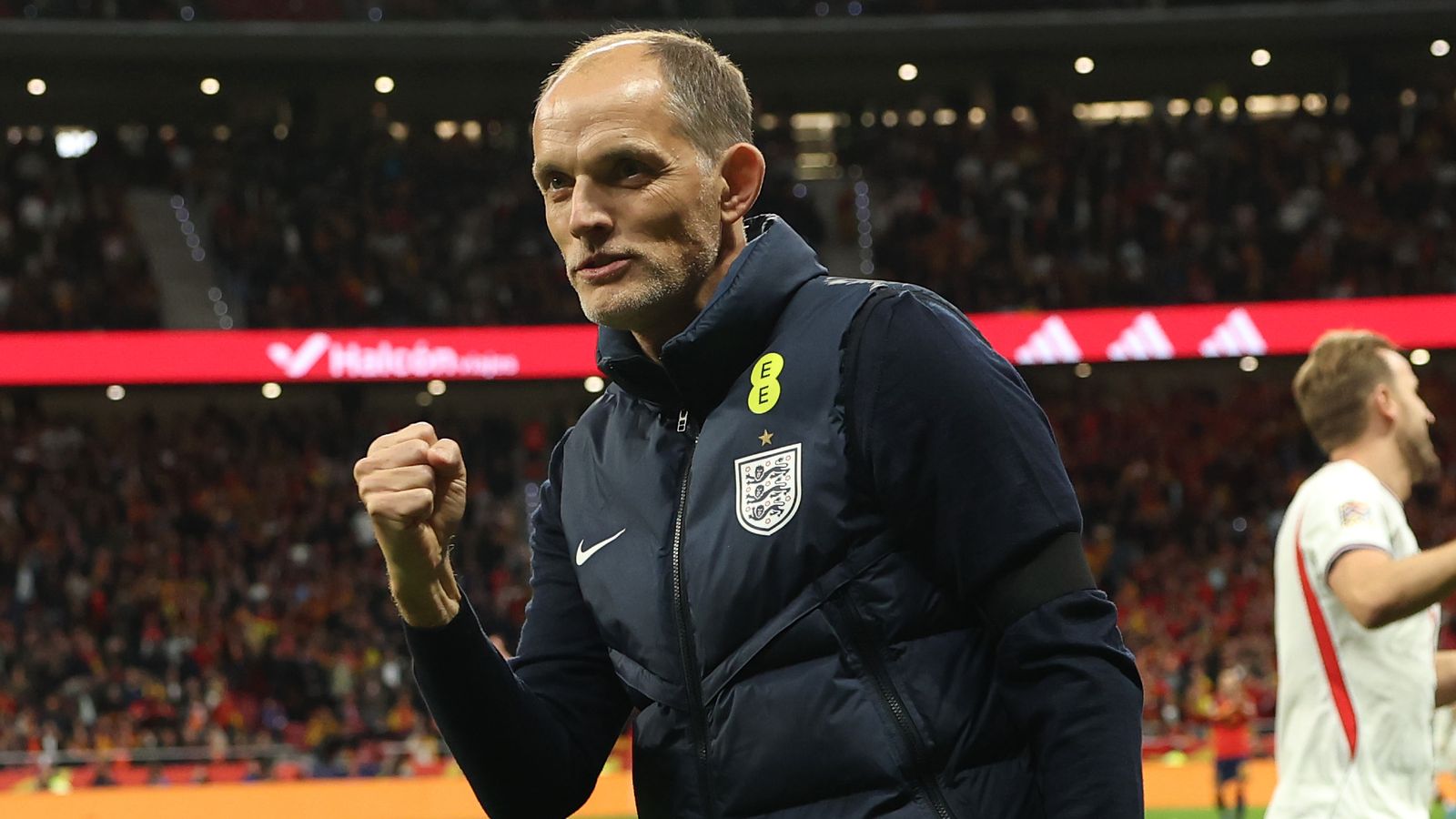
He is a European champion several times over. He is the most creative right-back the English game has ever produced. But as Thomas Tuchel gathers the England squad for friendlies against Uruguay and Japan, the man who wears the famous white of Real Madrid is nowhere to be found. He is home, watching from the sidelines while Tino Livramento and Djed Spence prepare to take his place.
There is a peculiar cruelty in being too good for a system that values safety over inspiration. It is a recurring theme in English football, a ghost that haunts the history of the national team. We have seen this play before, and the ending usually involves a generational talent sitting on a bench while a functional substitute does the bare minimum. It is the story of a player who sees the pitch in four dimensions being asked to play in two.
The Ghost of Paul Scholes
Critics have begun to draw the obvious, painful parallels. As recent analysis has suggested, Alexander-Arnold is becoming this generation’s Paul Scholes. He is a player possessed of a passing range that borders on the supernatural, yet he is treated as a tactical problem to be solved rather than a solution to be embraced. Scholes was shoved onto the left wing to accommodate lesser midfielders; Trent is simply discarded to accommodate faster runners.
Tuchel’s omission of the Madrid star has sent ripples through the sport. The German manager has built a reputation on structural integrity and high-pressing discipline. In that rigid framework, a right-back who wanders into the center-circle to spray 60-yard cross-field balls is seen as a luxury the Three Lions cannot afford. It is a cynical view of the game, one that prioritizes the prevention of mistakes over the creation of moments. It ignores the fact that Trent doesn't just pass the ball; he changes the gravity of the match.
The snub feels personal, or at least ideological. Roy Keane has even hinted at an off-pitch dispute between the player and the manager. Whether it is a clash of personalities or a fundamental disagreement on the role of a defender, the result is the same. England is heading toward a World Cup summer without its most potent creative weapon. It is a decision that feels like a self-imposed handicap, a refusal to use the sharpest tool in the shed because the handle feels unfamiliar.
The Defensive Paradox
The argument against him has always been his defending. It is the low-hanging fruit of football punditry. Keane famously questioned why a player who 'isn't a good defender' was being discussed for a starting role in a team that needs to be hard to beat. It is a tired narrative. It ignores that Trent's defensive value comes through possession—the opponent cannot score when they are chasing his shadows.
"Thomas Tuchel doesn't fancy Trent Alexander-Arnold and that's disappointing because England could use his passing and free-kicks."
The reality is that Trent has struggled at times in Spain. The adjustment to La Liga has not been without its bumps. There have been reports of him breaking club rules regarding his 130,000 pound car and struggling with the intense scrutiny of the Madrid press. His form has fluctuated, and the looming threat of Achraf Hakimi wanting to return to the Bernabéu has added a layer of pressure he never felt at Anfield. But a dip in form for Trent is still a level of output most full-backs could only dream of achieving.
At Liverpool, he was protected by a system designed to mask his flaws and amplify his strengths. In Madrid, and certainly under Tuchel, he is exposed. He is asked to be a traditional defender first and a playmaker second. It is like asking a concert pianist to spend half his time moving the piano instead of playing it. Eventually, the fingers lose their touch, and the music starts to fade.
The Acrimonious Exit
There is still a lingering bitterness surrounding his departure from Merseyside. He was the crown jewel of the Klopp era, the Scouser in the team who was supposed to captain the club for a decade. Instead, he left for a fee of €70m in what many have called an acrimonious sale. It was a move that signaled the end of an era, and the wounds have not fully healed. With Mohamed Salah now following him out of the door, the circus at Anfield is reaching a fever pitch.
As Metro UK reported, something has fundamentally shifted in his relationship with the English setup. He no longer carries the air of the untouchable prodigy. He is now a veteran of the game, a 27-year-old who has won everything but still feels like he is on trial every time he puts on a training bib. The defiant three-word messages on social media—'See you soon'—suggest a player who hasn't given up, but the bridge to Tuchel looks increasingly rickety.
Even David Beckham, a man who knows a thing or two about being the scapegoat and the savior, has voiced his support. Beckham has publicly stated he would take the Real Madrid man to the World Cup without a second thought. He recognizes the value of a player who can decide a game with a single dead-ball delivery. Beckham knows that in the knockout stages of a major tournament, you don't win by being safe. You win by being special.
A Career at the Crossroads
We are witnessing a defining moment in Alexander-Arnold's career. He spent eight years sharing a dressing room with Mo Salah, becoming part of the most feared attacking trident in the world. Now, he is an island. He is the Englishman in Madrid, the genius in the international wilderness. His exclusion from the current camp is a gamble by Tuchel that could define his tenure. If England's right-backs struggle against the pace of Japan or the guile of Uruguay, the clamor for Trent will become deafening.
The tragedy of his current situation is that it was entirely predictable. England has never known what to do with its artists. We prefer the grinders, the players who 'put a shift in' and 'know their jobs.' We distrust the players who make the game look easy, who take risks that seem unnecessary until they come off. Trent Alexander-Arnold is the ultimate risk-taker. He is a player who believes that the shortest distance between two points is a curved line that only he can see.
If this is indeed the end of his England journey under the current regime, it will be a stain on this era of the national team. To have a player of his caliber at his physical peak and choose to leave him at home is a form of tactical cowardice. It is a refusal to imagine what is possible in favor of what is comfortable. As the Daily Mail noted, the decision to bring back Ben White while ignoring Trent feels like a sideshow we could do without.
For now, Trent will return to Spain. He will train under the watchful eye of Carlo Ancelotti, a man who understands that champions need room to breathe. He will wait for his moment, knowing that history usually looks kindly on the creators and forgets the gatekeepers. But as the World Cup looms just months away, the clock is ticking. A talent this bright shouldn't be kept in the dark for this long.
Read Next
- Why everyone is furious about Tuchel's vanishing England squad
- Top 10: Moments Shaping the 2026 World Cup Cycle
- Arsenal are cruising to the title while Spurs are staring at the Championship
- Belgium just humiliated the USMNT and Tuchel is finally dropping Maguire
- 🏆 World Cup 2026 — Full Coverage Hub
- 🏴 England World Cup 2026 — Three Lions Hub
- ⚽ La Liga 2025-26 — Title Race Hub