Why the world's most populous countries keep missing the World Cup
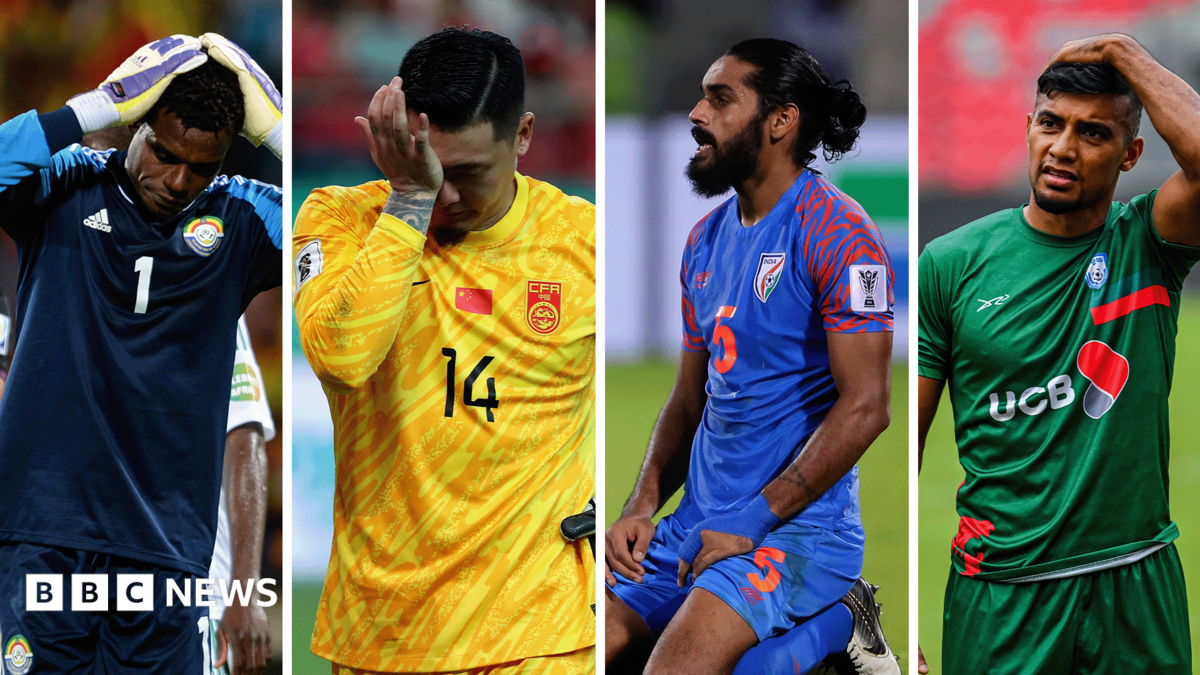
The 2026 World Cup was supposed to be the tournament of expansion. Gianni Infantino got his 48-team tournament, designed to bring in the lucrative markets of Asia and Africa. Yet, as the tournament plays out, the global demographic giants are watching from home.
The statistics are damning: eight of the ten most populous countries in the world failed to qualify. This paradox, recently highlighted in a report by the BBC, shows that throwing more seats at the table does not help if you do not know how to sit at it.
The United States, Brazil, and Mexico are here. India, China, Indonesia, Pakistan, Nigeria, Bangladesh, Russia, and Ethiopia are not.
Population size does not generate goals. Development systems, tactical identity, and coaching stability do.
Without these, a massive population is just a number on a census form. It does not translate to international success.
This failure is not accidental. It is the logical result of systemic coaching failures and obsolete tactical setups.
When we analyze the qualifiers, the same patterns repeat across different continents. These are not unlucky campaigns; they are structural dead ends.
We see teams unable to build from the back. We see midfields bypassed with single passes. We see forwards completely isolated, starved of service for ninety minutes.
To understand why these giants missed out, we must look at the pitch. The numbers tell a story of tactical stagnation. Let's look at the details.
The Asian Giants' Stagnation
India's Attacking Desert and the Post-Chhetri Void
India's qualification campaign ended in familiar, frustrating fashion. A controversial 2-1 defeat to Qatar in June 2024 sealed their fate, but the writing had been on the wall for months. Under Igor Stimac, India's attacking play was mathematically stagnant.
In six matches in the second round of AFC qualifying, the Blue Tigers managed a paltry three goals. Tactically, Stimac alternated between a rigid 4-2-3-1 and a defensive 4-1-4-1.
The midfield lacked a progressive passer who could break lines. India completed only 62% of their passes in the opposition half during their matches against Kuwait and Afghanistan.
When Sunil Chhetri retired from international duty, the tactical plan collapsed entirely. Without Chhetri's clever dummy runs and spatial awareness, India resorted to aimless long balls from center-back Sandesh Jhingan.
The wingers, Lallianzuala Chhangte and Liston Colaco, were left to chase hopeless balls. India finished the qualifying campaign with an average xG of 0.65 per match.
You cannot win international matches when your primary attacking transition is a 40-yard prayer. Stimac's side lacked the technical capability to sustain possession under the slightest pressure.
Against Afghanistan in Guwahati, India had 59% possession but created zero big chances. The ball circulated slowly between the two center-backs, never penetrating the opponent's mid-block.
The domestic league structure does not prepare players for the intensity of international football. The Indian Super League is played at a slower tempo, allowing technical deficiencies to go unpunished.
On the international stage, those extra seconds on the ball disappear. The result is panicked clearances and immediate loss of possession.
India's players often look tactically lost when their initial plan fails. They lack the positional flexibility to adapt during a match.
When Qatar adjusted their press in the second half of their June encounter, India had no response. They simply dropped deeper, inviting the pressure that eventually broke them.
This is the reality of Indian football. A massive country with zero progressive structure. Until the domestic game improves its technical speed, the national team will remain irrelevant.
China's Midfield Diamond of Doom
China's failure to qualify is even more expensive. The country spent billions on youth development and foreign imports, yet they registered only a single point from their final three games in the second round.
Under Branko Ivanković, China attempted to play a narrow 4-4-2 diamond. This system requires incredible tactical discipline and athletic full-backs.
In theory, a diamond controls the center of the pitch. In practice, China's diamond left their full-backs isolated and exposed.
During their critical match against South Korea, China held only 38% of the ball. South Korea's wingers, Son Heung-min and Lee Kang-in, repeatedly created 2v1 situations against China's full-backs.
China's midfield shuttle players, Gao Tianyi and Xie Pengfei, failed to slide across quickly enough to cover the wide spaces. This left the defensive line constantly shifting and pulling out of shape.
Offensively, the diamond isolated Wu Lei up front. Without any natural width, China's attacking transitions were slow and predictable.
They averaged 6.4 passes before losing possession. This slow build-up allowed opponents to set their defensive block.
China finished the round having registered just 12 shots on target across six matches. That is two shots on target per game, a statistic that explains their absence far better than any population chart.
Ivanković's tactical stubbornness was painful to watch. Even when South Korea dominated the flanks, China refused to change formation.
The midfield diamond became a defensive prison. Players were running out of steam by the 60th minute, unable to cover the massive lateral distances required.
The lack of technical players in the Chinese Super League is glaring. For years, clubs relied on expensive foreign attackers to do all the creative work.
Local players were relegated to defensive duties or simple supporting roles. Now, when asked to lead the national team's attack, they lack the confidence and skill to do so.
China's footballing project has collapsed under the weight of its own bad planning. Money did not buy a tactical identity. Without that identity, they are just another massive country watching the World Cup on television.
The Bypassed Midfields of Africa and Southeast Asia
Nigeria's Tactical Dissolution and Midfield Black Hole
Nigeria is the most baffling absence. The Super Eagles possess some of the most lethal attacking talent in Europe, including Ademola Lookman and Victor Osimhen.
Yet they finished second in CAF Group C with 17 points, failing to qualify directly. The fatal blow was a 2-1 defeat to Benin in Abidjan.
Tactically, coach Finidi George deployed a disjointed 4-3-3. The distance between Nigeria's defensive line and their front three was frequently over 45 yards.
Wilfred Ndidi and Alex Iwobi were left to cover a vast midfield expanse alone. Benin's compact mid-block easily intercepted Nigeria's predictable vertical passes.
Benin then exploited the space behind Nigeria's high full-backs. Nigeria dominated possession but had no structure to counter-press.
When they lost the ball, they were instantly vulnerable. The lack of a cohesive defensive transition plan cost them the World Cup.
Individual brilliance cannot overcome structural negligence at this level. The Super Eagles played like a group of individuals who met in the hotel lobby before the match.
There was no coordination in their pressing. When Osimhen pressed the center-backs, the midfield did not step up to lock the passing lanes.
This left Benin with easy exit routes. Nigeria's defensive line was terrified of the space behind them, so they dropped deep.
This created the massive gap in the center of the pitch that Benin exploited. It was a tactical disaster class from the coaching staff.
Nigeria's football federation has also been a circus of instability. Finidi George's short tenure was marked by administrative chaos and public disputes with star players.
You cannot build a winning tactical system in such a toxic environment. The players look demotivated and confused on the pitch.
Nigeria should be a global force. Instead, they are a warning sign. Talent is useless if your tactical structure is non-existent.
Indonesia's Dutch Illusion
Indonesia generated massive excitement by reaching the third round of AFC qualifying under Shin Tae-yong. The team was boosted by a wave of naturalized players from the Dutch Eredivisie.
Yet their campaign ultimately showed the limits of quick-fix squads. Shin Tae-yong favored a modern 3-4-3 system.
In possession, midfielder Thom Haye was pivotal, dropping between the center-backs to build play. But against elite Asian opponents, Indonesia's defensive organization buckled.
In their 2-0 defeat to Iraq, Indonesia's backline was repeatedly exposed. Iraq used a high-pressing trigger, targeting Indonesia's center-backs when they tried to build short.
The red card to Jordi Amat in the 59th minute was a direct result of this pressure. Indonesia's wing-backs failed to drop back quickly enough, turning a back three into an exposed back two. Naturalizing players gives you individual quality, but it does not automatically give you tactical cohesion.
Under pressure, teams resort to muscle memory. If a backline has only played three matches together, that muscle memory does not exist.
The players do not know when to step up or when to drop off. They lack the non-verbal communication that defines elite defensive units.
Indonesia's domestic league is also far below the required standard. The local players in the squad struggle to match the physical and technical intensity of the naturalized players.
This creates a two-tier team, which opponents easily exploit. Iraq simply ignored the Dutch-born players and targeted the weaker local links.
Shin Tae-yong has done a respectable job with the resources available. But naturalization is a short-term band-aid, not a long-term solution. It hides the systemic failures of the domestic development system.
Until Indonesia can produce its own technical players, they will remain just short of the elite level. Reaching the third round is a step forward, but the gap remains wide.
The Low-Block Traps of Pakistan and Bangladesh
At the bottom of the population list are Pakistan and Bangladesh. Both nations exit qualifying early, trapped in a cycle of defensive survival.
Under Stephen Constantine, Pakistan played a low-block 5-4-1. Against Saudi Arabia, they recorded an xG of 0.04.
They completed only 112 passes in 90 minutes. Defending deep is a valid strategy, but it requires a counter-attacking trigger.
Pakistan had none. They won the ball back and immediately gave it away, inviting another wave of pressure.
Bangladesh suffered a similar fate in Group I. They played a rigid 4-4-2 low-block under Javier Cabrera.
In their 2-0 home defeat to Australia, they showed decent defensive discipline. But their pass completion rate under pressure was just 48%.
They could not retain the ball for more than three passes. This fatigue-inducing style inevitably leads to defensive errors.
In the 58th minute, a simple positional lapse allowed Ajdin Hrustic to score. Without technical ball retention, a low block is just a slow death.
The tactical setup of both teams is designed purely to avoid heavy defeats. There is no ambition to progress the ball or control matches.
This style of play stunts the development of young players. They spend their entire international careers running after the ball, never learning how to use it.
Both countries suffer from a complete lack of proper pitches and academy networks. Football is a secondary sport, starved of funding and attention. The national teams are afterthought projects, put together for qualifying matches and then forgotten.
You cannot build a competitive team on a diet of low-blocks and hope. The tactical gap between these nations and the rest of Asia is widening every year.
The Fallacy of Numbers
The expansion of the World Cup was built on commercial greed. FIFA wanted the massive markets of the East and the South.
But football is a meritocracy of systems, not census data. Iceland qualified for a World Cup with 330,000 people, while India cannot qualify with 1.4 billion.
The lesson of this qualification cycle is clear. If you do not invest in coaching development and tactical consistency, you will remain outside the party.
It does not matter how many millions are watching on television. The pitch does not care about population statistics.
The failure of these eight nations is a victory for football. It shows that the game cannot be bought or forced by sheer demographics.
It requires patience, structure, and tactical intelligence. Without those, you are just a spectator.
As the tournament reaches its climax, the lesson remains. The World Cup is for the prepared. The rest are just numbers on a page.
Read Next
Adidas FIFA World Cup 2026 Al Rihla League Training Soccer Ball
Kick it like a pro with the official design language of the upcoming 2026 World
Frequently Asked Questions
Why did India fail to qualify for the 2026 World Cup?
Which populous countries missed out on the 2026 World Cup?
How did Sunil Chhetri's retirement affect India's tactical play?
What tactical formations did Igor Stimac use for India?
Who was the coach of India during their 2026 World Cup qualifying run?
More Coverage

Jurgen Klopp called out AfD idiocy, but Germany's pitch problems are real
13 hours ago
Scotland's attacking promise died in the 11th minute against Switzerland
3 days, 1 hour ago
England win in Prague but Thomas Tuchel still has tactical puzzles to solve
3 days, 3 hours ago
Ashley Sanchez's 20-goal NWSL season creates a massive USWNT tactical puzzle
3 days, 10 hours ago
Ashley Sanchez is scoring at will, but where does she fit under Emma Hayes?
3 days, 10 hours ago
Brazil needed VAR and a touchline brawl to finally put away the Socceroos
3 days, 15 hours agoMore Analysis
Brazil needed VAR and a touchline brawl to finally put away the Socceroos
3 days, 15 hours agoSeptember 21 has a weird habit of breaking football's biggest empires
1 week, 5 days ago
FIFA's three-week September window is a tactical disaster waiting to happen
2 weeks, 1 day agoMessi's Argentina retirement hurts, but we got the fairytale ending in Qatar
1 month ago
Diego Forlan faces a brutal reality check in the Uruguay dugout
1 month, 3 weeks ago