The Breaking of a 96-Year-Old Record
Tunisia came to this tournament and immediately set about chasing their own tail. By falling behind after seven, four, and three minutes in their three group matches, the North Africans spent a total of 256 minutes chasing games. In doing so, they broke a 96-year-old World Cup record for the most time spent trailing in a single campaign, surpassing the 240-minute mark set by Mexico in 1930.
This stat is not just a quirk of scheduling or bad luck. It is indicative of a wider trend at this expanded tournament. While the expansion to 48 teams was widely predicted to dilute the tournament’s quality, the opening rounds have instead exposed the tactical complacency of established footballing superpowers.
The gap has not widened; the middle class has simply got smarter. We are seeing an analytical revolution on the pitch. The numbers show that defensive blocks have become more compact, pressing triggers are executed with greater precision, and transitional efficiency has neutralized raw individual talent.
The African Tactical Boom and the Elite Fallacy
The traditional giants are struggling to break down well-drilled mid-blocks, relying on individual moments rather than cohesive tactical plans. The expansion debate has been settled on the pitch. A total of nine African nations qualified for the last 32, a massive vindication for Caf's increased allocation.
The breakdown of the last-32 qualifiers shows a shifting balance of power:
- Uefa: 13 teams advanced to the last 32.
- Caf: 9 teams advanced to the last 32.
- Conmebol: 5 teams advanced to the last 32.
- Concacaf: 3 teams advanced to the last 32.
- AFC: 2 teams advanced to the last 32.
The Miami Scare and the Cape Verde Press
The standout performance of the round of 32 came in Miami, where Cape Verde pushed world champions Argentina to the absolute limit in a 3-2 thriller. Cape Verde coach Bubista set up a fearless, narrow mid-block that successfully choked Argentina’s central progression. They matched the world champions stride for stride, forcing Lionel Scaloni’s side into low-value crossing situations.
The statistics tell the story of Cape Verde's tactical discipline. They forced three corners in quick succession during extra time, culminating in Sydney Lopes Cabral’s stunning equalizer at 102 minutes to make it 2-2.
While Argentina eventually scraped a 3-2 victory in Lionel Scaloni's 100th game in charge, it was a structural warning sign for the favourites. Scaloni admitted as much after the match, noting the immense difficulty his side faced in possession.
"We suffered a very difficult game, we are still here but it won’t be easy, this is a very difficult World Cup."
As The Guardian live blog reported, Cape Verde's boldness was the talk of the tournament, showing that small nations no longer fear the traditional heavyweights. They do not park the bus; they compress the space between the lines and strike on the counter with structured vertical patterns.
Germany's Structural Collapse
The most high-profile casualty of this tactical shift was Germany. Julian Nagelsmann resigned on Friday, just four days after his team collapsed on penalties against Paraguay in the round of 32. It was the final act of a campaign that had been mediocre from the opening whistle.
Germany's metrics were damning. They were lucky to escape with a result against Cote d'Ivoire, before suffering successive defeats to Ecuador and Paraguay.
Nagelsmann’s side suffered from a complete lack of defensive balance, leaving huge vertical spaces between their double pivot and the backline. Paraguay exploited this gap repeatedly, exploiting transitions that the German defenders simply could not handle.
The Failure of Name-Brand Star Power
Germany were not alone in their structural failure. Several established teams suffered from similar tactical deficiencies that left them exposed against underdogs.
Ghana were eliminated by Colombia in Kansas, turning in performances that were almost unwatchable due to a complete lack of offensive cohesion. The Black Stars failed to register a single shot on target during the second half, highlighting their creative bankruptcy.
Meanwhile, Australia fell to Egypt on penalties in the last 32, a match defined by a disastrous decision to swap goalkeepers late on. Mat Ryan’s replacement failed to make a single save in the shootout, proving that ad-hoc tactical gambles rarely pay off under pressure.
The era of simply putting eleven elite players on the pitch and expecting them to win is dead. Structured teams with clear defensive schemes are neutralizing individual quality.
France’s 3-0 win over Sweden was one of the few exceptions, but even that required moments of brilliance like Michael Olise’s bicycle kick that struck the post before the floodgates opened. Didier Deschamps’ side had to rely on a late tactical shift to unlock a stubborn Swedish low-block that had held firm for the first 45 minutes.
Ancelotti's Pragmatism Rebuilds Brazil
No coach has understood this shift better than Carlo Ancelotti. The Italian manager has brought a cold, calculated pragmatism to Brazil that has surprised many traditionalists. The most stark representation of this is the marginalization of Neymar.
The 34-year-old superstar has played only 14 minutes at this tournament, coming on late against Scotland and remaining on the bench entirely against Japan. In previous years, a Brazilian manager would have felt compelled to start Neymar regardless of fitness or tactical fit.
Ancelotti has ignored the noise, building a system around the defensive work rate and vertical speed of Vinícius Júnior. The numbers back this up: Brazil are pressing less but recovering the ball closer to the opponent’s goal than in 2022.
This tactical discipline will be tested tomorrow when Brazil face Norway. The match will feature a direct battle between Gabriel Magalhaes and Erling Haaland.
Ancelotti's defensive structure, which relies on a compact low-block when out of possession, is specifically designed to stop physical strikers like Haaland from exploiting space behind the defense. Brazil's PPDA has dropped significantly under Ancelotti, prioritizing space denial over active high-pressing.
The Azteca Cauldron and Mexico's Defensive Wall
The upcoming round of 16 clash between England and Mexico in Mexico City offers another fascinating tactical study. The match will be played at the Estadio Azteca, situated at an altitude of 2,200 meters.
The physiological impact of this altitude cannot be overstated, particularly for an England side that has struggled with physical recovery late in games. England defender Marc Guehi has already labeled Mexico as favourites for the tie. This is not mind games; it is a realistic assessment of the data.
Mexico enter the clash with a perfect record and have conceded zero goals in the tournament so far, including their 2-0 victory over Ecuador on Wednesday night. They are defensively resolute, organized, and backed by a fanatical home crowd.
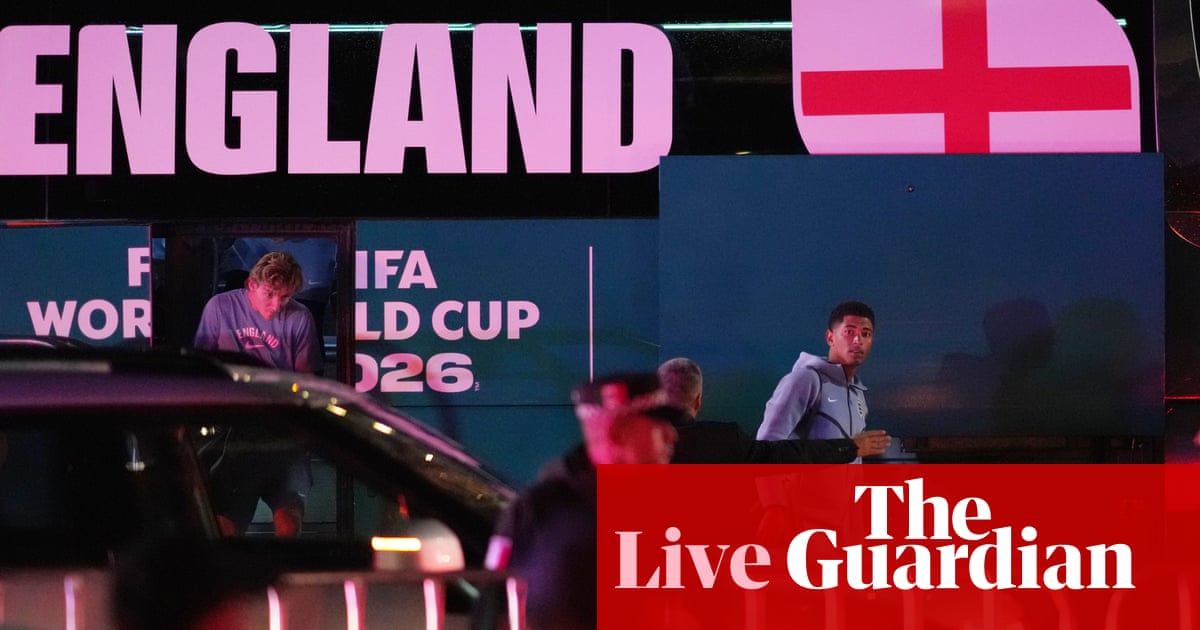
England’s path to the last 16 has been unconvincing. Their 2-1 comeback win against the Democratic Republic of Congo on Wednesday exposed familiar flaws. Under Thomas Tuchel, England have struggled to maintain control in the middle third, often looking disjointed when transitioning from defense to attack.
As Declan Rice noted, England will have to deal with a hostile away environment and a team that knows the high-altitude environment intimately. Tuchel's tactical gamble of leaving creative outlets at home has left England looking rigid. They will face a Mexican side that excels at recycling possession and utilizing wide overloads to tire out opponents.
In the thin air of Mexico City, England's lack of ball retention could prove fatal. If Tuchel cannot find a way to control the tempo of the game, England will be run ragged by a Mexican team that is statistically the most disciplined defensive unit in the tournament.