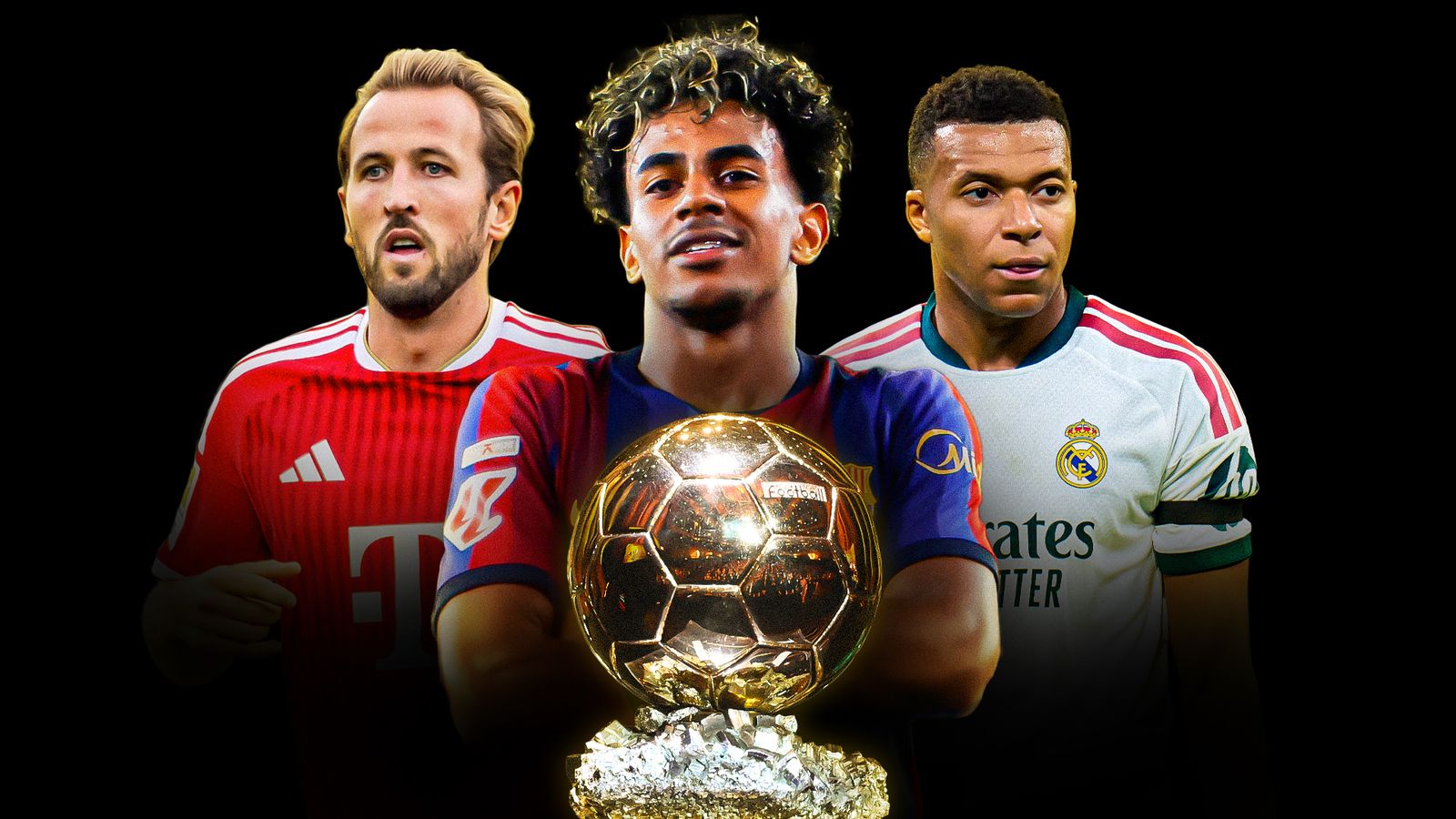
With twelve groups of four teams, the group stage was a massive buffet for elite forward lines. Playing against defensive units that looked like they met in the hotel lobby three days prior is a world-class striker’s dream. The path to the top scorer trophy no longer goes through cagey knockout rounds against tight low blocks.
Instead, the trophy will be decided by who can rack up the most goals against defensive lines that collapse at the first sign of a quick transition. We are seeing scorelines that look like a teenager playing FIFA on amateur difficulty. This is not a tournament of tactical chess; it is a gold rush for selfish number nines.
The Heavyweights and the Tactical Handbrakes
Kylian Mbappé and the French speed limit
Let’s start with the tournament favorite, Kylian Mbappé, whose summer move is valued at over $150 million, has been carrying France despite Didier Deschamps’ best efforts to bore us to death. Deschamps has the keys to a fleet of high-performance supercars yet insists on driving them through a school zone at fifteen miles per hour. Despite these tactical handbrakes, Mbappé is still finding space to destroy defenders on the counter-attack.
He does not need a cohesive team performance to make an opposition fullback look completely out of his depth. Give him one yard of space, a quick shoulder drop, and he will curl a trivela into the far corner before the keeper can set his feet. France’s opening match, a routine 3-0 victory, showed exactly how this plays out.
Even when the French midfield looks sluggish and disconnected, Mbappé's individual brilliance bails them out. Antoine Griezmann is still running himself into the ground to cover defensive gaps, which leaves the frontline isolated. If France get dragged into another low-scoring knockout slog, Mbappé might find himself starved of service. Still, betting against a man who scored a hat-trick in a World Cup final is a quick way to lose your shirt.
Harry Kane is still playing left-back for England
England's matches are always accompanied by a massive media circus, and Harry Kane remains the lightning rod for every tactical debate. The England captain is one of the most lethal finishers of his generation, capable of scoring with both feet from any angle. Yet, he still cannot resist the urge to drop forty yards deep into the center circle to play quarterback.
Every time Kane wanders away from the box, England's attacking threat completely evaporates. When you have Jude Bellingham and Phil Foden trying to make runs into the penalty area, they need a focal point to occupy the center-backs. Instead, they find a congested midfield because their starting striker wants to spray thirty-yard diagonal passes.
In England's recent match against Denmark, Kane spent more time shielding the ball in his own half than running off the last defender. If he stays in the penalty box, the goals will flow like cheap lager in Newcastle. But if he keeps trying to play like Andrea Pirlo, England will exit in the quarter-finals and the Golden Boot will go to a striker who actually plays striker.
The Chaos Merchants and Vanity Projects
The beautiful, terrifying chaos of Darwin Núñez
If you want tactical discipline and predictable patterns of play, look elsewhere. If you want pure, unadulterated entertainment that defies the laws of Newtonian physics, Darwin Núñez is your savior. Under Marcelo Bielsa, Uruguay are playing a brand of high-octane football that can only be described as absolute heavy metal chaos.
Núñez is the perfect poster boy for this tactical madness. In the span of a single half, he will miss an open net from two yards out, run through an advertising board, and then smash a twenty-five-yard volley into the top corner. There is simply no middle ground with him.
Bielsa’s intense pressing system ensures that Uruguay create a ridiculous volume of high-quality chances in every game. Núñez will get the opportunities, and in this expanded tournament, he could easily bag four goals in a single group stage match. He might not be the most clinical finisher, but he will certainly be the most entertaining player to watch.
Cristiano Ronaldo at forty-one is Portugal's vanity project
We need to address the massive elephant in the Iberian peninsula. Cristiano Ronaldo is forty-one years old, playing in his sixth World Cup, and still demanding to start every single match. The Portuguese squad is arguably the deepest in the tournament, stacked with young, creative talent who can press, rotate, and play at a tempo that would make opponents dizzy.
Instead, the team is forced to play in a system that is entirely geared toward feeding a legend who can no longer run. The movement up front is static, the pressing is non-existent, and every single attack is forced to end with a cross to the back post. It is a tactical straightjacket designed to preserve a single player's ego.
Ronaldo will inevitably score a couple of penalties, perhaps converting a soft foul in the 82nd minute against a tired team in the group stage. But when Portugal face a serious team like Germany or Argentina in the knockout rounds, this vanity project will get completely exposed. The manager’s refusal to make the tough decision is a bottleneck that will cost Portugal a real shot at winning the trophy.
Dark Horses and the Diluted Boot
The dark horses and tactical workarounds
Beyond the star names, there are several players who could quietly steal the Golden Boot if their teams make a deep run. Lautaro Martínez is coming off a massive season in Italy and finally looks like he has shaken off his previous tournament jitters. For Argentina, Lionel Messi is now operating primarily as a creator, which is fantastic news for Lautaro.
With Messi feeding him line-breaking passes, Lautaro just needs to keep his composure in the box. Then there is Benjamin Šeško, the Slovenian giant who has the physical presence of a young Zlatan Ibrahimović and the speed to match. Slovenia might not be tournament favorites, but in this format, a single big game against a weak opponent can put a striker halfway to the trophy.
Let’s also keep an eye on Germany’s fluid frontline, where Kai Havertz is leading the line as a false nine. Without a traditional target man, Germany's attack is incredibly unpredictable and difficult to scout. It might not lead to a Golden Boot for Havertz himself, but it makes Germany one of the most dangerous teams in the tournament.
Why the Golden Boot has lost its magic
When Oleg Salenko won the Golden Boot in 1994, largely thanks to scoring five goals in a single game against Cameroon, we thought it was a bizarre anomaly. Now, that kind of lopsided stat-padding is going to be the standard. The expanded tournament has diluted the quality of the group stage to the point where the Golden Boot is no longer a true measure of elite performance.
We will likely see a winner who scored eighty percent of their goals in two games against teams that qualified through wildcard routes. It is a triumph of commercial expansion over sporting integrity. The goals will count the same on Wikipedia, but the prestige of the award is gone.
As the knockout rounds begin, the real pressure starts. The strikers who can score when the space shrinks and the tackles get heavier are the ones who deserve our attention. The rest are just beneficiaries of FIFA's relentless desire to monetize every corner of the globe.
Read Next
- Why Tuchel's brutal squad pruning is exactly what England needed
- FIFA's bloated 48-team World Cup was saved by its own players
- England face a defensive crisis as Jarell Quansah joins injury list
- Lionel Messi gets benched while Manchester United enters transfer panic mode
- 🏆 World Cup 2026 — Full Coverage Hub
- 🏴 England World Cup 2026 — Three Lions Hub
- 🥇 World Cup 2026 Golden Boot — Top Scorer Predictions
- 🏆 Premier League Golden Boot 2025-26 — Top Scorer Race Hub