Refactoring the Golden Generation
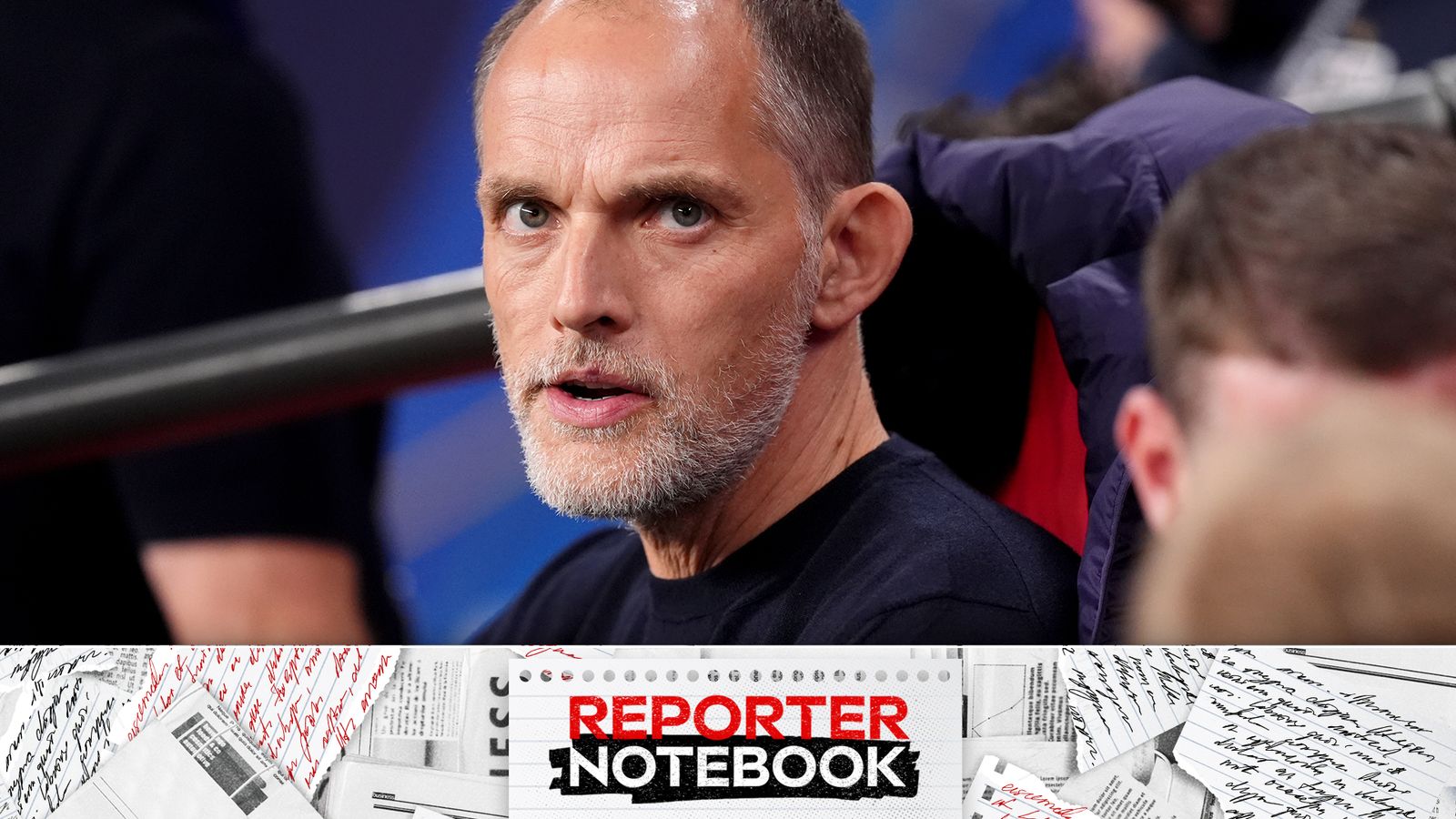
The English media spent the entire month of May having a collective, foaming-at-the-mouth meltdown because Thomas Tuchel looked at his squad list and chose absolute violence. They expected the usual corporate-approved circus of shoehorning every billboard superstar into a bloated, overfitted formation. Instead, Tuchel acted like a senior software architect refactoring a legacy codebase, hitting delete on the most expensive features.
Leaving Cole Palmer, Phil Foden, and Trent Alexander-Arnold out of the 26-man squad for this tournament was a pure system-first move. The pundits screamed about talent, but they forgot that England has spent forty years choking on that exact word. Tuchel realized you cannot win a World Cup by running an unquantized lineup of star players who all want to occupy the same zones.
This is the smartest thing the English Football Association has done since they hired Alf Ramsey back in the sixties. By purging the vibes and individual brilliance tax, Tuchel has built a lean, mean, optimized machine. This is not the celebrity shoot of the Southgate era; this is a team that actually functions.
Under Gareth Southgate, England was like a bloated legacy codebase that kept adding more high-profile APIs without optimizing the core engine. It looked pretty on paper, but it ran at two frames per second and crashed whenever it faced a well-organized defense in a final. Tuchel looked at that legacy mess and decided to prune the parameters.
The Group Stage Data Dump
Look at the data from the group stage if you want to understand how this refactoring works in practice. In the opening game against Croatia, England walked away with a 4-2 victory in Dallas. It was a chaotic start, with Martin Baturina and Petar Musa exposing John Stones and Marc Guéhi in ways that made every England fan sweat.
But the offensive system worked because it had clear lanes instead of three different number tens stepping on each other's toes. Harry Kane grabbed two goals, Marc Guéhi kept the defensive shape, and Noni Madueke won the penalty that turned the tide.
By the time Jude Bellingham and Marcus Rashford added the second-half goals, the vision was clear. There was none of the hesitation that defined the final months of the previous manager's tenure. It was a clean compile with minimal runtime warnings.
Of course, the optimization process is never completely smooth, and the subsequent 0-0 draw against Ghana was an absolute horror show of low-power football. England managed zero shots on target in the first half and looked like a deprecated API running on a dial-up connection.
The fans in the stadium booed them off the pitch, and they deserved every single whistle. Tuchel's rigid tactical discipline looked less like a masterclass and more like a straightjacket. When Ghana clogged the passing lanes, England had no backup script.
Even in that dull stalemate, Tuchel refused to panic and throw on uncoordinated attackers just to appease the press. He knew that adding more random parameters would only increase latency without improving the accuracy of the model.
They bounced back in New Jersey, grinding down Panama for a comfortable 2-0 win to secure the top spot in Group L. Jude Bellingham opened the scoring in the 62nd minute with a superb volley from a corner kick. Five minutes later, Harry Kane sealed the victory with a header from a Rashford cross, taking his World Cup tally to 11 goals.
Passing Gary Lineker as England's top scorer in World Cups is a massive milestone for Kane, who has often been criticized for slowing down play. Yet, Kane's success in this tournament is direct proof that Tuchel's setup works. With Marcus Rashford and Anthony Gordon running the channels, Kane does not need to drop into midfield to play quarterback.
He can just be a striker and focus on finishing inside the box. That is the beauty of a dedicated microservice architecture. It does one thing, and it does it at scale.
Pruning the Bloated Codebase
This brings us to the core issue that has plagued England for decades: the obsession with names. Go back to Sven-Göran Eriksson's era, when England had Paul Scholes, Steven Gerrard, Frank Lampard, and David Beckham.
Sven tried to play them all together, shoving Scholes onto the left wing like a developer trying to fit a square peg in a round database slot. It was an expensive, overfitted mess that crashed in successive quarter-finals. The team was constantly out of memory.
Tuchel has refused to repeat that history. He has actively rejected the idea of collecting players like Pokemon cards. As FourFourTwo reported during the squad announcement, the German manager made it clear that he had no interest in accommodating players who did not fit his exact tactical blueprint.
Tuchel laid out his philosophy in no uncertain terms during his press conference:
"I think from day one we were very clear that we are trying to select and build the best possible team, which is not necessarily to select and collect the 26 most talented players. Teams win championships. It's as simple as that."
Compare this to Alf Ramsey leaving out Jimmy Greaves in 1966. Greaves was the most lethal striker in the country, but Ramsey stuck with Geoff Hurst because Hurst fit the defensive structure of his system. The rest is history, and Tuchel is channeling that exact same energy in 2026.
Let's look at the exclusions themselves. Phil Foden had an inconsistent season at club level, failing to adapt to Tuchel's strict positional requirements. Cole Palmer had injury struggles and a record with the national team that was average at best.
Trent Alexander-Arnold spent the year struggling for consistent starts at Real Madrid, and his defensive positioning remains a liability that elite teams exploit. In any other era, an England manager would have brought them anyway, bowing to the pressure of the tabloids and social media.
They would have sat on the bench, creating a media circus with every camera shot of their disappointed faces. By leaving them in England, Tuchel eliminated the distraction before the plane even took off. The media team was forced to focus on the pitch.
Compile Errors and the Road to Glory
Instead, we get Morgan Rogers playing the number ten role with the work rate of a defensive midfielder. Rogers is not going to win a Ballon d'Or, but he is going to run twelve kilometers, track back, and create space for Bellingham.
According to reports on the official England Football site, Tuchel spent hours calling the excluded players to explain his reasoning. That shows a level of authority and clarity that Gareth Southgate simply never possessed. He didn't delegate his tough decisions.
The squad is filled with players who know their roles. Nico O'Reilly and Elliot Anderson are there to provide energy off the bench, not to demand starting spots. Dan Burn and Jarell Quansah are honest defenders who will clear their lines without trying to play like prime Franz Beckenbauer.
There are still major red flags that could derail this campaign. If John Stones gets injured, the central defense looks incredibly thin, with Ezri Konsa forced to carry a massive load. Against top-tier opponents like France or Brazil, these structural flaws will be tested to the limit.
In the lateral positions, the injury to Tino Livramento has left the team short of natural fullback depth. This forced Tuchel to call up Ivan Toney as a late replacement. It remains a concern that we are one hamstring pull away from playing a central defender at fullback.
But for now, the path is clear. England faces DR Congo in the Round of 32, a tie they should win comfortably if they maintain their defensive shape. Tuchel has already signed a contract extension through 2028, showing that the FA is fully committed to this systematic overhaul.
This is no longer a collection of famous individuals wearing the same shirt. It is a highly optimized, single-purpose application built to win tournament football. For the first time in sixty years, England has a manager who values the system more than the names on the back of the jerseys, and that is why they will finally bring it home.
Read Next
- England face a defensive crisis as Jarell Quansah joins injury list
- England's right-back emergency is Thomas Tuchel's comedy of errors
- Thomas Tuchel will bench Marcus Rashford again, and it's the right call
- Reece James is hurt again and England have a massive problem at right-back
- 🏆 World Cup 2026 — Full Coverage Hub
- 🏴 England World Cup 2026 — Three Lions Hub