FIFA wants you to believe the 2026 World Cup final at MetLife Stadium will be the greatest sporting event in human history. They want you to focus on the expanded bracket, the glitz of New York, and the global spectacle. But if you strip away the marketing, the reality is far more terrifying.
We are looking at a final that will likely be defined by exhausted legs, ruined pitches, and tactical chaos. The path to this final has been a logistical nightmare designed by suit-wearing executives who have never run a mile in their lives. Let's talk about the five biggest problems and storylines heading into this match.
The Pitch at MetLife is a Disaster Waiting to Happen
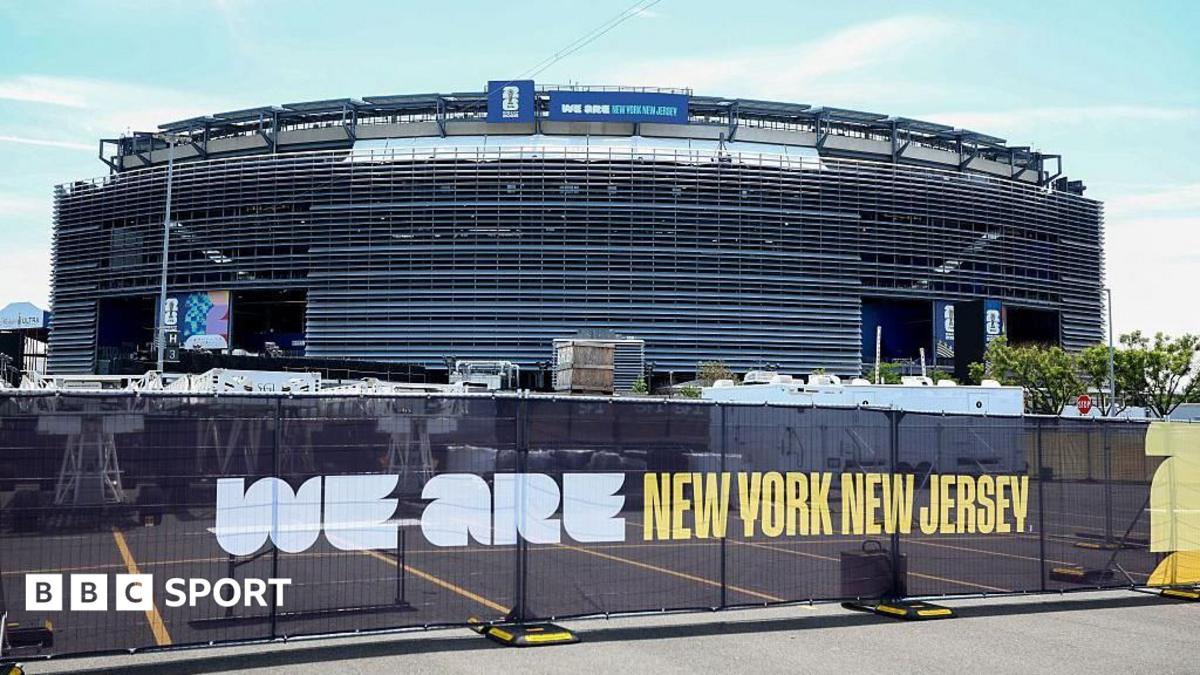
Let's start with the turf. MetLife Stadium was built for American football, meaning it features artificial turf laid over concrete. To host the final, FIFA mandated the installation of temporary natural grass.
We have seen this movie before, and it ends in torn ligaments. During the Copa America, players openly complained about temporary grass pitches laid over turf, which shifted underfoot and looked like a patchwork quilt. The ball bounced like a pinball, and players looked like they were running on ice.
MetLife's dimensions are also notoriously narrow for soccer. To fit a standard pitch, they had to remove corner seats, but it remains a tight squeeze that suffocates teams trying to play with width. Wingers like Vinicius Junior or Bukayo Saka will find themselves suffocated by touchlines and defensive blocks.
It is a farce that the biggest game on earth will be played on a compromised surface. In the 1994 final at the Rose Bowl, the grass was immaculate. In 2026, we will be lucky if a key player does not blow out their ACL before halftime.
The Eight-Game Marathon Will Kill the Quality
For the first time in history, the finalists must play eight games to lift the trophy. Adding a Round of 32 might make FIFA's finance department salivate, but it destroys the athletes. An extra knockout match means an extra 90 or 120 minutes of high-intensity running.
Most of these players played over sixty matches for their clubs this season. Jude Bellingham and Rodri arrived at this tournament running on fumes. Expecting them to press intensely in their eighth game of the summer is pure delusion.
The physical toll is crammed into 39 days of action. Compare this to 1970, where teams played six games in a relaxed schedule. The speed of modern football makes this expansion a recipe for muscle tears.
By the second half of the final, we will not be watching elite tactical execution. We will be watching twenty-two exhausted men dragging themselves across the field, praying for penalties. It is a terrible way to crown the champions of the world.
The Travel Logistical Nightmare Comes Home to Roost
Look at the geography. The hosting duties are split across three nations, creating chaotic travel schedules. A finalist could play their quarterfinal in Miami, their semifinal in Seattle, and then fly across the continent to New York.
Qatar was different. In 2022, teams stayed in one hotel and had zero travel fatigue. In 2026, the finalists will spend dozens of hours on planes, crossing multiple time zones.
Jet lag and altitude shifts destroy player recovery. Jumping from Mexico City to the humid East Coast is brutal. The winner of this final might simply be the team that spent the least time in transit.
This favors teams with deep benches rather than better starting lineups. We saw this at Euro 2020, where traveling teams were visibly slower. FIFA learned absolutely nothing.
Tactical Chaos and the New Superstar Pressure
The Death of the Midfield Maestro
Do not expect a final controlled by a modern-day Zinedine Zidane or Xavi Hernandez. The physical demands of the expanded tournament mean that tactical setups will favor defensive solidity and rapid transitions. Midfields will be bypassed entirely as coaches choose long balls and wing-play to avoid costly turnovers in the center.
This trend has been growing in club football, but the World Cup final will cement it. We are going to see midfields packed with destructive runners like Aurelien Tchouameni and Declan Rice rather than creative playmakers. The focus will be on winning second balls and launching counter-attacks before the opposition can set their defensive structure.
This style of play might produce high-scoring matches, but it lacks the artistic beauty of classic finals. The 2006 final featured the tactical chess match between Italy and France, where every pass felt deliberate and tense. In 2026, the final will look more like a chaotic Premier League game in mid-December.
Creative geniuses like Jamal Musiala or Florian Wirtz will likely be forced to play out wide or carry defensive duties that limit their creative spark. The modern manager is too terrified of transition goals to allow a traditional number ten to roam free. The result is a standardized, athletic, and ultimately boring tactical approach.
The Ballon d'Or Audition in New Jersey
The final at MetLife will not just decide the world champion; it will crown the next global superstar. With Lionel Messi and Cristiano Ronaldo finally out of the picture, the vacuum at the top of world football is immense. Kylian Mbappe and Vinicius Junior are the leading candidates to claim the throne, and this match will be their ultimate audition.
Mbappe already has a World Cup trophy and a hat-trick in a final, but leading France to another title in the United States would elevate him to legendary status. On the other side, Vinicius Junior carries the weight of a Brazilian nation that has not won the tournament in twenty-four years. The pressure on their shoulders will be immense, and their individual duels with opposing fullbacks will decide the match.
We have seen how this pressure can break even the greatest players. Ronaldo in 1998 suffered a convulsive fit before the final, and Lionel Messi struggled under the weight of expectation in 2014. The mental fortitude required to perform on this stage, after a grueling season, is something very few players possess.
If one of these stars fails to perform, the backlash will be merciless. Social media will tear them apart before they even leave the dressing room. The winner will be immortalized, while the loser will be labeled a big-game bottleneck for the rest of their career.
The Officiating Under the Microscope
Another major storyline is the officiating, which has been a constant source of controversy throughout this tournament. With the matches played across North America, many officials from the Concacaf region have been given high-profile assignments. The final will put one referee under a level of scrutiny that can destroy a career.
We all remember the refereeing disasters of the past, like Byron Moreno in 2002 or the controversial penalty in the 1990 final. In a high-stakes match played on a slippery pitch with exhausted players, a single bad call will dominate the headlines for years. The VAR officials will be under just as much pressure as the on-field referee, and any delay will ruin the flow of the game.
The physical nature of modern football makes refereeing almost impossible. With players diving to win penalties and defenders using dark arts to stop attackers, the final is guaranteed to have at least one major officiating controversy. If the referee loses control of the match early, it could easily turn into a chaotic brawl.
A Final Built for Television, Not for Football
When the kickoff whistle blows at MetLife Stadium, which seats 82,500 fans, FIFA executives will celebrate their record-breaking television ratings. They will talk about the success of their expanded tournament and the money they generated. But the fans who actually love the game will know the truth.
The 2026 World Cup final is the ultimate product of modern football's greed. It is a match played on a compromised pitch, by exhausted players who have traveled thousands of miles. We might get drama, and we will certainly get spectacles, but we will not get the beautiful game at its peak.
Ultimately, the final will be a survival of the fittest. The team that lifts the trophy will not necessarily be the most talented or the most tactically brilliant. They will simply be the team that managed to survive the logistics, the heat, and the schedule better than everyone else.
Read Next
- How Tuchel solves England's midfield trap while United chase James Garner
- Bosnia finally finding their feet on the world stage
- The World Cup knockout stage promises chaos
- Morocco need defensive grit after that defensive collapse against Haiti
- 🏆 World Cup 2026 — Full Coverage Hub
- 🏆 World Cup 2026 Final — MetLife Stadium Hub