
Norway and the name on Haaland's back just broke Brazil

Ancelotti's passive approach invites a historic disaster
The final whistle at the New York New Jersey Stadium on Sunday evening confirmed a shift in the modern football order. Brazil's campaign ended not with a bang of attacking brilliance, but with a whimper of tactical passivity under Carlo Ancelotti. The five-time champions were systematically picked apart by a disciplined, well-drilled Norway side that refused to blink under the New Jersey heat.
Ancelotti's defensive structure was passive from the opening kickoff. Brazil sat deep in a compact block, opting to soak up Norwegian possession and exploit turnovers on the counter-attack. This approach drew immediate whistles from the frustrated Brazilian contingent in the stands who expected a more proactive display of defensive intent.
Ancelotti's tactical setup has been dubbed by critics as a direct negation of the traditional Brazilian style. The fans expected fluid attacking combinations, but instead witnessed a cautious block that resembled a mid-table Premier League clash. This structural rigidity left the team vulnerable to a well-drilled European opponent.
This defensive passivity proved costly as Norway controlled the tempo of the midfield. Martin Odegaard operated with complete freedom, picking passes between the lines without any aggressive pressing from Casemiro. The veteran Brazilian midfielder looked leggy and struggled to cover the lateral spaces as the game wore on.
Brazil did have a golden opportunity to break the deadlock in the first half. A VAR review penalised Norway for a foul in the box, presenting Newcastle midfielder Bruno Guimaraes with a spot-kick. But his stuttering run-up did not fool Ørjan Nyland, who guessed correctly and parried the ball away to keep the match level.
According to live commentary from Sky Sports, Guimaraes became the first Brazilian player to miss a penalty at a World Cup since 1986. The miss set a nervous tone that Ancelotti's side never managed to shake. The lack of attacking chemistry was obvious as Vinicius Junior was left completely isolated on the left flank.
Rayan struggled on the right wing, failing to provide the width needed to stretch Norway's back four. Without Lucas Paqueta and Raphinha, the frontline looked disjointed and flat. The team showed none of the fluid lateral rotations that had defined their group stage campaign.
Norway were content to keep the ball, even if they lacked penetration in the final third during the first half. Antonio Nusa was a livewire on the left wing, though his constant attempts to cut inside were easily managed by Julian Ryerson. Solbakken's side looked comfortable but needed a spark to break down the Brazilian low block.
The personal tribute on the back of Norway's star
While the match unfolded as a tactical battle, many viewers noticed a curious detail on the back of Norway's star forward. Instead of his familiar Manchester City moniker, the striker wore the name Braut on his jersey. As explained by Mirror Football, this was a deliberate tribute to his maternal family heritage.
The name honors his mother, Gry Marita Braut, and aligns with traditional Norwegian naming customs. It also represents a deep connection to his geographical roots in Bryne, where he was raised. By choosing this name for international matches, he separates his national identity from his corporate club brand.
This personal connection seemed to fuel his performance on the pitch. The striker now has a tournament-leading tally of seven goals in just four World Cup appearances. He has become the player that no defender wants to face in the knockout stages.
The battle between Gabriel and the Norwegian striker was a continuation of their intense domestic battles in England. While the Arsenal defender had previously succeeded in keeping the forward quiet in club matches, the international stage offered a different dynamic. The lack of protection from the Brazilian midfield left Gabriel isolated in key defensive moments.
His presence alone occupied both Brazilian centre-backs, creating space for Norway's midfield runners. Gabriel was forced to match his physicality in every aerial duel, a matchup that grew increasingly physical as the afternoon progressed. The battle between the Arsenal defender and the Manchester City striker was the defining individual duel of the match.
Norway's direct approach in the second half sought to exploit this physical advantage. Solbakken instructed his team to bypass the midfield and seek their target man with early crosses. This tactical shift immediately put the Brazilian backline under immense pressure.
Solbakken's bench wins the tactical battle
The turning point of the match came at the interval when Stale Solbakken made a double substitution. He withdrew Antonio Nusa and Alexander Sorloth, introducing Oscar Bobb and Andreas Schjelderup. While Nusa had been lively, his tendency to lose possession had triggered several dangerous Brazilian counter-attacks.
Oscar Bobb's introduction added a vital outlet for lateral circulation in the final third. The young winger kept the ball moving in tight circles, frustrating the tired Brazilian full-backs and preventing them from launching counters. His ability to retain possession in advanced areas was the key to neutralizing Vinicius Junior's speed on the break.
The introduction of Bobb and Schjelderup gave Norway far more discipline in possession. The substitute duo kept the ball moving quickly, preventing Brazil from establishing their defensive shape. Ancelotti had no tactical response to this sudden injection of technical control.
Brazil had their own chances in the second half. Ancelotti introduced Endrick for Matheus Cunha in the fifty-eighth minute to inject pace into the attack. The teenager had a massive opportunity almost immediately after a brilliant pass from Vinicius Junior.
Endrick broke free of the defense but took a heavy second touch that allowed Nyland to narrow the angle. The striker poked his effort wide of the target when he should have scored. It was a calamitous miss that highlighted the teenager's lack of composure on the grand stage.
Ancelotti then turned to Neymar, who replaced Martinelli in the sixty-eighth minute. The veteran forward looked physically off the pace, struggling to find the speed to match Norway's transition play. He was frequently crowded out by a compact Norwegian midfield that worked tirelessly to deny him space.
Norway's defensive work rate was superior throughout the second half. The midfielders blocked the passing lanes to Neymar and forced Brazil to play wide, low-value crosses. Nyland was protected by a wall of red shirts that threw themselves in front of every shot.
A dramatic finish seals Norway's historic triumph
The deadlock was finally broken in the 80th minute of play. Schjelderup found space on the left wing, easily bypassing Endrick before floating a cross to the back post. Haaland timed his run perfectly, outmuscling Gabriel to power a header past Alisson into the bottom corner.
The goal was the direct result of Solbakken's second-half adjustments. Schjelderup's delivery was precise, and Haaland's physical dominance in the air was simply too much for the Arsenal defender. Gabriel was left on the turf as the Norwegian fans erupted in celebration.
According to the match timeline from The Guardian, Norway did not retreat after taking the lead. They continued to exploit the spaces left by a desperate Brazilian team pushing forward in search of an equalizer. This tactical discipline paid off in the ninetieth minute.
Haaland received the ball near the edge of the box and unleashed a low, powerful strike. The ball flew past Alisson into the bottom corner, doubling Norway's lead and sealing the victory. The strike confirmed Haaland's status as the most clinical finisher in world football.
Brazil did manage to pull a goal back deep in added time. A late penalty was awarded for a handball in the box, and Neymar converted the spot-kick to make the scoreline 2-1. But referee Ismail Elfath blew the final whistle seconds later, ending Brazil's World Cup campaign.
For Stale Solbakken, this victory represents the validation of a patient, multi-year building process. The manager has successfully blended individual world-class talent with a collective defensive discipline that was previously lacking in Norwegian squads. They will now head into the quarter-finals with the belief that they can challenge any team left in the bracket.
The victory sends Norway into the quarter-finals for the first time in their history. For Brazil, the defeat marks another failure against European opposition in the knockout rounds. They have now lost every knockout match against a European team since their tournament victory in 2002.
Ancelotti's lack of a specific plan to contain Norway's star forward will draw severe criticism. The decision to play a passive, low-block system backfired, leaving their attacking stars isolated and their midfield exposed. Norway's historic march continues, while Brazil must return home to rebuild their tactical identity.
Read Next
- Why Carlo Ancelotti's European revolution is about to meet Erling Haaland
- Tuchel is walking England straight into an Azteca trap
- England are walking into a tactical trap at the Azteca
- How Lucas Paqueta's hamstring injury changes Brazil's World Cup route
- 🏆 World Cup 2026 — Full Coverage Hub
- 🇧🇷 Brazil World Cup 2026 — A Seleção Hub
- 🇳🇴 Norway World Cup 2026 — Can Haaland Lead the Vikings?
adidas Men's Tiro 23 League Training Pants
The gold standard of soccer training pants.
Frequently Asked Questions
Who did Erling Haaland score against to reach the World Cup quarter-finals?
Which Brazilian player missed a penalty against Norway?
Why was Brazil's midfield vulnerable against Norway?
What name did Erling Haaland wear on his shirt against Brazil?
Who was missing from Brazil's starting lineup against Norway?
More Coverage
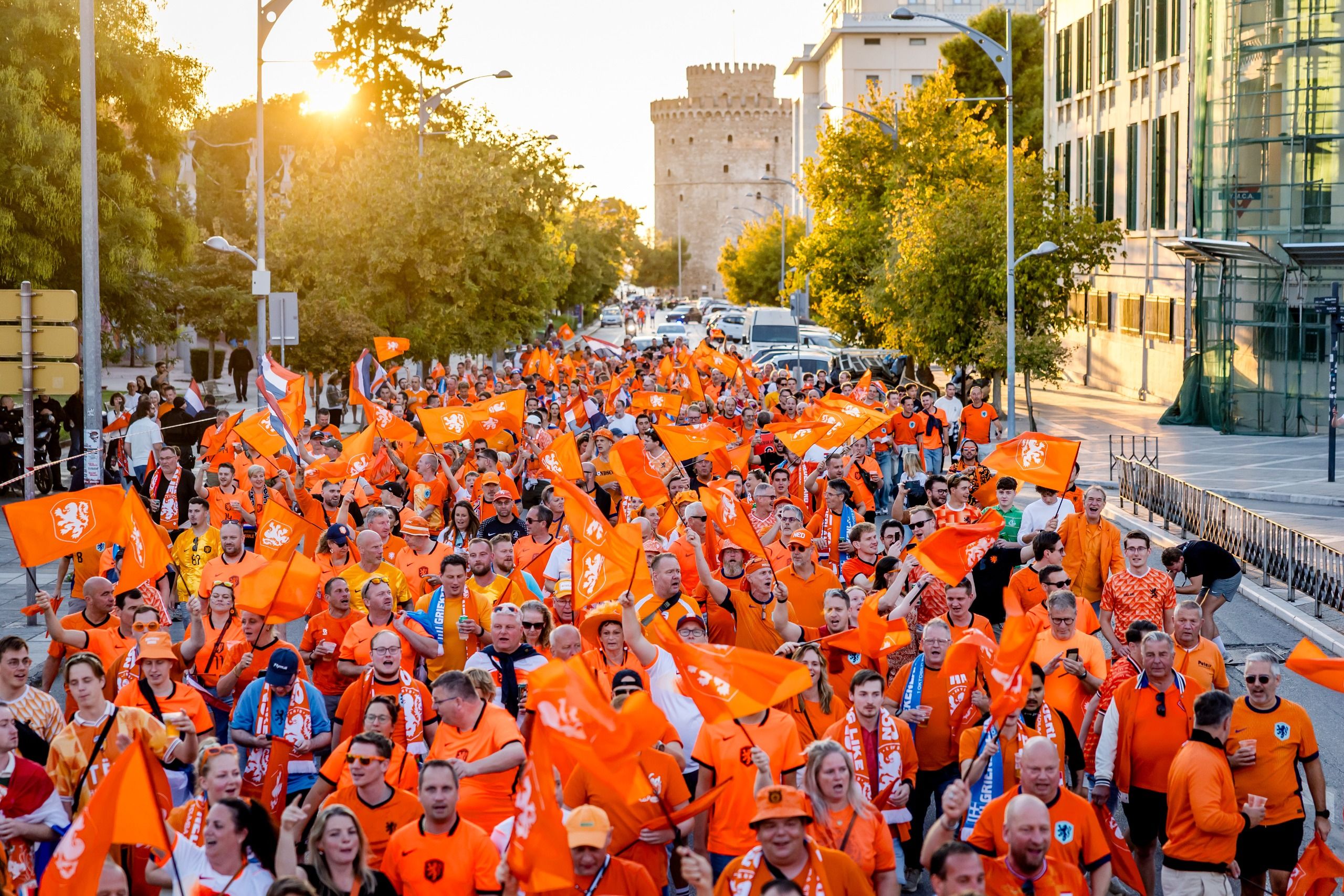
Frenkie de Jong's return gives Xavi the ultimate Dutch tactical engine
16 hours ago
Zidane's France debut exposed structural issues talent cannot fix
1 day, 21 hours ago
The Tennent's Sixes is back and modern sports science would hate it
2 days, 4 hours ago
Man City's £900m scandal casts a long shadow over the A-League launch
4 days, 13 hours ago
Thomas Tuchel is still overthinking Trent Alexander-Arnold
4 days, 19 hours ago
Man City's guilty ruling puts European giants on high alert for Haaland
4 days, 21 hours agoMore Analysis
Frenkie de Jong's return gives Xavi the ultimate Dutch tactical engine
16 hours ago
Zidane's France debut exposed structural issues talent cannot fix
1 day, 21 hours ago
The Tennent's Sixes is back and modern sports science would hate it
2 days, 4 hours ago
Man City's £900m scandal casts a long shadow over the A-League launch
4 days, 13 hours ago
Thomas Tuchel is still overthinking Trent Alexander-Arnold
4 days, 19 hours ago