The Uruguay Blueprint
Spain's final Group H match against Uruguay was a clash of styles. Luis de la Fuente wanted control, while Marcelo Bielsa demanded chaos. The resulting 1-0 victory for Spain masked major structural defects in the European champions' build-up play.
Uruguay's man-oriented pressing system rattled Spain's center-backs early on. Pau Cubarsí and Aymeric Laporte struggled to find Rodri in the first phase. The Manchester City pivot was shadowed constantly by Manuel Ugarte, who pinched high up the pitch to disrupt the passing lanes.
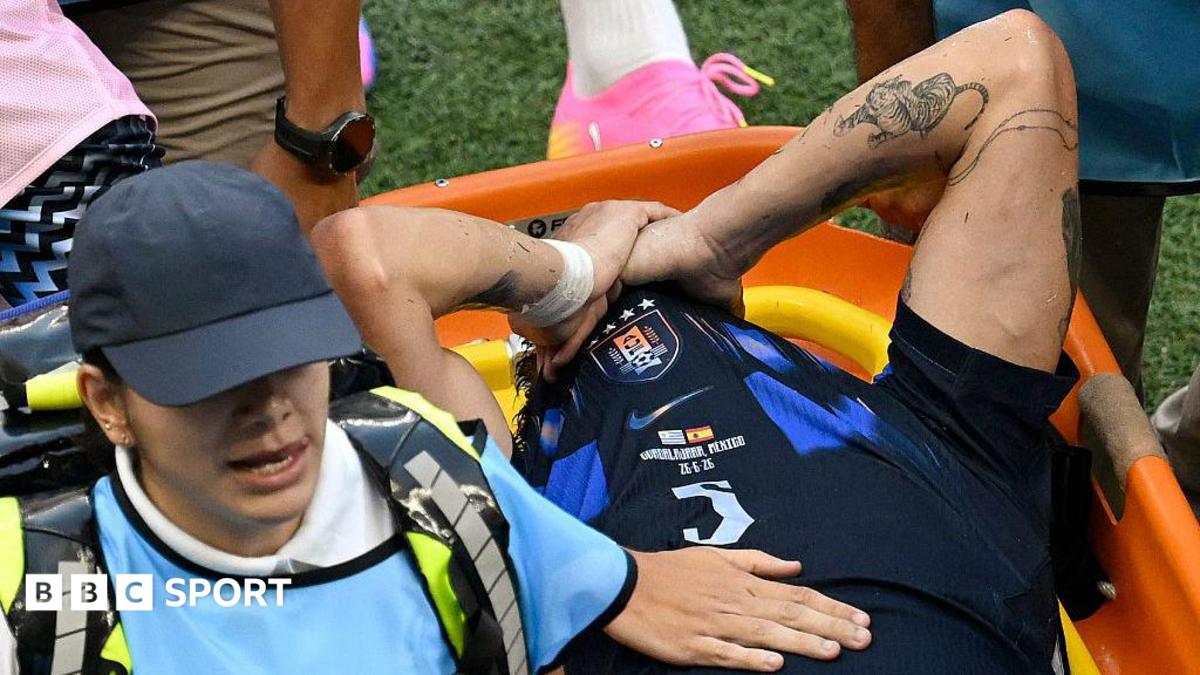
The game shifted permanently when the Uruguayan midfielder collapsed. The news confirmed today by Manchester United indicates he sustained knee ligament damage in Guadalajara. It was a costly moment for both his club and country.
Minutes after he was stretchered off, Spain struck. Pedri exploited the sudden gap in Uruguay's midfield, feeding Álex Baena who swept home the winner in the 42nd minute. The goal was clinical, but it arrived only after the Uruguayan defensive screen was broken by injury.
Spain held 64% possession in that match. Yet, they finished with an xG of just 0.82. This statistical mismatch highlights how uncomfortable they were under pressure.
Enter the Austrian Machine
Now, Spain face Austria in the Round of 32. Ralf Rangnick's side will have watched that footage with keen interest. They know Spain can be rattled.
Austria does not play with Bielsa’s man-to-man rigidity, but their zonal counter-press is even more vertical. Rangnick has built a side designed to turn turnovers into immediate shots. They do not want possession; they want transitions.
Austria's group stage campaign was a wild ride of goals and errors. They advanced after a chaotic 3-3 draw against Algeria, where Saša Kalajdžić scored a 95th-minute header to save their tournament. Earlier, they had beaten Jordan 3-1 and lost to Argentina.
That Algeria match exposed Austria's massive defensive vulnerabilities. While they scored three, they conceded three, showing alarming spacing issues between their center-backs and full-backs. Riyad Mahrez cut them open repeatedly by running into the channels behind Phillipp Mwene.
But Spain lacks a Mahrez profile on their left wing. Álex Baena is a playmaker who drifts inside, not a winger who runs behind. This means Austria's defensive line can play higher without fear of getting caught in behind.
This tactical quirk will encourage Rangnick to play even more aggressively. Expect Austria to launch their pressing lines deep into Spain's third from the first whistle. They will attempt to suffocate Rodri before he can turn.
The Key Battleground
The tactical battleground will be the center circle. Konrad Laimer and Nicolas Seiwald will be tasked with locking down the middle of the pitch. Their main target will be Rodri, preventing him from dictating the tempo.
In Spain's typical structure, Rodri drops between the split center-backs to form a three-man base. Austria will counter this by pushing Christoph Baumgartner and Marcel Sabitzer narrow to block the passing lanes. This forces Spain to play wide to their full-backs early.
Marcos Llorente and Marc Cucurella will have to progress the ball under heavy pressure. If Austria's wingers trigger their press at the right moments, they can trap Spain against the touchlines. This is exactly where Uruguay won their most dangerous turnovers.
However, Spain's main issue is not just the build-up; it is the lack of central presence. With Mikel Oyarzabal playing as a false nine, Spain lacks a physical reference point in the box. He tends to drop deep, leaving Lamine Yamal and Baena to make diagonal runs into empty space.
The loss of Ugarte is a warning for how a physical press can fall apart when one key player is missing. Following the confirmation that Ugarte sustained ligament injuries, Uruguay’s tournament ended in disappointment. Austria must ensure their own pressing structure does not break under Spain's quick passing.
Austria's press is highly demanding and physically exhausting. Against Algeria, their intensity dropped significantly after the 60-minute mark. This is when they conceded two goals to Mahrez as their defensive lines stretched.
Luis de la Fuente will likely instruct his team to keep the ball moving quickly in the first half to tire Austria out. Spain's technical quality in tight spaces is superior. Pedri and Merino can navigate tight spaces if they receive the ball on the turn.
Lamine Yamal remains Spain's most dangerous weapon. The teenager's ability to isolate defenders on the right flank will force David Alaba or Kevin Danso to shift over. This shifting will open up space in the center for Pedri to exploit.
Austria's Direct Threat
Austria's own attacking threat will rely heavily on direct play. Marko Arnautović is a master at holding up the ball under pressure from center-backs. His link-up play with Sabitzer will be vital to Austria's transition moments.
Cucurella's defensive awareness will be tested against Sabitzer's runs. Sabitzer scored a fine goal in the 55th minute against Algeria by attacking the half-spaces. Cucurella cannot afford to get sucked inside and leave his flank exposed.
Aymeric Laporte's long-range distribution will be another key element. If Austria presses high, Laporte's ability to hit diagonal switches to Yamal can bypass their entire midfield block. This requires pin-point accuracy under pressure.
Patrick Pentz's distribution in the Austrian goal is another area of concern. Against Algeria, his poor clearances under pressure gave the ball away in dangerous areas twice. Spain's front three will press him aggressively when he has the ball at his feet.
Austria's captain David Alaba will need to organize the defensive line to prevent gaps from appearing. Alaba's experience will be tested by Yamal's dribbling. The Real Madrid defender must avoid stepping out of the line to challenge Yamal early.
The match will likely become a battle of endurance. Spain will look to starve Austria of the ball and quiet the game. Austria will try to make it as chaotic as possible.
The Tactical Flaws and Final Verdict
We must address Spain's defensive vulnerability on the counter. During the group stage, when Spain lost possession in the attacking third, Rodri was often left isolated. Merino must do a better job of covering the half-spaces when Spain commits bodies forward.
Austria's direct style can exploit this isolation. If Sabitzer can pick up second balls in midfield, Austria will create three-on-three situations against Cubarsí and Laporte. This is the nightmare scenario for De la Fuente.
Furthermore, Austria’s set-piece threat is significant. With towering figures like Kalajdžić and Gregoritsch, they will target Spain’s relative lack of height in the box. Spain's zonal marking on corners has looked shaky throughout the tournament.
Despite these threats, Austria's defensive flaws are too severe to ignore. Conceding three goals to Algeria shows they cannot cope with rapid shifts in play. Spain's patience will eventually unlock them.
If Spain can survive the opening thirty minutes without conceding, Austria's press will lose its edge. As the game wears on, Pedri and Baena will find more time on the ball. This is when the quality gap will tell.
We expect Spain to progress to the Round of 16 after a difficult, physical encounter. They will have learned from the Uruguay match and will be better prepared for the press.
Our prediction is a Spain victory. They will survive an early storm from Rangnick's side to win. We expect a final score of 2-1.
Read Next
- Bielsa's goalkeeper gamble just blew up Uruguay's World Cup
- Scotland need to stop hiring their mates after Steve Clarke's World Cup exit
- Algeria and Austria just played the least collusive draw in World Cup history
- Argentina's depth will finally break Cape Verde's brick wall
- 🏆 World Cup 2026 — Full Coverage Hub
- 🇪🇸 Spain World Cup 2026 — La Roja Hub
- 🇦🇹 Austria World Cup 2026 — Das Team Hub