Collina Rules Miami: FIFA Orders Set-Piece Peace
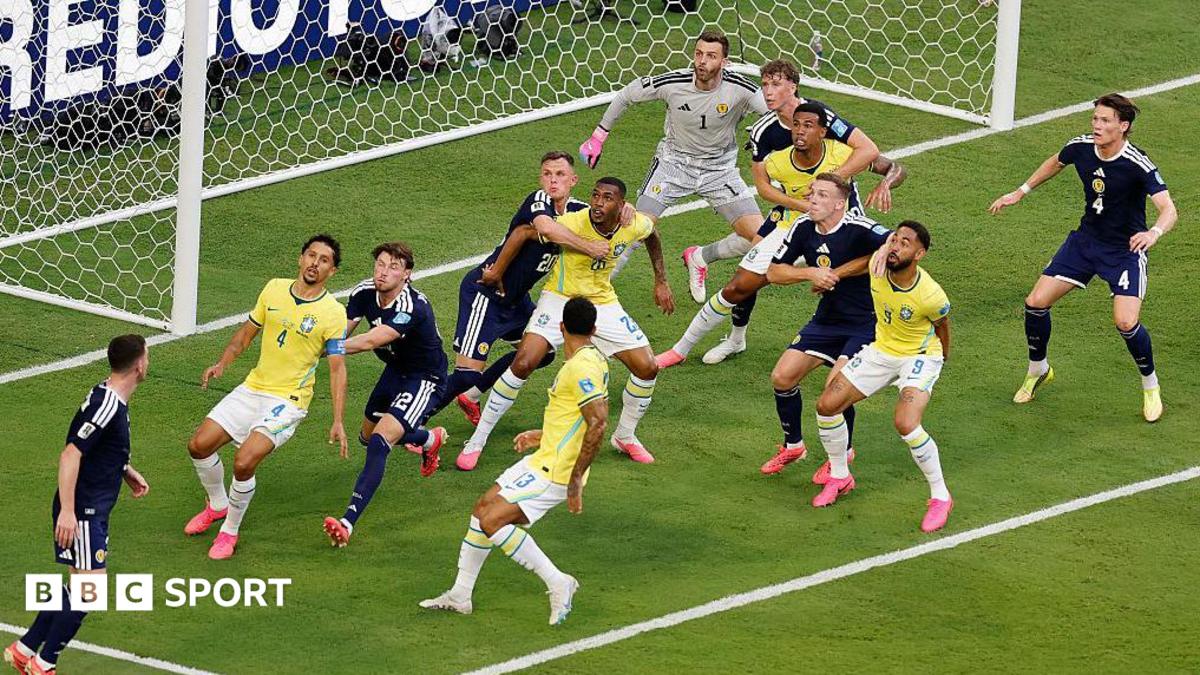
FIFA head of referees Pierluigi Collina is forcing a total set-piece reset at the World Cup. Referees have received strict instructions to penalize off-the-ball holding and blocking. The crackdown has dramatically reduced corner-kick goals and redrawn the physical battles in the penalty area.
The numbers confirm that the traditional physical battle is being policed out of the international game. At this World Cup, corner goals have plummeted to an average of 0.34 per match. That is a steep drop.
This policing is not just tactical. It represents a massive safety intervention for goalkeepers who are routinely targeted by physical blockers. Collina wants a clear exclusion zone in the six-yard box to prevent dangerous mid-air collisions.
The safety issues are real. Clinical data on goalkeeper injuries supports the FIFA crackdown. Goalkeepers are highly vulnerable to concussions and hyperextension injuries when challenged in mid-air.
We saw this strict policing in action during Germany's group stage match. The Germans had a goal disallowed because Anton stood in a blocking position that forced the goalkeeper to walk into him. Officials ruled this a deliberate blocking tactic, highlighting the zero-tolerance stance.
Spain suffered a similar fate when Pau Cubarsi was penalised for a foul on Austria goalkeeper Alexander Schlager. The young defender initiated contact that prevented the keeper from jumping. Schlager avoided injury.
Former Germany midfielder Thomas Hitzlsperger noticed the contrast while commentating on BBC One. He noted that the officiating style was the extreme opposite of what fans see weekly in domestic leagues. Hitzlsperger observed that goalkeepers are not even protesting because FIFA has tilted all contact decisions in their favor.
At least they are consistent, but it's the extreme opposite. We watch the Premier League every week and this is so different. None of the goalkeepers are protesting. Fifa changed their approach and any contact is in favour of the keeper.
This strict policing of corners is detailed in the report by Dale Johnson. The article outlines how international officials have established a clear boundary for physical contact. However, this tournament standard is heading for a major clash with domestic league traditions.
The Physical Cost of Corner Chaos
The medical community has long warned about the dangers of unchecked penalty box grappling. Players frequently suffer shoulder subluxations, collarbone damage, and rib contusions during corner routines. Domestic leagues have ignored these risks for years in the name of physical entertainment.
By clamping down on holding, Collina is attempting to protect players from these high-velocity joint injuries. If defenders cannot grab shirts, they cannot pull opponents down and cause severe ankle sprains. The decrease in grappling could lead to a noticeable drop in muscle strains and joint sprains.
Goalkeepers are particularly at risk when attackers are allowed to stand directly in their path. A keeper jumping for a high ball has their hands extended and their torso completely exposed. Any contact at that moment can cause them to lose balance and fall heavily on their back or head.
The goal is simple. FIFA hopes that by creating an exclusion zone, they can eliminate these dangerous challenges. This safety-first approach has received praise from medical staff who monitor player wellness.
Collina's Miami Boot Camp for Officials
To enforce these strict guidelines, FIFA established an intensive training program for their match officials. Collina gathered 51 referees and 88 assistant referees at a state-of-the-art camp in Miami, Florida. The preparation was exhaustive, moving far beyond classroom sessions and video reviews.
FIFA sourced a large group of semi-professional players to act as training XIs. These players were drilled to mimic the exact set-piece routines and playing patterns of the qualified national teams. Referees were placed in real-game scenarios to practice identifying illegal blocking and holding.
For example, before the match between France and Morocco, referee Facundo Tello and his team rehearsed with these training XIs. The players ran the specific set-piece plays that France and Morocco use. This allowed Tello to see where the physical blocks would occur before he even stepped onto the pitch.
However, this level of preparation is virtually impossible to sustain over a nine-month domestic schedule. Domestic referees travel constantly and officiate multiple matches a week. They do not have access to a dedicated squad of players to run simulated set-piece drills before every game.
Premier League Rejects Set-Piece Reset
English officials are reluctant to implement the same zero-tolerance policy. The league has promised an enhanced recognition of clear holding, but they will not go as far as FIFA. Set-piece chaos will remain.
This means the controversial goals scored by Germany and Spain would still stand in England next season. Premier League referees believe that English fans expect a more physical and combative style of play. They fear that awarding multiple penalties for corner grappling would ruin the spectacle.
Everton boss David Moyes voiced this frustration in February after a highly fractious match against Manchester United. Moyes stated that referees really do not want to get involved in any of it. The hands-off approach continues.
referees really don't want to get involved in any of it
Former Chelsea defender Cesar Azpilicueta also discussed this issue during his appearance on BBC One. He suggested that there is a line in between where officials can manage it better. Azpilicueta noted that players in England are used to more contact, but felt a middle ground was needed.
There is a line in between where they can manage it a little bit better. In England especially, you have more contact - you are used to it. There is something in between where everybody can feel a bit happier.
This decision to reject the FIFA standard has serious medical and tactical implications for English clubs. Premier League players will continue to face high physical loads and collision risks at every corner. Set-piece coaches will continue to design complex blocking routines to crowd and harass goalkeepers.
This means that English clubs competing in European competitions will have to adapt to two different rulesets. Players who are allowed to grapple in the Premier League will find themselves penalized in the Champions League. This tactical discrepancy is a questionable decision that could lead to costly penalties and player injuries on the European stage.
For now, the corner chaos will continue to define the English domestic game. While the World Cup has shown that set-pieces can be cleaned up, the Premier League prefers its physical traditions. The combat zone remains.