The Heavy Weight of Toronto's Night
The Iberian Derby in a World Cup knockout round is normally a tactical chess match wrapped in historical friction. But when Spain and Portugal meet in the last 16, the tactical whiteboard will share space with raw, heavy emotion. Portugal booked their place in this clash after a chaotic, nerve-shredding 2-1 victory over Croatia in Toronto. It was a match played on the eve of the first anniversary of Diogo Jota's tragic death.
The former Liverpool forward and his younger brother, Andre Silva, were killed in a car crash on July 3, 2025. That tragedy has cast a long, profound shadow over Roberto Martinez's squad. During the national anthems, Jota’s image flashed across the stadium screens. After the final whistle, Cristiano Ronaldo pulled on Jota’s number 21 shirt and held it to the heavens. The team won for their fallen teammate, but behind the emotion lies a stark tactical reality.
Portugal were incredibly lucky to escape Toronto with their World Cup lives. Only a highly controversial VAR decision in the 103rd minute saved them from extra time. Josko Gvardiol's late equalizer was disallowed because the referee ruled Igor Matanovic had touched the ball, putting Mario Pasalic in an offside position. The decision sparked outrage. Croatian fans threw bottles and cans onto the pitch, causing a lengthy delay before the final whistle could blow.
Croatia manager Zlatko Dalic did not hold back in his post-match press conference.
"VAR kills emotions, it kills everything within you. We have gone too far with VAR."
His frustration was understandable, but the record books will only show that Goncalo Ramos’s late winner, assisted by a sharp shadow-run from Rafael Leao, sent Portugal through. Ronaldo also made history, scoring his first-ever World Cup knockout goal. Yet, his presence remains a tactical paradox for Martinez. At 41, Ronaldo no longer participates in the defensive block, leaving Portugal defensively fragile.
The Midfield Void and Spain's Machine
When Croatia pushed forward, Portugal's midfield of Ruben Neves and Joao Palhinha was stretched thin. Spain's high-volume passing game will exploit those gaps ruthlessly. Interestingly, Neves is currently wearing Jota's No. 21 international jersey. He still sends messages to Jota's old phone number in a group chat kept active with Jota's widow, Rute Cardoso. Cardoso has been a source of strength for many, even sending an emotional widow Rute Cardoso's letter to Andy Robertson before the tournament began.
At Manchester City, midfielder Matheus Nunes was spotted reading Jose Manuel Delgado's biography of Jota on the team plane. The collective grief has bonded this Portuguese team, but sentimentality cannot survive Spain's cold efficiency. Spain reached this stage with a far more convincing performance. They dismantled Austria 3-0 in a display that felt like a declaration of intent, as Mirror Football reported.
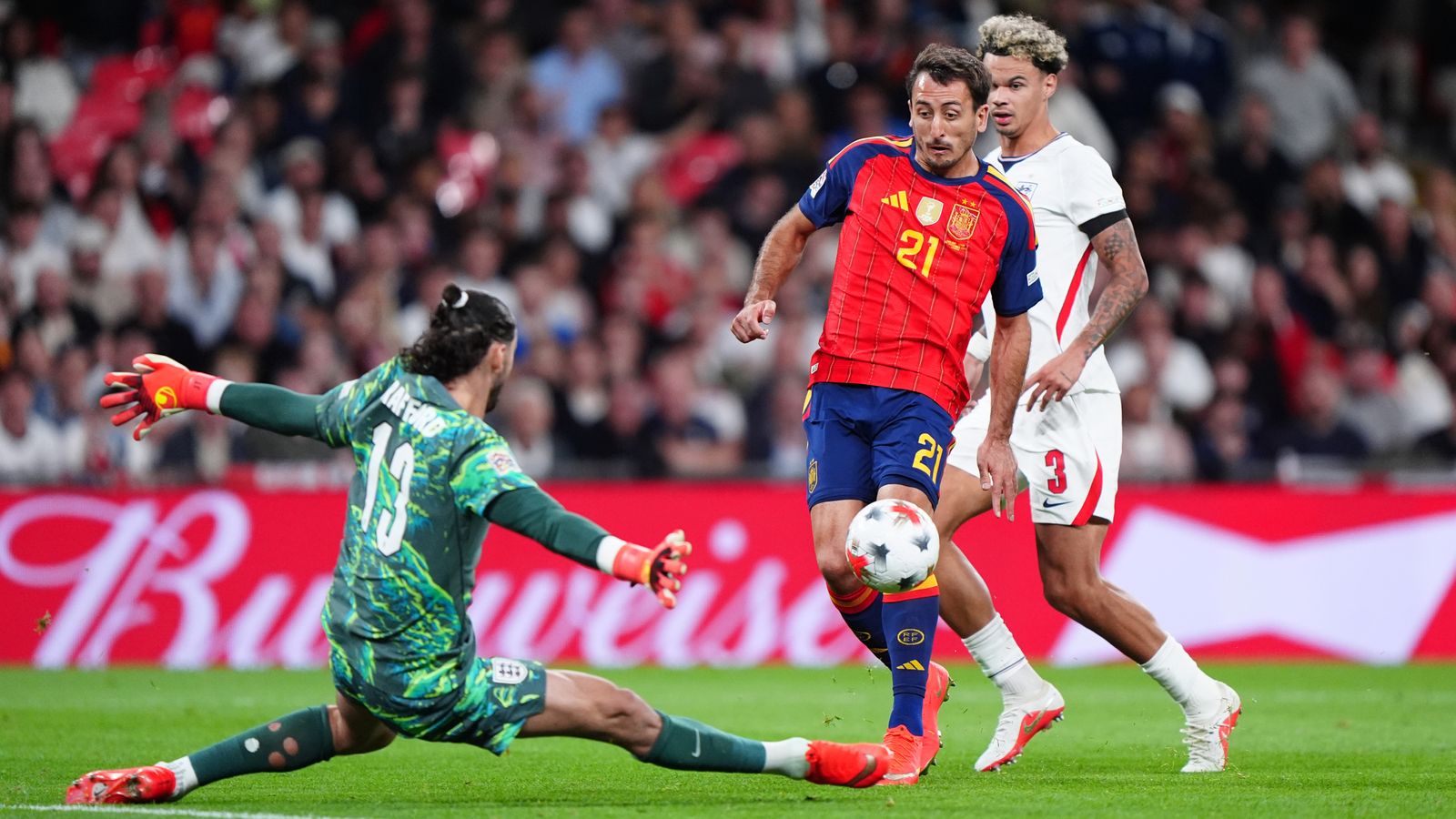
Mikel Oyarzabal scored a brace, while Tottenham's Pedro Porro added a third. Luis de la Fuente's side played with the kind of verticality and speed that has defined their recent cycle. It was a complete turnaround from their opening group match, a baffling 0-0 draw against Cape Verde. That sluggish performance raised doubts, but the Austria match silenced them. Even their disallowed goals showed Spain's attacking threat.
Marc Cucurella had a goal ruled out for a minor foul on the goalkeeper, a decision that left TV pundit Joe Hart in utter disbelief. Spain's tactical structure is built on relentless counter-pressing. They squeeze the pitch, forcing turnovers high up the field. Unlike Croatia, who allowed Portugal to build from the back, Spain will suffocate Martinez’s defensive line. If Portugal cannot find an outlet, the game could turn ugly quickly.
The Battle in the Half-Spaces
De la Fuente's midfield is a model of positional discipline. They retain possession not for the sake of it, but to manipulate the opponent's defensive block. Nico Williams and Lamine Yamal provide raw pace on the wings, a nightmare for Portugal's aging fullback line. Diogo Dalot and Nuno Mendes will need to be flawless. If Dalot is forced to defend in isolation against Yamal, Spain will create overload situations at will.
Portugal's central defenders, including Ruben Dias, will be dragged out of position. This is where the Ronaldo dilemma becomes critical. If Portugal's front line does not press, Spain's center-backs will have time to pick passes into the half-spaces. Pedri and Dani Olmo are masters of occupying these zones. They turn and drive at the backline before the defensive midfielders can recover.
Martinez might be tempted to start Goncalo Ramos over Ronaldo to inject energy into the press. But dropping Ronaldo after a historic knockout goal is politically impossible. For Jota, who scored 65 goals in 182 games for Liverpool, this tournament was supposed to be his peak. He was the forward who bridged the gap between Ronaldo's era and the future. His versatility and tactical intelligence are exactly what this Portugal team lacks right now.
They miss his defensive work rate and his knack for scoring dirty goals in the box. Instead, they must rely on the memory of his intensity. As Martinez noted, Jota's standards are what the players want to carry forward. Let's analyze the passing networks. Spain's pass completion rate against Austria was a staggering 91%. They dominated the middle third, completing 342 passes in that zone alone.
Portugal, by contrast, struggled to maintain possession in Toronto. Their pass completion dropped to 79% under Croatian pressure in the second half. If Spain replicates that pressing intensity, Portugal's midfield will crumble. Neves will be forced into long, hopeful balls that Spain's center-backs will gobble up. The use of FIFA's microchip-enabled ball technology has also become a focal point of criticism. While it ensures accuracy, it has stripped matches of their natural flow.
The ten-minute delay in Toronto while the referee checked the offside was excruciating. It killed the tempo of the game and incited a hostile reaction from the stands. Football is losing its soul to millimeter-precise lines. If the derby is decided by a microchip rather than a moment of magic, it will be a tragedy for the sport. But Spain's superiority is not artificial. It is the result of structural coherence that Portugal simply cannot match.
The Definite Verdict
To win, Portugal must find a way to shield their back three without dropping into a low block. A low block against Spain is slow suicide. It invites wave after wave of possession, eventually forcing a mistake or a penalty. Yet, if Portugal press high, they will be bypassed easily due to Ronaldo's lack of mobility. It is a tactical catch-22 that Martinez has failed to solve all tournament.
Portugal will play with passion, fueled by Jota's memory and the emotional letters from Rute Cardoso. They will fight for every ball, but passion is a volatile fuel. When the legs tire in the second half, structure wins. Spain's positional play is designed to tire opponents, moving the ball from side to side until a gap appears. Once Spain find the opening, they do not let teams back into the game.
Expect Spain to dominate the ball, stifling Portugal's transitions and isolating Ronaldo. Oyarzabal will continue his rich vein of form, finding space between Dias and Dalot. Portugal's emotional journey has been the story of the World Cup so far, but storybooks do not win matches against tactical machines. My prediction is a 2-0 Spain victory that will feel far more comfortable than the scoreline suggests.
Read Next
- Portugal must resolve their identity crisis before facing Spain
- Spain will punish Portugal if Roberto Martinez doesn't drop Cristiano Ronaldo
- Portugal must drop Cristiano Ronaldo if they want to beat Spain
- Portugal's emotional World Cup victory splits fans over Ronaldo's tribute
- 🏆 World Cup 2026 — Full Coverage Hub
- 🇪🇸 Spain World Cup 2026 — La Roja Hub
- 🇵🇹 Portugal World Cup 2026 — A Seleção Hub