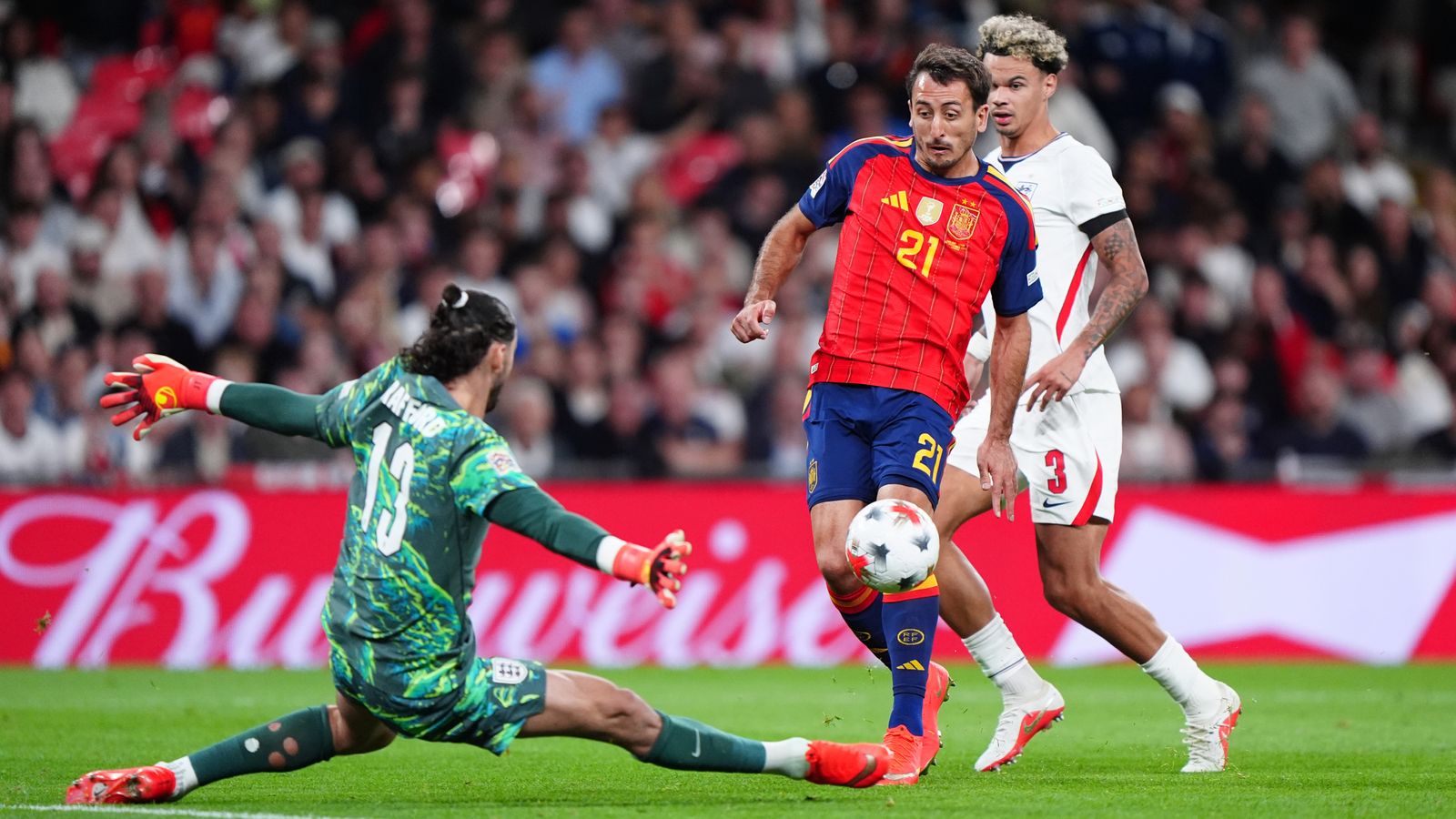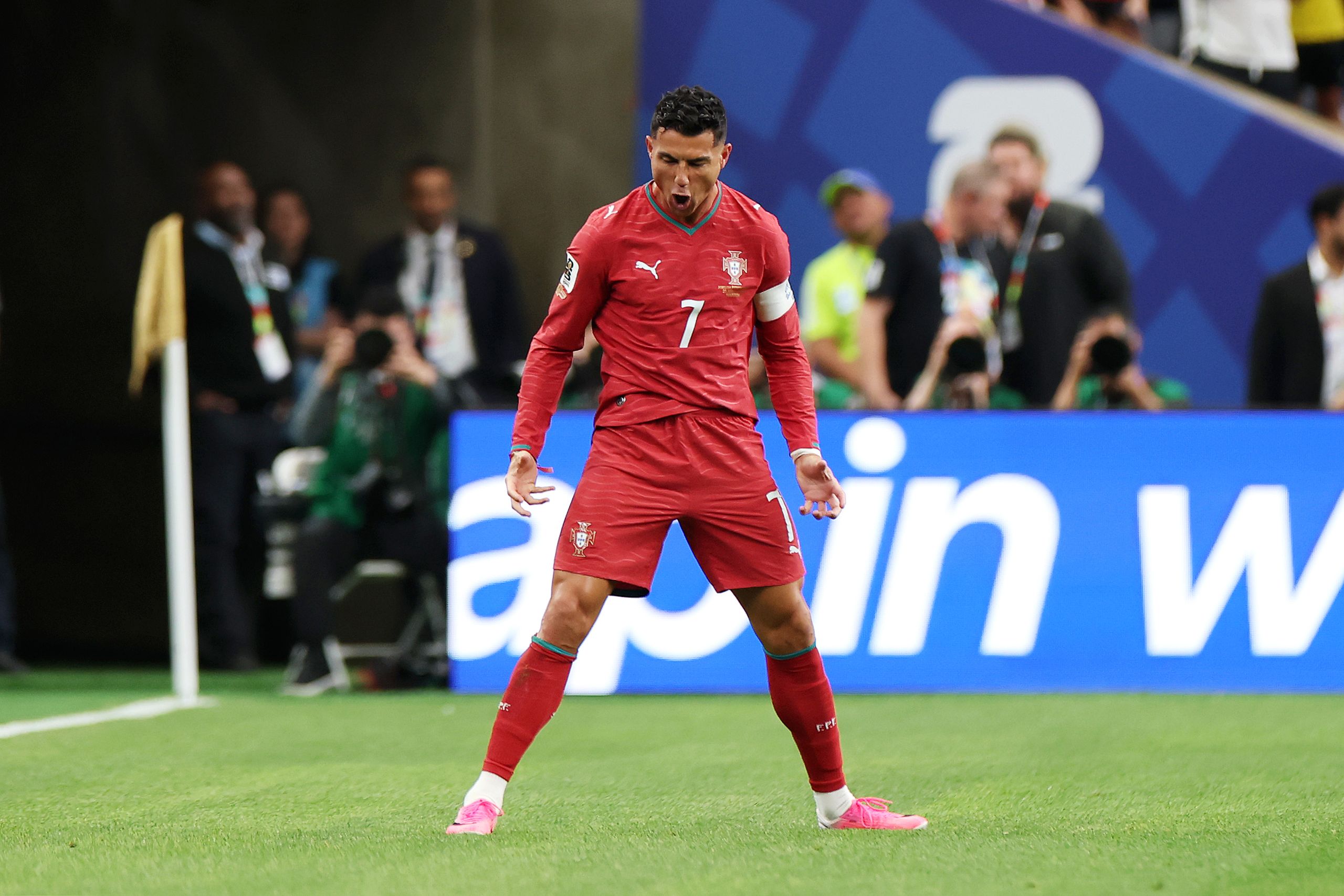
An Iberian Derby Born in VAR Chaos
Portugal did not walk into the Round of 16; they stumbled through a technological trapdoor. Their clash against Croatia was a masterclass in survival, saved only by the Adidas Trionda ball and its built-in microchip. When the late Croatian equaliser was ruled out by a fraction of a touch, it confirmed Portugal's passage to face Spain.
But survival is not a sustainable tournament strategy. The match left Luka Modric distraught and Petar Sucic shaken after the VAR drama. As Mirror Football reported, the microchip technology was the difference between progress and elimination.
Spain will not allow Portugal to retreat into a passive block without punishment. Luis de la Fuente has built a machine that thrives on transition speed and verticality. If Martinez repeats the structural mistakes of the Croatia game, Spain will dismantle them.
The 41-Year-Old Elephant in the Room
Cristiano Ronaldo is still rewriting the history books. At the grand old age of 41, he finally scored a World Cup knockout goal against Croatia. It was a moment of pure instinct, proving his finishing remains elite.
Yet, the overall performance showed why his presence is a double-edged sword. Portugal's press was entirely disjointed. Ronaldo has played at the top level for more than two decades, but his physical limitations are now clear.
He recorded just three pressures in the final third over ninety minutes. This inactivity forced Vitinha and Bernardo Silva to cover double the turf, fracturing Portugal's mid-block. They looked ragged.
As The Daily Mail observed, deputy Goncalo Ramos stole the thunder when he entered the pitch. Ramos offers the lateral running and defensive work rate that Martinez needs. Spain build their play through Rodri, who requires constant pressure to disrupt.
If Ronaldo starts, Rodri will dictate the tempo of this match from the center circle. Martinez must decide if sentimentality overrides tactical necessity. Playing Ronaldo means accepting a defensive liability in transition.
Against Spain's rapid wingers, that is a recipe for disaster. Portugal cannot afford a passenger when out of possession.
Spain's Pressing Traps and the Midfield War
Spain's tactical approach under De la Fuente differs significantly from the possession-heavy sides of the past. They are direct, aggressive, and comfortable defending in a high line. Their central pressing trigger usually starts when the opponent's defensive midfielder receives the ball facing his own goal.
Joao Palhinha will be the primary target of this trap. In the group stage, Spain forced fifteen turnovers per game in the opposition half. They rely on Fabian Ruiz and Dani Olmo to squeeze the space around the box.
If Vitinha cannot drop deep to aid the build-up, Palhinha will be isolated. Portugal's centre-backs will be forced to play long, hopeful balls to a static forward line. Spain's pressing triggers are highly structured, focusing on three situations:
- A pass played backwards to Portugal's centre-backs under physical pressure.
- The defensive midfielder receiving the ball with his back to the Spanish goal.
- Slow lateral passes across the backline that allow Williams and Yamal to cut off the wings.
To counter this, Martinez should consider a back-three system. This would allow Nuno Mendes and Diogo Dalot to push higher, pinning Spain's wingers back. It also provides extra cover against the threat of Nico Williams.
Williams has been terrorizing full-backs with his inside-out runs all tournament. However, Martinez has shown a stubborn reluctance to adapt mid-tournament. He prefers a standard 4-3-3 that relies heavily on individual brilliance.
Against a coordinated Spanish block, individual brilliance is rarely enough. The tactical battle in the half-spaces will decide the outcome.
De la Fuente's Winger System vs. Portugal's Full-Back Dilemma
The real danger for Portugal lies on the flanks. Spain's winger pairing of Nico Williams and Lamine Yamal is the most dynamic in international football. They do not just stay wide; they occupy the half-spaces and force full-backs into isolated 1v1 situations.
Portugal's full-backs must be perfect in their positioning. Nuno Mendes has the speed to match Yamal, but his attacking instincts often leave space behind him. In the match against Croatia, Portugal conceded three clear chances from crosses on the left wing.
If Mendes pushes too high, Yamal will exploit that vacated zone instantly. Ruben Dias will be forced to slide over, leaving the center of the box vulnerable. Diogo Dalot faces a similar challenge on the right against Williams.
Williams prefers to cut inside on his stronger right foot, but he can also beat defenders on the outside. This dual threat makes him nearly impossible to mark without midfield assistance. Bernardo Silva must drop deep to double-team Williams, which limits his impact in transition.
If Martinez does not adjust his defensive support, his full-backs will be exposed. Spain's wingers have registered a combined twelve dribbles completed per game. Portugal cannot afford to leave their defenders on an island.
The Trionda Tech and High-Stakes Refereeing
The Adidas Trionda ball is the silent protagonist of this World Cup. Its internal sensor transmits data 500 times per second to detect the slightest deviation. This was the technology that broke Croatian hearts in the previous round.
It is a tool that brings absolute clarity, but it also alters player behavior in the box. Defenders are now hyper-aware of the microchip's sensitivity. They are defending with their arms pinned tighter than ever, leading to passive body shapes.
Spain's attackers are clever enough to exploit this hesitancy. They will drive into the penalty area, looking for block attempts that might trigger a review. Portugal's defensive line must be disciplined.
Ruben Dias was excellent against Croatia, but his tendency to engage early could be risky. With VAR examining every touch, a single mistimed slide tackle can be fatal. The margin for error has shrunk to millimetres.
The Sister's Bombshell and Ronaldo's Focus
Off the pitch, the noise around the Portuguese camp is deafening. Reports of Ronaldo's retirement have circulated rapidly following a bombshell statement from his sister. As Mirror Football reported, Ronaldo played down these claims, insisting his focus is entirely on Spain.
But the distraction is undeniable. A squad fighting for a World Cup cannot afford media circuses. Every press conference is dominated by questions about one player's future.
This environmental pressure can wear down even the most experienced players. Spain, by contrast, look completely unified and quiet in the media. Ronaldo's post-match interactions with opponents show he is feeling the weight of these final chapters.
His long chats with Sucic and Modric suggested a player reflecting on his own career arc. While his leadership is valuable, his emotional state must not cloud his on-pitch decision-making. Portugal needs clinical execution, not a farewell tour.
Our Confident Prediction
This match will be decided in the first thirty minutes. Spain will start with an intense high press, testing Portugal's ability to build from the back. If Vitinha is choked out of the game early, Spain will take control.
We expect Spain to score first through a transition attack led by Lamine Yamal. Portugal will make adjustments in the second half, likely bringing on Ramos to inject energy. They might grab an equaliser through a set-piece.
But Spain's superior structural cohesion will tell in the end. Their midfield control is simply too strong for Martinez's disjointed system. Spain will find the winner late in normal time, exploiting a tired Portuguese defense.
The final whistle will mark the end of an era for Portuguese football. Spain progress with a hard-fought 2-1 victory, sending Portugal home.
Read Next
- Why Portugal's emotional wave faces its ultimate test against Spain
- Spain will punish Portugal if Roberto Martinez doesn't drop Cristiano Ronaldo
- Portugal must drop Cristiano Ronaldo if they want to beat Spain
- Portugal and Croatia face a grueling tactical battle in Toronto
- 🏆 World Cup 2026 — Full Coverage Hub
- 🇪🇸 Spain World Cup 2026 — La Roja Hub
- 🇵🇹 Portugal World Cup 2026 — A Seleção Hub