The Empty Arena and the Exile of Home Expectation
Six wins from 24 matches. That is the grim reality of the Republic of Ireland's Nations League history since the tournament's inception in 2018. It is a record characterized by structural drift, offensive stagnation, and a persistent inability to dictate games.
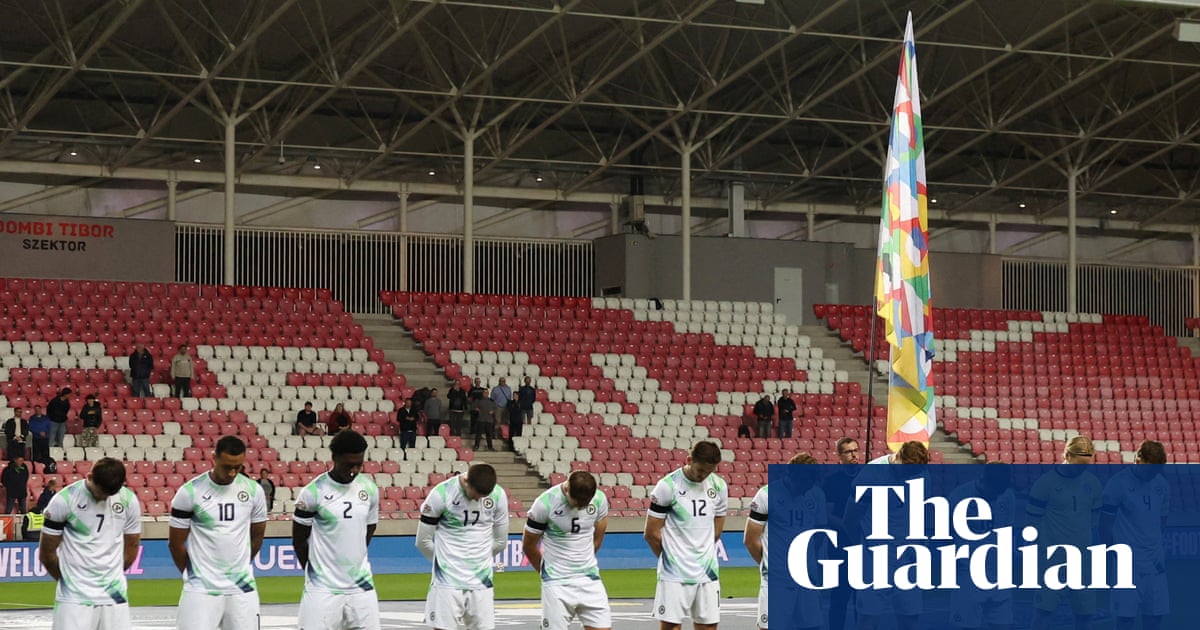
When the FAI confirmed that the designated home fixture against Israel on October 4, 2026, was moved to Serbia, the immediate reaction was frustration. A home game stripped of the Aviva Stadium crowd and played behind closed doors feels like an administrative concession. Yet, when analyzed through a purely tactical lens, this neutral-ground exile might represent a quiet blessing for Heimir Hallgrímsson.
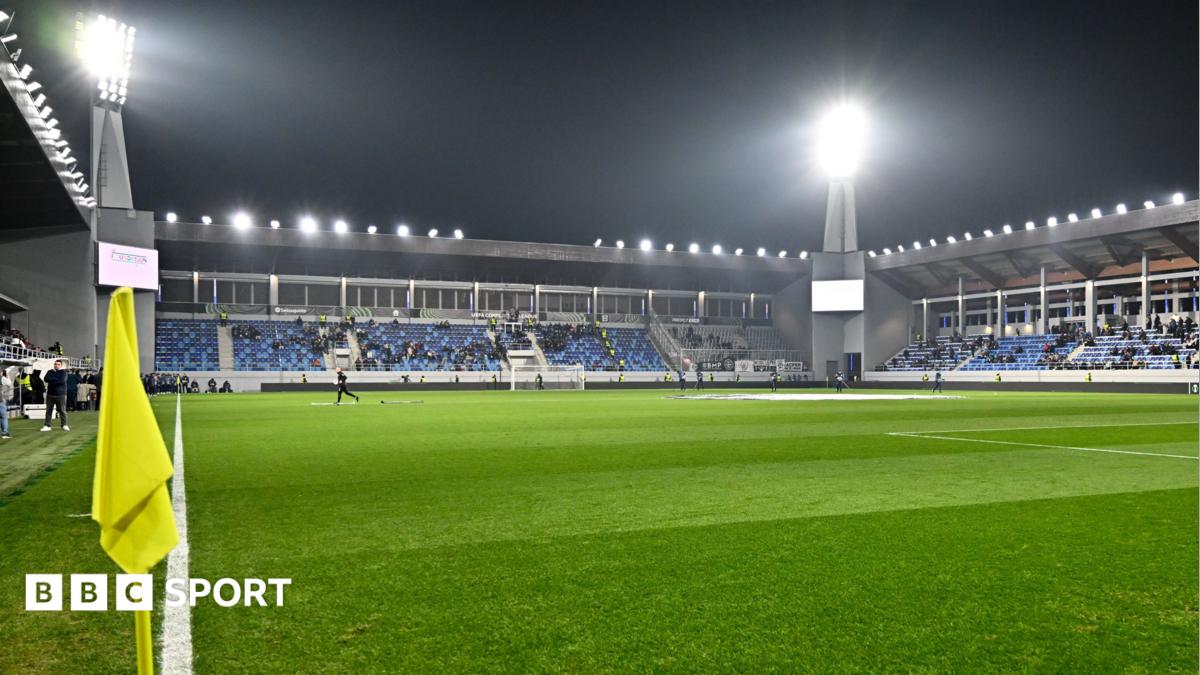
As the BBC confirmed, the fixture was moved due to operational challenges on Irish soil. The match will now take place in a silent, 4,500-seat stadium in northern Serbia. Specifically, the teams will play at the TSC Arena in Bačka Topola.
For a team that has historically relied on the emotional energy of Dublin to fuel its defensive shifts, this change seems damaging. The mathematical reality of empty-stadium fixtures supports this concern. During the pandemic-era "ghost games" across European football, the average home win rate fell from 45.1% to 41.4%.
The absence of crowd pressure significantly reduced the home bias of referees. Away teams received fewer yellow cards and committed fewer defensive errors under scrutiny. It removed the psychological edge that home teams take for granted.
However, the Republic of Ireland is not a typical home team. Under Hallgrímsson, they have transitioned into a reactive unit that struggles when asked to dominate possession. At the Aviva Stadium, 50,000 expectant fans demand forward momentum.
This crowd pressure creates a tactical conflict. It forces players to step out of their defensive shape to press high. Doing so opens passing lanes for technically superior opponents.
The crowd's anxiety becomes the opponent's greatest weapon. In a silent TSC Arena, this psychological pressure disappears.
Hallgrímsson can implement his reactive structure in a clinical vacuum. The players can defend deep without external pressure, free from the anxious groans of a home crowd demanding low-block capitulation.
The Mechanics of Heimir's Snake
The Art of the Passive Block
Hallgrímsson's defensive model, colloquially dubbed "The Snake," is built on structural rigidity and possession denial. The system uses a flexible 3-4-2-1 shape that compresses space in the defensive third. It lures the opposition forward before striking on transition.
We saw the purest expression of this model during the 2026 World Cup Qualifying Group F campaign. Ireland finished second in the group with 10 points, behind Portugal's 13. While Portugal dominated the group with 20 goals scored, Ireland took a different path, registering three wins, one draw, and two losses, while conceding just seven goals.
The statistical anomaly of Ireland's campaign was their efficiency when ceding the ball. During their 3-2 victory over Hungary in Budapest on November 16, 2025, Ireland registered just 36% possession. Despite playing without the ball for long stretches, they allowed Hungary only three clear-cut chances.
Troy Parrott's 96th-minute winner capped off a clinical counter-attacking display. When Ireland does not have to build play, they are highly effective. Their passing network in that match showed a direct vertical axis.
Caoimhín Kelleher frequently bypassed the midfield press to find Parrott or Chiedozie Ogbene directly. This tactic relies on long-ball principles. It is simple, direct, and highly effective against teams that commit men forward.
The problem is that executing this passive style at home is psychologically difficult. In Dublin, the expectation to take the game to the opponent often disrupts the defensive block. Players press individually rather than as a unit, which breaks the defensive chain.
In Serbia, behind closed doors, Ireland can defend deep without external pressure. The team can focus entirely on space denial, waiting for the trigger to press. They do not have to worry about entertaining the crowd.
With Israel expected to dominate possession, the silent arena will allow Hallgrímsson's players to maintain their spacing. They can force the opponent into low-value possession before launching vertical transitions. It is a sterile environment that suits a sterile, defensive gameplan.
The Danger of Defensive Inertia
The Concentration Tax of Silence
While the empty stadium solves Ireland's tactical conflict in possession, it introduces a severe risk to their defensive concentration. A low block is physically and mentally exhausting. Without a home crowd to provide adrenaline boosts during late-game pressure, defensive concentration naturally drops.
We saw this vulnerability during Ireland's tragic World Cup qualification play-off semi-final against Czechia in Prague on March 26, 2026. Ireland played brilliant counter-attacking football in the opening stages, taking a 2-0 lead within the first 23 minutes. Troy Parrott scored a clinical transition goal to stun the home crowd.
But as the match progressed, Czechia pushed Ireland deeper. Without the crowd's energy to sustain their defensive intensity, Ireland's structure began to sag. The spacing between the defensive line and the midfield double-pivot expanded from an average of 12 meters to over 20 meters.
This gap allowed Czechia to win second balls and sustain pressure. The eventual 86th-minute equalizer by Ladislav Krejci was the direct result of defensive exhaustion. Ireland survived extra time to draw 2-2, but ultimately fell 4-3 in the penalty shootout, ending their hopes of qualifying for the tournament.
In Bačka Topola, this physical fade will be even harder to combat. In a silent arena, players must rely entirely on internal motivation and vocal coaching to maintain intensity. If Hallgrímsson's side drops too deep in the final 20 minutes, they will not have the crowd to push them out of their box.
The lack of acoustic feedback makes it easy for players to switch off during cross-field rotations. This is a critical weakness that Israel's technical midfielders are equipped to exploit. A silent stadium can quickly become a graveyard of defensive focus.
Exploiting Israel's Transition Flaws
Targeting the Half-Spaces
Despite the defensive risks, the tactical matchup favors Ireland's transition speed, especially given Israel's recent defensive struggles. During the 2024-25 Nations League Group A2 campaign, Israel faced elite opposition in Italy, France, and Belgium. While they managed a surprising 1-0 win against Belgium and a 0-0 draw in Paris, they conceded 13 goals in six matches, averaging 2.17 goals against per game.
Their high defensive line was repeatedly exposed by vertical passes. This was particularly evident in their 4-1 defeats to both France and Italy. Their centre-backs struggled to defend the space behind them when turned by quick passing.
Israel's defensive structure lacks coverage when their full-backs push high to support the possession phase. This structural flaw fits perfectly with Ireland's transition profiles. Players like Finn Azaz and Troy Parrott excel at exploiting the half-spaces vacated by advancing full-backs.
In the empty TSC Arena, Ireland's defensive block must remain compact. They will need to absorb Israel's possession, win the ball in the defensive third, and immediately release Ogbene or Parrott into the channels. It is a simple plan, but it requires absolute precision.
Ultimately, this match will not be decided by tactical flair, but by defensive discipline. By removing the pressure of the Aviva Stadium, the FAI may have inadvertently given Hallgrímsson the perfect environment to execute his reactive gameplan.
Ireland's historical record of six wins from 24 matches in this competition is a stark reminder of their struggles. But in the quiet of northern Serbia, away from the expectations of Dublin, they have a unique opportunity to turn their defensive isolation into a tactical advantage.
Read Next
- How Virgil van Dijk is holding Koeman's fragile Dutch defense together
- Why England's right-back crisis gives DR Congo a path to an upset
- Scotland's next manager must throw out the Steve Clarke playbook
- Why Canada's aggressive press might crash against South Africa
- 🇸🇷 Serbia World Cup 2026 — Eagles Hub