
How Virgil van Dijk is holding Koeman's fragile Dutch defense together
The pundit and his bogeyman
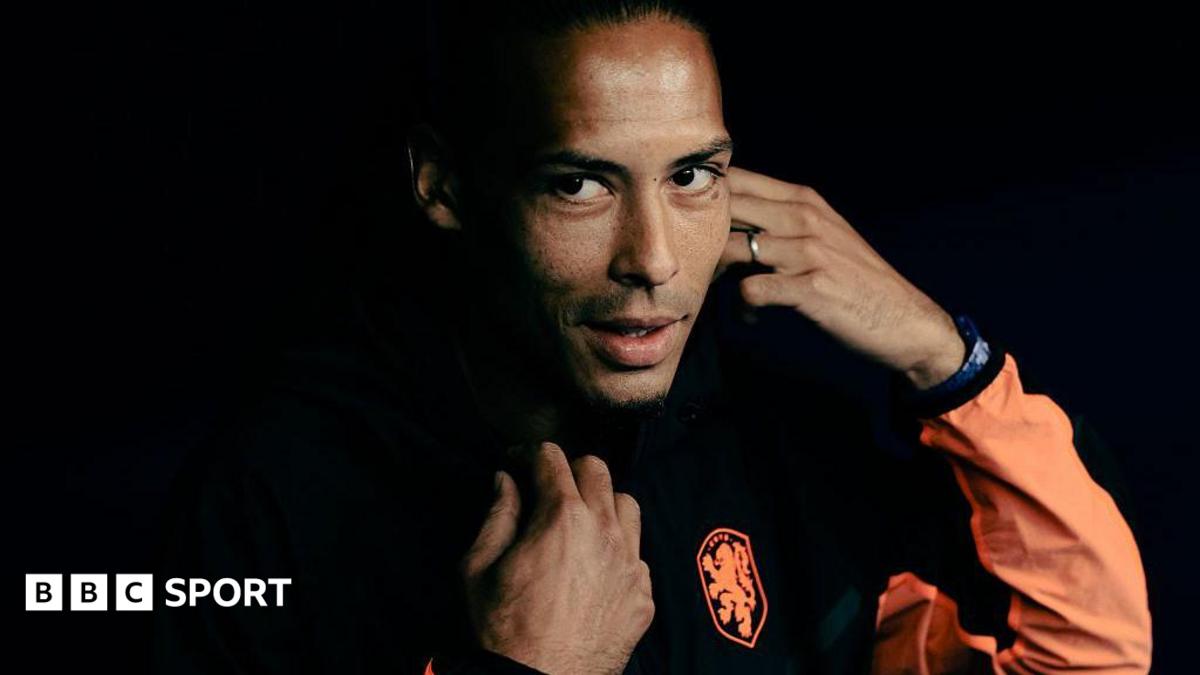
Olivier Giroud sat in the BBC studio and smiled when the tape rolled. For years, the French forward was the striker Virgil van Dijk openly dreaded facing, a physical presence who used his body to disrupt the defender's impeccable timing.
During their numerous Premier League battles—whether Giroud was wearing the red of Arsenal or the blue of Chelsea—the striker developed a reputation as the captain's ultimate bogeyman. Now, from the comfort of the punditry chair at this World Cup, Giroud has shifted from opponent to analyst.
His recent verdict on the Dutch captain was telling. According to Giroud, the defender remains the "main man" for his national team, operating as a "big brother" at the back. It is a warm, paternal metaphor that captures the current mood around the Netherlands camp, suggesting a leader who keeps his younger teammates calm under pressure.
Yet, under the bright lights of the tournament, this description carries a darker tactical implication. When a defense relies so heavily on a single figure to guide them through matches, it suggests a systemic instability. If the big brother has to solve every problem, what happens when he is dragged out of position by dynamic attacking systems?
For Ronald Koeman, this is not a theoretical exercise. The Dutch progressed through the group stage, but their defensive structures looked alarmingly porous when transition moments occurred. The reliance on their leader is no longer just a strength; it has become a structural crutch that opponents are actively targeting in their match preparation.
The geometry of the Dutch defense
To understand the burden placed on the Liverpool defender, one must look at the Dutch lateral spacing. Koeman has alternated between a flat back four and a shifting three-man build-up. In possession, Denzel Dumfries plays as an aggressive wingback, occupying high vertical zones on the right flank to stretch the opponent's defensive line.
This movement forces the right-sided center-back to slide wide to cover the vacant space. In theory, this is a standard defensive rotation. In practice, it creates a massive defensive gap in the right channel that the central defender must manage, leaving the middle of the box under-defended.
During their recent group stage matches, opponents repeatedly targeted this exact zone. Fast wingers exploited the space behind Dumfries before the right center-back could rotate. This trigger immediately forced the captain to leave the center of the pitch to block the cross, disrupting the entire backline's alignment.
When he shifts wide, the penalty box is left under-protected. The remaining defenders must cover the near and far posts without their primary aerial commander. The statistics show that the Dutch conceded far too many high-value chances from cutbacks in these exact scenarios, exposing a lack of defensive cohesion.
We saw this clear vulnerability develop in their final group fixture. A quick lateral switch caught the Dutch midfield pressing high, leaving the backline in a three-on-three situation. The captain had to cover forty yards of turf just to force a corner, showing how exposed he is when the team's defensive shape breaks down in transition.
This structural gap is aggravated by the behavior of the left-sided center-back. When the right side slides to cover Dumfries, the left center-back must tuck inside, leaving the far post isolated. Opponents have noted this asymmetry and frequently overload the Dutch left-back with late diagonal runs from the opposite flank.
The physical limits of the modern sweeper
At 34-year-old, the Dutch captain is no longer the physical outlier who dominated the Premier League in 2019. Back then, his recovery pace allowed him to play a high defensive line with impunity. If an attacker broke free, he simply sprinted back to erase the mistake, rendering the opponent's tactical planning useless.
Today, the recovery sprint is a scarce resource. His defensive style has shifted toward containment and positioning, using his massive frame to guide strikers away from goal. He jockeys, blocks passing lanes, and uses his defensive partner to press while he sweeps behind, minimizing the need for full-intensity sprints.
This works well in low-block situations where space is condensed. In the penalty area, his aerial dominance remains elite, winning 76.2% of his defensive duels in the air. But when the Dutch press fails, the center-back is caught in no-man's land, unable to sprint back or step up effectively.
He cannot drop too early without leaving a massive gap between the lines. If he stays high, he risks being turned by younger, faster attackers who target his turning circle. This physical compromise has forced Koeman to lower the team's defensive line, directly affecting their ability to win the ball back in the opponent's half.
The numbers from the group stage confirm this regression. The Dutch defense conceded an average of 0.64 expected goals (xG) per match when defending deep, but that number spiked when they attempted to play a high press. The tactical friction between a high-pressing midfield and a deep-lying captain is tearing the team in two.
Furthermore, his agility when defending in wide channels has decreased. Strikers who can receive the ball on the half-turn and immediately drive at his inside shoulder have found success. He is forced to give them two yards of space to prevent being beaten on the outside, allowing clean cross opportunities.
A double pivot without a lock
The core issue does not lie solely with the backline. The Dutch double pivot has struggled to control the tempo of matches, leaving their defense exposed. Without a true defensive midfielder to protect the zone in front of the center-backs, opponents progress too easily through the middle third.
Jerdy Schouten and Tijjani Reijnders have shown excellent progressive passing qualities, but they lack defensive bite. When they press high, they leave a thirty-yard chasm behind them. Attacking midfielders find easy pockets of space in this zone, forcing the captain to step out of the defensive line to challenge.
Every time a center-back is forced to step up into midfield, the defensive structure fractures. It triggers a chain reaction of emergency cover. The left-back must tuck in, leaving the opposite flank wide open for a late-running winger to exploit the space.
This lack of midfield cover is what Giroud observed during his analysis. He noted that the captain is constantly communicating, pointing, and shouting at his teammates. While this looks like exemplary leadership, it is actually a sign of a team constantly on the verge of defensive collapse.
A functional defensive unit should not require its captain to play traffic cop for ninety minutes. The constant adjustments indicate that the defensive system is reactive rather than proactive. They are surviving on individual interventions rather than cohesive team structure, which is unsustainable in knockout football.
This issue is compounded by the lack of physical presence in the midfield double pivot. Neither Schouten nor Reijnders possesses the physical stature to win second balls after aerial duels. This leaves the backline to contend with immediate secondary pressure, preventing them from cleanly clearing their lines.
Sterility in possession
Beyond his defensive duties, the captain remains the primary hub for Dutch ball progression. He completed 91.4% of his passes during the group stage, a stat that looks impressive on a graphic. However, the direction of these passes tells a more concerning story about their offensive fluidity.
When opponents press the Dutch, they deliberately leave the captain free while blocking the passing lanes to the midfield. This funneling tactic forces him to play long, lateral switches to the wingbacks. If the right-sided wingback is isolated, the possession ends in a turnover or a back-pass, halting the attack.
We saw this bottle-neck against organized defensive blocks. By shadow-covering the central midfielders, opponents forced the Dutch into a slow, predictable build-up. The ball goes side-to-side along the back three, lacking the vertical penetration needed to break lines.
When the captain is forced to force the play, he resorts to long diagonal balls. While these diagonals were once a trademark weapon, they have become predictable. Teams simply position their fullbacks deeper to intercept the long balls, killing the Dutch attack before it starts.
This tactical bottleneck limits the effectiveness of the Dutch forwards. Memphis Depay and Cody Gakpo are forced to drop deep to receive the ball, leaving the box empty. The offensive stagnation is a direct consequence of their compromised build-up structure, which lacks alternative progression routes.
Additionally, the lack of variety in the build-up makes it easy for opposing managers to prepare. By simply placing a winger in the passing lane between the left center-back and the central midfielder, opponents can force the Dutch to play exclusively through the captain, who they know will choose the safest option.
The danger waiting in the knockouts
As the tournament enters the knockout phase, the margin for error disappears. The Dutch cannot afford the defensive lapses that characterized their group matches. The big brother at the back will eventually face teams with the speed and movement to exploit his physical limitations, and no amount of leadership will save them then.
If Koeman does not adjust his midfield spacing, the Netherlands will face an early exit. They must find a way to compress the distance between their midfield and defensive lines. Relying on their captain to cover for everyone else's mistakes is a recipe for disaster against elite opposition.
Giroud's punditry was a compliment, but it served as a warning. A defense that relies on a single leader is a defense that can be broken by a single injury or a bad night. The Dutch must learn to play as a unit, or their World Cup dreams will end in the round of sixteen.
The time for structural adjustments is running out. The captain can only hold the line for so long before the cracks become too wide to ignore, and the big brother role is no longer enough to save them.
Read Next
The Mixer: The Story of Tactical Innovation in the Premier League by Michael Cox
The ultimate tactical deep-dive into how the Premier League transformed.
Frequently Asked Questions
Who did Virgil van Dijk struggle against during his Premier League career?
How does Olivier Giroud describe Virgil van Dijk's role for the Netherlands?
What tactical role does Denzel Dumfries play in Ronald Koeman's system?
Why is the Dutch defense vulnerable to transition attacks?
How do opponents exploit the gap in the Netherlands' defensive alignment?
More Coverage

Tuchel's depleted England face Spain test in FIFA's new autumn window
1 day, 2 hours ago
Premier League transfer rumors reveal a dangerous trend of tactical panic
1 day, 16 hours ago
Man City head to Anfield under a cloud of 115 financial charges
1 day, 18 hours ago
Chelsea survived Austria Vienna, but their defensive numbers are alarming
4 days, 14 hours ago
Pocognoli's first Scotland squad signals a massive European shift
5 days, 16 hours ago
Celtic are top of the league, but their numbers reveal a collapse in progress
6 days, 18 hours agoMore Analysis
Tuchel's depleted England face Spain test in FIFA's new autumn window
1 day, 2 hours ago
Premier League transfer rumors reveal a dangerous trend of tactical panic
1 day, 16 hours ago
Man City head to Anfield under a cloud of 115 financial charges
1 day, 18 hours ago
Chelsea survived Austria Vienna, but their defensive numbers are alarming
4 days, 14 hours ago
Pocognoli's first Scotland squad signals a massive European shift
5 days, 16 hours ago