The Hernandez Benchmark and the 58-Year Record
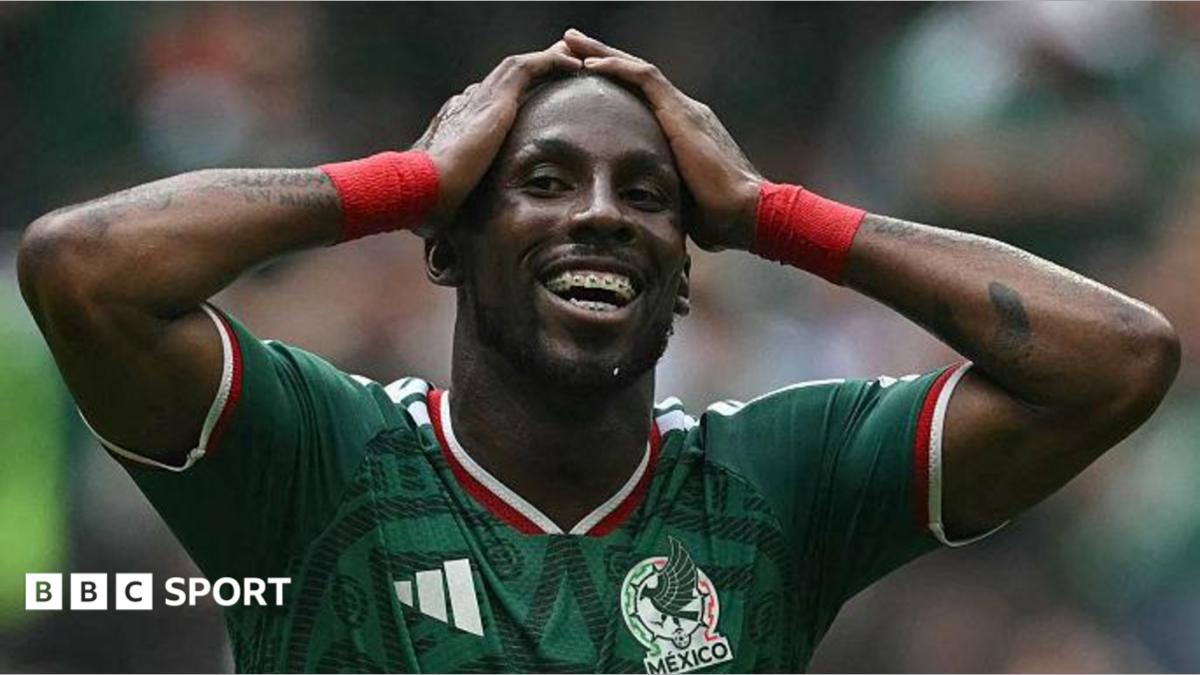
Julián Quiñones has registered four goal involvements in four matches at the 2026 World Cup. Since Opta began tracking detailed World Cup statistics in 1966, no Mexican player has ever recorded a higher goal involvement in a single edition of the tournament. He currently shares this historic record with Luis Hernández, who scored four goals during France 1998.
The statistical blueprint of Quiñones' tournament is defined by extreme efficiency. He has generated three goals and one assist from an expected goals (xG) value of just 1.84. This overperformance is not a fluke of small sample sizes, but the result of shot selection and intelligent vertical movement.
As BBC Sport reported, Quiñones has already scored three times in the United States. He opened the tournament in the ninth minute against South Africa, scored against the Czech Republic, and netted the opener in the round of 32 against Ecuador. His next challenge is England on Monday morning at the Azteca Stadium.
The comparison with Luis Hernández reveals contrasting styles of play. While Hernández was a traditional penalty box poacher, Quiñones operates as a modern inside forward. His ability to create chances for others adds a dimension that Mexico's historical attacks lacked.
The Azteca Altitude and England's Right-Back Dilemma
The round of 16 tie takes place in Mexico City, where the altitude of 2,240 meters above sea level becomes a tactical variable. At this height, recovery times after high-intensity sprints increase by an average of 15 percent. This physical tax will directly impact England's right-back position, a defensive area currently under intense debate.
Quiñones will start on the left wing, positioned specifically to isolate England's right-sided defender. His tactical role under national team coach Jaime Lozano is to stretch the opposition backline. He averages 5.8 progressive carries per 90 minutes, forcing opponents into deep defensive transitions.
If England starts a fullback who struggles in recovery runs, Quiñones will exploit the vacated space. During the group stage, England conceded 42 percent of opposition progressive passes down their right flank. Quiñones' speed allows Mexico to bypass midfields and attack the penalty area directly.
The altitude also affects the flight dynamics of the ball. Long cross-field passes travel faster and with less aerodynamic drag, making defensive coverage more difficult. Quiñones relies on these diagonal switches to isolate his marker in one-on-one duels.
Exploiting the Half-Spaces in Transition
Mexico's attacking structure relies on a 4-3-3 shape that transforms into a 3-2-5 in possession. Quiñones positions himself on the touchline before cutting inside on his right foot. This movement draws the opposing right-back out of the defensive line, creating space for overlapping runs.
In the match against South Africa, his ninth-minute goal came from this exact sequence. A midfield turnover triggered a vertical pass into the half-space. Quiñones ran onto the ball, drove into the box, and drilled his shot through the legs of goalkeeper Ronwen Williams.
Against Ecuador, he repeated the pattern by running onto a long diagonal pass down the left channel. He took two touches to control and cut inside before firing past the goalkeeper. England's defensive transition must account for this run, or risk conceding early in high-altitude conditions.
His movement profile shows he does not stay on the periphery. He registers 6.4 touches in the opposition penalty area per 90 minutes. This presence forces opposing centre-backs to shift wide, creating central gaps for Raul Jimenez to exploit.
The Al-Qadsiah Anomaly: Outscoring Ronaldo and Toney
The path Quiñones took to the World Cup was highly unconventional. Last summer, he left Club América for Saudi Pro League side Al-Qadsiah in a transfer worth £12 million, a move detailed by BBC's transfer reports. Many analysts dismissed the move as a financial choice that would dull his competitive edge.
Instead, under the tactical structure of Brendan Rodgers, Quiñones enjoyed the most prolific season of his career. He scored 62 goals in 68 matches in all competitions since joining the club. Last season, he won the Saudi Pro League golden boot with 33 goals.
According to BBC's coverage of the tournament, this tally placed him one goal ahead of England's Ivan Toney and four clear of Portugal legend Cristiano Ronaldo. Despite this individual success, Rodgers' side could only finish fourth in the league. This defensive failure highlights the imbalance in Al-Qadsiah's tactical setup.
Rodgers' system prioritized possession and high fullbacks, which exposed the defence to counter-attacks. Al-Qadsiah conceded 48 goals in 34 league matches, undermining Quiñones' offensive output. Yet, this high-possession style allowed him to refine his positioning in tight areas.
Quiñones' high goal volume was sustained by a shot conversion rate of 24.8 percent. He averaged 4.2 shots per 90 minutes, with 58 percent of those efforts hitting the target. This volume-to-accuracy ratio explains why he was able to maintain his sharpness ahead of the international summer.
The Flaw in the Numbers: Final-Third Inefficiency
Despite his scoring numbers, a detailed analysis reveals significant flaws in Quiñones' style. His pass completion rate in the final third during the group stage was just 71.4%. He often forces individual plays instead of maintaining possession in tight spaces.
Against Ecuador, before scoring the opening goal, he lost possession 14 times in the first half. His tendency to carry the ball into congested areas can stall Mexican counter-attacks. If England presses him double-teamed, they can disrupt Mexico's entire attacking flow.
Furthermore, his defensive contribution is minimal. He averages only 1.2 defensive actions per 90 minutes in his own half. This lack of tracking back leaves his left-back exposed to overlapping runs from opposing fullbacks.
This defensive neglect could be fatal against England's attacking fullbacks. If Bukayo Saka or Phil Foden combine with an overlapping runner, Mexico will struggle to contain the overload. Lozano must adjust his midfield spacing to cover the flank behind Quiñones.
The Colombian Rejection and the Six-Title Naturalisation
The international career of Quiñones is a story of national team oversight. Born in Magui Payan, Colombia, he represented his birth nation at youth level in 2017 and 2018. Despite scoring over 70 goals in the Mexican top flight, Colombia's federation never handed him a senior call-up.
During his eight years in Mexico, he played for Tigres, Atlas, and Club América. He won six Liga MX titles, lifting two trophies with each of those three clubs. This domestic dominance established him as one of the most consistent forwards in North American football.
When Colombia finally offered a call-up in 2023, Quiñones rejected it. Having lived in Mexico for nearly a decade, he chose naturalisation. He committed to the Mexican national team, a decision that now shapes their 2026 World Cup campaign.
On Monday morning at the Azteca, he faces an England team seeking their own tactical balance. Lozano will instruct his team to feed the ball to Quiñones early and often. England's backline must stop his direct runs, or they will become the next victim of Mexico's naturalised goalscorer.
Read Next
- Why a 5am licensing extension won't solve England's midfield crisis
- England’s trip to the Azteca isn’t the tactical death sentence it looks like
- Thomas Tuchel is playing with fire ahead of England's trip to the Azteca
- Why Tuchel's midnight World Cup kickoff might be a nightmare for England
- 🏆 World Cup 2026 — Full Coverage Hub
- 🏴 England World Cup 2026 — Three Lions Hub
- 🇲🇽 Mexico World Cup 2026 — El Tri Hub
- 🇨🇴 Colombia World Cup 2026 — Los Cafeteros Hub