
Why Tuchel's midnight World Cup kickoff might be a nightmare for England
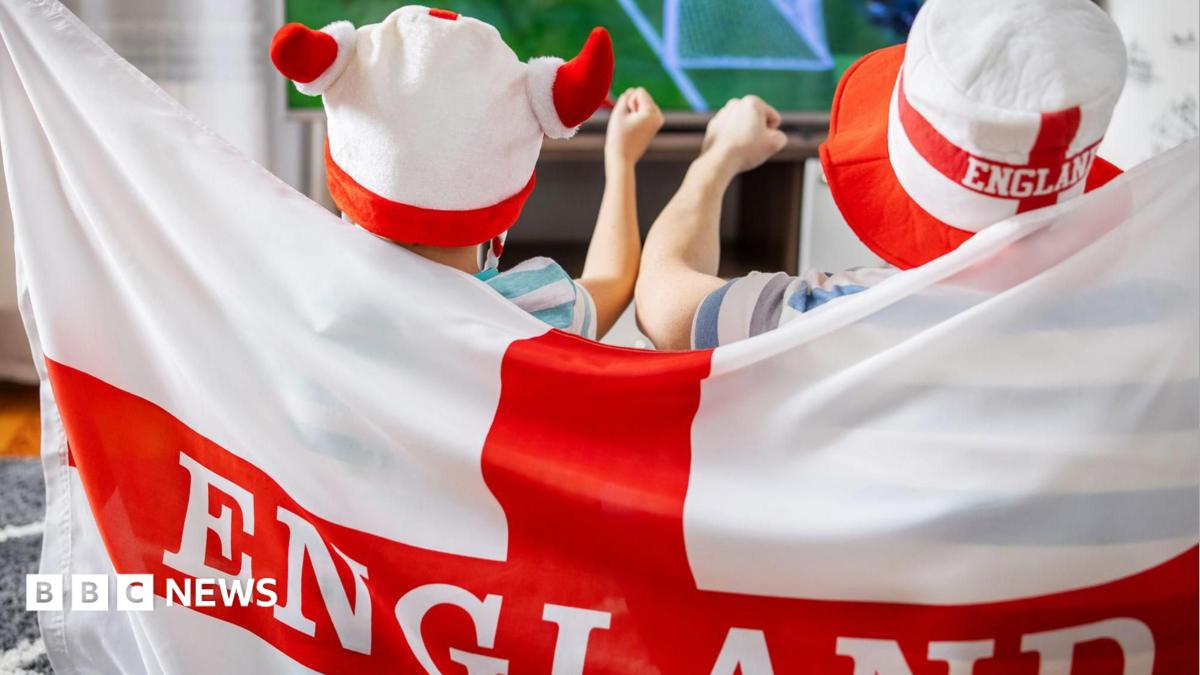
The Midnight Mandate and the Cult of Tuchel's Intensity
Thomas Tuchel’s appeal to the nation’s youth is typical of his demanding nature. He wants young supporters to fight sleep, drink coffee, and watch England's tournament survival play out in the early hours of Monday morning. But the real problem isn't the sleep schedules of school children; it is the sluggishness of his own team's possession play.
The tactical stagnation on display during the first two group matches suggests that viewers might find sleep a welcome escape from England's sideways passing networks. As the match against Mexico kicks off at 1:00 AM BST on Monday, the tactical stakes could not be higher. This is a must-win scenario that will expose whether Tuchel's complex positional play can survive under tournament pressure.
England enter the game after a frustrating 1-1 draw with Ecuador and a narrow 1-0 win over Algeria, leaving them second in the group. They need a decisive victory to secure top spot and avoid a nightmare round-of-16 tie against Argentina. As the BBC reported, the late kickoff has sparked debate over whether young fans should stay awake to watch.
Tuchel has demanded high-tempo pressing and quick transitions, yet his team has looked slow and predictable. If England cannot solve their build-up problems, no amount of midnight caffeine will save their campaign. The tactical blueprint must change before Monday night.
The Broken Mechanics of the Positional Gridlock
Tuchel’s signature 3-4-2-1 shape has so far produced sterile domination. Against Ecuador, England enjoyed 67% possession but managed a meager 0.84 non-penalty xG. The ball recirculated endlessly between John Stones, Marc Guéhi, and Levi Colwill, rarely breaking the opponent's first line of pressure.
This slow, U-shaped passing network is the antithesis of what Tuchel successfully implemented at Chelsea during his Champions League run. The central issue lies in the spacing of the double pivot. Declan Rice and Kobbie Mainoo are constantly occupying the same horizontal line, often separated by less than ten yards.
This proximity makes it simple for a single opposing midfielder to screen both passing options. Consequently, the center-backs are forced to pass sideways or drop the ball back to Jordan Pickford. This resets the attack and allows the opponent to regroup.
Pickford's distribution has also contributed to the build-up congestion. Under instruction to play out from the back, he has frequently opted for short, low-value passes to the wide center-backs rather than executing his trademark long-range launches. This keeps England pinned in their own third, playing directly into the teeth of Mexico's high-pressing block.
When the ball does reach the wing-backs, Bukayo Saka and Kieran Trippier are receiving it in deep areas. Instead of isolating opposing full-backs in 1v1 situations, they are met by a shifting defensive block that easily pushes them backward. Harry Kane is forced to drop into his own half just to touch the ball, leaving the penalty box empty.
Jude Bellingham and Phil Foden, playing as the dual ten's, are starved of service in the half-spaces. They are forced to chase shadow runs, dragging themselves out of position to ask for the ball. This disconnect between the midfield and the attacking front has neutralized England's creative threat.
Mexico's High-Pressing Trap and the Midfield Conundrum
Mexico will not sit deep and wait. Under their current manager, they employ an aggressive mid-press designed to force turnovers in the middle third of the pitch. Their defensive metrics are impressive, maintaining a PPDA of 12.4 during the tournament.
This indicates an intense hunger to disrupt the opposition's build-up. They target the half-spaces, using their central midfielders to cut off the diagonal passes from England's wide center-backs. Mexico's front three, led by Santiago Giménez, press in a curved trajectory to force the ball toward the touchline.
Once England's wing-backs receive the ball near the halfway line, Mexico trigger a trap. The nearest midfielder, the full-back, and the winger converge to create a three-man cage. This forces a backpass or a hurried long ball that turns possession over.
Mexico’s wingers, Hirving Lozano and Uriel Antuna, are adept at making inward runs to pin the opponent's back three. This vertical pinning action forces England's wide center-backs to stay central, preventing them from stepping out to assist the wing-backs. This leaves Saka and Trippier in constant 1v2 situations against Mexico's overlapping full-backs.
England's lack of vertical passing options makes them highly vulnerable to this trapping system. Furthermore, Mexico’s transition play relies on exploiting the space behind England's wing-backs. When Saka pushes forward to join the attack, the space behind him is immediately targeted by Luis Chávez's direct passing.
Hirving Lozano's speed on the left wing will test John Stones' ability to cover the wide channel. If Stones is dragged out of the back three to defend the wide areas, the central defense is left exposed to Giménez's late runs into the box. England must find a way to neutralize this threat or face elimination.
To break Mexico's press, England need a midfielder who can receive the ball on the half-turn under pressure. They need someone willing to carry the ball forward, forcing the Mexican midfield to step out and commit. Currently, Rice and Mainoo are playing too safely, prioritizing ball retention over progression.
This safety-first approach is exactly what Mexico want, as it keeps the game in front of their defensive lines. Tuchel must consider introducing a more vertical passer into the pivot. Adam Wharton’s passing range could unlock the front three, but his lack of physical presence makes Tuchel hesitant in defensive transitions.
Conor Gallagher offers the energy to match Mexico's midfield, but lacks the technical composure required to progress the ball through tight spaces. It is a tactical catch-22 that Tuchel has failed to resolve during his training sessions in North America. The solution may lie in dropping Bellingham into a deeper role.
This would free up a space for Cole Palmer to start as one of the dual ten's, adding unpredictability to the final third. Palmer's ability to slide passes through narrow gaps is exactly what Kane needs to get back into the goals. Tuchel’s reluctance to alter his structural starting point is hindering the creative potential of his squad.
The positioning of Foden and Bellingham as dual ten's has also backfired due to their tendency to occupy similar vertical zones. Foden naturally drifts to the left half-space, while Bellingham favors the left-central area, leading to an unbalanced attack that ignores the right flank entirely. This makes England's possession incredibly easy to defend, as opponents can simply overload their right-defensive side to block the cross.
The Environmental Toll and the Threat of Early Exit
The physical reality of playing a high-intensity match in the Mexican summer heat adds another layer of complexity. The high altitude and humidity will test England’s physical conditioning to the absolute limit. Pressing constantly for 90 minutes in these conditions is a recipe for muscular fatigue and mental errors.
The venue of the match, the Estadio Azteca in Mexico City, presents a unique tactical obstacle with its altitude of over 7,200 feet. At this elevation, the ball travels faster through the air, affecting passing weight, while the aerobic capacity of the players is severely compromised. Tuchel's high-intensity pressing scheme, which relies on synchronized sprints, will be nearly impossible to sustain for ninety minutes in this thin air.
Tuchel must adapt his intense counter-pressing demands, or risk his players running out of gas by the hour mark. We saw in England's second group match how the intensity dropped off a cliff after the hour mark. The distance covered stats dropped by 12% in the second half, leading to a late equalizer for Ecuador.
Mexico will also benefit from a partisan home crowd that will amplify the pressure on England's fragile composure. The hostile atmosphere has historically rattled European teams who struggle to adapt to the noise and the physical intensity. If England concede early in this cauldron, the mental resilience of Tuchel's squad will be tested as much as their physical endurance.
Smart game management will be required. Tuchel cannot afford to wait until the 80th minute to make his substitutions if the press begins to fail. England's rest defense has been sub-optimal when they lose possession in the final third.
The distance between the attacking unit and the defensive line is too large, creating a vast space in midfield. Mexico will exploit this space if England's counter-press is not coordinated. If England fail to win the ball back within the first three seconds of losing it, they must drop into a compact mid-block.
Tuchel's stubbornness is well-documented. He trusts his tactical system implicitly, often preferring to stick to his structural plan rather than making reactive changes. But tournament football does not forgive rigidity.
If England fall behind early, they do not possess the dynamic attacking patterns to chase the game successfully. A repeat of the passive performance against Ecuador will result in a historical disaster against a motivated Mexican side. The English media will be ruthless if this campaign ends prematurely.
Tuchel was hired specifically to deliver a trophy, not to coach a team that plays boring, risk-averse football. The pressure is mounting, and the manager's calls for fans to stay up until dawn will look foolish if his team delivers another lifeless performance. The players must show the tactical flexibility that has been lacking throughout the group stage.
Ultimately, England have the technical superiority to win this match. But tactical superiority is earned on the pitch, not on the whiteboard. Tuchel must find a way to connect his midfield to his attack, protect his wide channels, and manage the physical demands of the climate.
If he fails, the post-mortem of England's 2026 World Cup campaign will begin at the final whistle. The tactical blueprint must evolve, or the lights will go out on England's tournament dreams. The final test comes in the 84th minute of Monday's clash, when fatigue will meet tactical discipline.
Read Next
- Tuchel is marching England into a tactical trap at the Azteca
- England face a brutal altitude trap at the Azteca after surviving DR Congo
- Top 10: Thomas Tuchel's World Cup Turbulence
- Why a 5am licensing extension won't solve England's midfield crisis
- 🏆 World Cup 2026 — Full Coverage Hub
- 🏴 England World Cup 2026 — Three Lions Hub
- 🇲🇽 Mexico World Cup 2026 — El Tri Hub
adidas Unisex Adult Tiro Match Shin Guards
Solid hard-shell protection with attached ankle guards for Sunday league warrior
Frequently Asked Questions
When does England's World Cup match against Mexico kick off?
Why is the Mexico match a must-win game for England?
What tactical formation is England using under Thomas Tuchel?
What problems are Declan Rice and Kobbie Mainoo facing in midfield?
How has Jordan Pickford's distribution affected England's build-up play?
More Coverage

Man City's £900m scandal casts a long shadow over the A-League launch
1 day, 11 hours ago
England win in Prague but Thomas Tuchel still has tactical puzzles to solve
1 day, 17 hours ago
Tuchel got his win in Prague, but Trent and VAR are still causing arguments
1 day, 17 hours ago
Thomas Tuchel is still overthinking Trent Alexander-Arnold
1 day, 17 hours ago
Thomas Tuchel is playing with fire after England's Wembley disaster
2 days, 3 hours ago
Why Ruben Amorim is misusing Goncalo Ramos at AC Milan
2 days, 6 hours agoMore Analysis
Man City's £900m scandal casts a long shadow over the A-League launch
1 day, 11 hours ago
England win in Prague but Thomas Tuchel still has tactical puzzles to solve
1 day, 17 hours ago
Tuchel got his win in Prague, but Trent and VAR are still causing arguments
1 day, 17 hours ago
Thomas Tuchel is still overthinking Trent Alexander-Arnold
1 day, 17 hours ago
Thomas Tuchel is playing with fire after England's Wembley disaster
2 days, 3 hours ago