The Transfer Loophole That Shook Firhill
Football transfers usually follow a tedious script of agent leaks and prolonged medicals. What occurred between Celtic, Partick Thistle, and Doncaster Rovers on July 07, 2026, was a refreshing piece of administrative theatre.
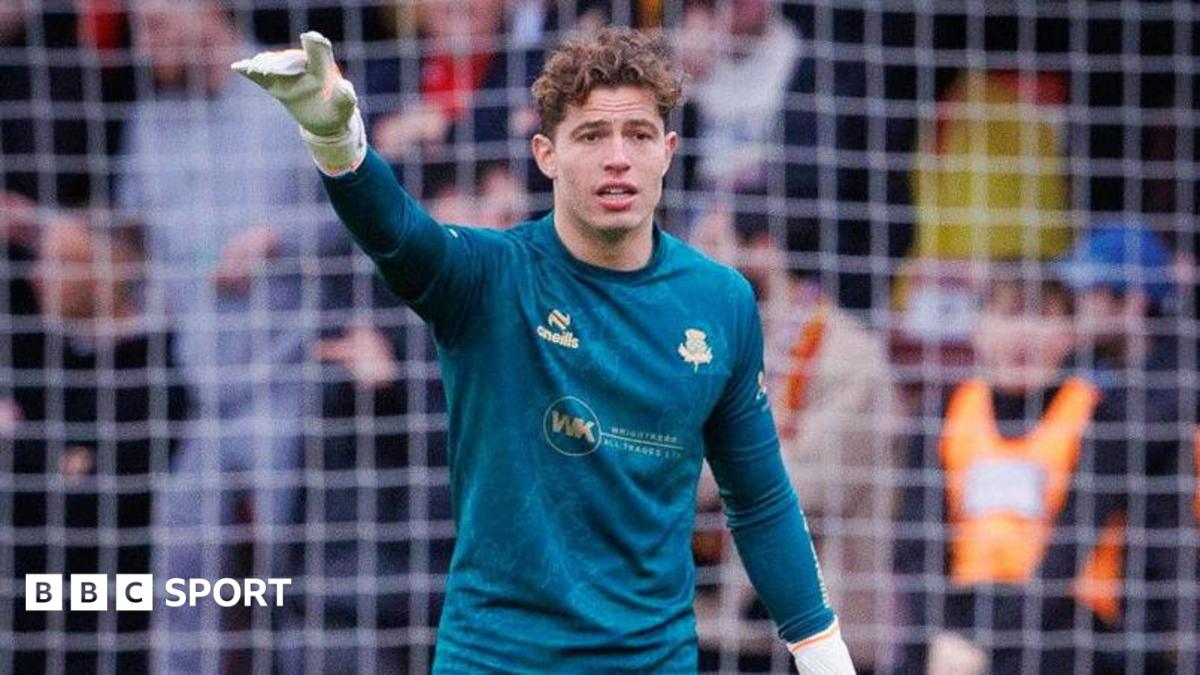
Doncaster Rovers secured goalkeeper Josh Clarke on a season-long loan, a deal destined to turn permanent in January. The real twist lay in the complex paperwork.
Clarke had only just agreed a permanent contract with Partick Thistle after leaving Celtic as a free agent. Doncaster moved quickly, exploiting the clause to secure a player who completed a bizarre transfer triangle.
Sporting Director Ian Baraclough admitted a contract clause allowed the 21-year-old to depart immediately if an English club of Doncaster's stature bid. Thistle pocketed an undisclosed fee, and Doncaster landed a prime development asset.
Clarke's move, coming immediately after his Celtic switch, caught Scottish football off guard. The terms of the goalkeeper's permanent-option loan mean Doncaster have secured their long-term number one.
McCann's Squeeze and the Midfield Trap
Why Clarke Fits the System
To understand why Grant McCann moved so swiftly for Clarke, one has to examine the spatial problems that plagued Doncaster last season. Under McCann, Doncaster deployed a high-intensity 4-3-3 shape. The front line pressed aggressively, forcing opponents into rushed clearances.
However, this defensive squeeze was often undermined by goalkeeping positioning. Thimothée Lo-Tutala is a competent line-keeper, but his starting position was routinely too deep. He averaged just 1.1 defensive actions outside his penalty area per ninety minutes.
This created a yawning gap between the back four and the goalkeeper. Opponents targeted this 25-yard pocket with direct diagonal balls. When the defensive line is forced to drop to cover this space, the midfield unit gets stretched and the compact shape evaporates.
Clarke's data from his loan spell at Partick Thistle suggests he is the solution to this structural flaw. In the Scottish Championship last year, Clarke made 42 appearances and kept 14 clean sheets. His heat map shows a goalkeeper comfortable operating 15 yards off his line.
He recorded 2.4 defensive actions outside the box per ninety minutes. His distribution was also key to Thistle's transition play. He completed 78% of his short-to-medium passes, allowing them to build from the back under pressure.
His background at the Harlequins rugby academy and Surrey youth cricket shows in his handling. He is aggressive in claiming crosses, catching 92% of aerial balls in his six-yard box last term. This physical dominance will settle a nervous backline.
Squeezing the Back Line
With Clarke sweeping behind, McCann can instruct his center-backs to push higher up the pitch. Neill Byrne, signed from Bradford City, and the experienced James Husband will benefit from this structural shift. Byrne is dominant in the air but lacks recovery speed over thirty yards.
If Byrne is forced to defend in a low block, he is excellent. If he has to run backward toward his own goal, he struggles. Squeezing the pitch by ten yards reduces the space Byrne has to cover.
Husband's intelligence at left-back will also be amplified. He can step into the half-spaces to intercept passes rather than turning to chase wingers. Clarke's presence allows both defenders to play to their strengths.
Alfie May's Pressing Triggers
Doncaster's defensive shape is only half the story. The real optimization happens in transition. The loan signing of Alfie May from Huddersfield Town is a clear statement of intent.
May is a relentless presser who does not allow center-backs time on the ball. At Huddersfield, May triggered 18.4 pressures per ninety minutes. He curves his runs to cut off the passing lane to the opposing defensive midfielder.
With May leading the press, Doncaster will look to win the ball in the middle third. George Broadbent and Owen Bailey are the ideal partners to spring the trap. Bailey sits as the single pivot, breaking up play and recycling possession quickly.
Broadbent is the carrier who runs from deep, exploiting the space created when May drops off the front line. If Doncaster can force turnovers in these central areas, the speed of Leon Ayinde and Francis Okoronkwo on the flanks will be lethal. But this entire system relies on the goalkeeper's feet.
If Clarke cannot distribute quickly, the transition momentum is lost. Goalkeeping in League One is a brutal physical test, far more intense than the Scottish Championship. Opponents will test his nerve early, crowding his six-yard box on set plays.
If Clarke falters under physical pressure, the confidence of the entire defensive line will crumble. Furthermore, McCann's high-risk build-up is prone to catastrophic errors. A single misplaced pass from the back can lead to an open goal.
The Celtic Legacy and the Rangers Penalty Heroics
Clarke's reputation as a cold-blooded competitor was forged in the Glasgow academy bubble. During his time in the Celtic youth ranks, his standout moment came in a Glasgow derby shootout against Rangers B. Clarke saved four consecutive penalties in that shootout.
This was not a fluke of guessing; it was a display of psychological dominance and explosive lateral power. He waited out the shooters, refusing to commit early, forcing them to alter their run-ups. That level of composure is exactly what McCann needs when Doncaster face high-pressure moments.
His physical profile also offers a stark contrast to traditional League One goalkeepers. Standing at 6'2", he is not a towering giant, but his rugby background at Harlequins has given him an unusual aerial presence. He is accustomed to heavy contact.
In the Scottish Championship last year, opposing forwards tried to pin him on corners, yet his command of his box remained unshaken. This physical resilience will be tested immediately. League One forwards are notoriously unforgiving with young goalkeepers.
Deciphering the 4-3-3 Transition Play
McCann's tactical blueprint has always focused on numerical overloads in wide areas. When building from the back, Bailey drops between the split center-backs, forming a temporary back three. This allows the full-backs, Husband and Jamie Sterry, to push high into the midfield line.
The wingers, Ayinde and Okoronkwo, pinch inside to occupy the half-spaces. This creates a 3-2-4-1 shape in possession. It is a highly offensive structure designed to overload the opponent's defensive line.
However, this system requires a goalkeeper who can act as the first line of attack. If the goalkeeper is forced to kick long under pressure, the temporary back three is caught out of position. This is where Clarke's technical comfort with both feet becomes vital.
At Celtic, he was trained to receive the ball under pressure and play short, crisp passes. If the opponent tries to press high with their front two, Clarke can calmly slide the ball past them to Bailey, breaking the first line of pressure. If they sit deep, Clarke can advance out of his box, acting as an extra outfield player.
The Opening Day Clash at Field Mill
The opening day fixture on August 15 at Field Mill is a fascinating tactical matchup. Mansfield Town under Nigel Clough are a stubborn, well-drilled outfit. They typically deploy a narrow 4-4-2 diamond.
This diamond creates numerical superiority in the center of the pitch. Louis Reed orchestrates play from deep, while their narrow midfielders squeeze the space. If Doncaster try to play through the middle, they will walk into a trap.
This is where Clarke's distribution becomes the primary weapon. He must bypass Mansfield's narrow diamond by targeting the wide areas. His ability to ping 40-yard diagonals to the feet of Ayinde or Husband is key to stretching Mansfield's block.
Once the diamond is stretched, Broadbent can find space in the half-spaces. If Doncaster can execute this transition, Mansfield's center-backs will be isolated against May's movement. Defensively, Doncaster must watch the movement of Mansfield's front two.
They like to run the channels, pulling center-backs out of position. Clarke's sweeping position must be precise. He cannot hesitate when Mansfield play early balls over the top for their strikers to chase.
A Bold Forecast for the Opening Day
This opening fixture will be a cagey, tactical battle of systems. Mansfield's narrow diamond will choke the central space early on. Doncaster will struggle to find their rhythm in the first half hour.
However, Clarke's ability to sweep high will prevent Mansfield from exploiting the space behind Byrne. Doncaster will gradually assert control by spreading the play wide. Ayinde will find joy against Mansfield's exposed full-backs.
Expect a tight contest decided by a single moment of transition quality. Alfie May will open his account in the second half, converting a low cross from Ayinde. Doncaster will secure a hard-fought 1-0 victory to start their campaign.
Read Next
- Why England's Bellingham and Kane dependency is a tactical trap
- After the Chelsea disaster, Liam Rosenior faces a fascinating test at Paris FC
- Spain's perfect defense is about to face its ultimate test against Belgium
- Why Egypt's low block will push Argentina to the absolute limit in Atlanta
- 🎮 EFL League One 2025-26 — Wrexham, Birmingham & Promotion Race Hub