The narrative leading into Atlanta is almost too neat. Lionel Messi and Mohamed Salah will share a pitch in national colors for the first time, with a quarter-final ticket on the line. It is the sort of marketing dream that tournament organizers print money with.
But the actual match at Mercedes-Benz Stadium will not be decided by individual branding. Instead, it will be a grinding war of attrition between Argentina's slow, possession-based positional play and Egypt's rigid, narrow defensive block.
Egypt did not reach the knockout stage by playing expansive, eye-pleasing football. Under their current setup, they have happily conceded territory, averaging just forty-one percent possession across their three group matches. They defend in a deep 4-5-1 shape that compresses the space between the defensive line and the midfield, making central penetration a nightmare for opponents.
Argentina will face a massive challenge trying to break down this defensive wall. Lionel Scaloni’s side prefers to build through short, patient passes, looking to find Messi in the right half-space. If Egypt can successfully close those passing lanes, Argentina will be forced to play wide, where their crossing has been statistically poor.
Look at the data from the group stage. Argentina attempted sixty-four crosses but completed only twelve of them, representing a dismal nineteen percent success rate. When forced to play around a low block rather than through it, they look sluggish and predictable.
Egypt's central midfield trio will be tasked with tracking Messi's drop-in movements. They must maintain their horizontal spacing to prevent vertical passes into the penalty box. If they lose discipline for even a second, Argentina will exploit the gap.
But Egypt has a major vulnerability of their own. Their central defenders lack recovery pace when dragged out of position. If Argentina can pull the Egyptian centre-backs wide using diagonal runs from their wingers, they will expose a massive channel in the middle of the box.
The Tactical Blueprint to Stop Messi
Egypt's Narrow Midfield Screen
To understand how Egypt will approach this game, we must look at how they frustrated opponents in the group stage. Their defensive block is designed to stay compact, leaving less than fifteen meters between their defensive and midfield lines. By crowding the central areas, Egypt forces their opponents to play low-value crosses from wide areas, which their physical center-backs easily clear.
During their group-stage finale, Egypt allowed an expected goals (xG) figure of just 0.24 from open play. They achieved this by refusing to press high, instead choosing to trigger their defensive actions only when the ball entered their defensive third. This passive defensive stance will test Argentina's patience, as Lionel Scaloni's men prefer a slower tempo to set up their attacking rotations.
The key match-up will be in the right half-space, where Messi constantly seeks to receive the ball on his left foot. Egypt's left-sided central midfielder must shadow Messi's diagonal movements without leaving space behind for overlapping runners. If Egypt's midfield screen collapses, Argentina's central midfielders will quickly find vertical passing lanes into the penalty area.
The Danger of Impatient Build-up
Argentina's biggest risk is getting frustrated and committing too many players forward in search of a breakthrough. When teams overcommit against Egypt, they play right into their hands. Egypt's entire offensive strategy relies on quick transition moments, looking to release their wingers into wide areas the moment they win the ball.
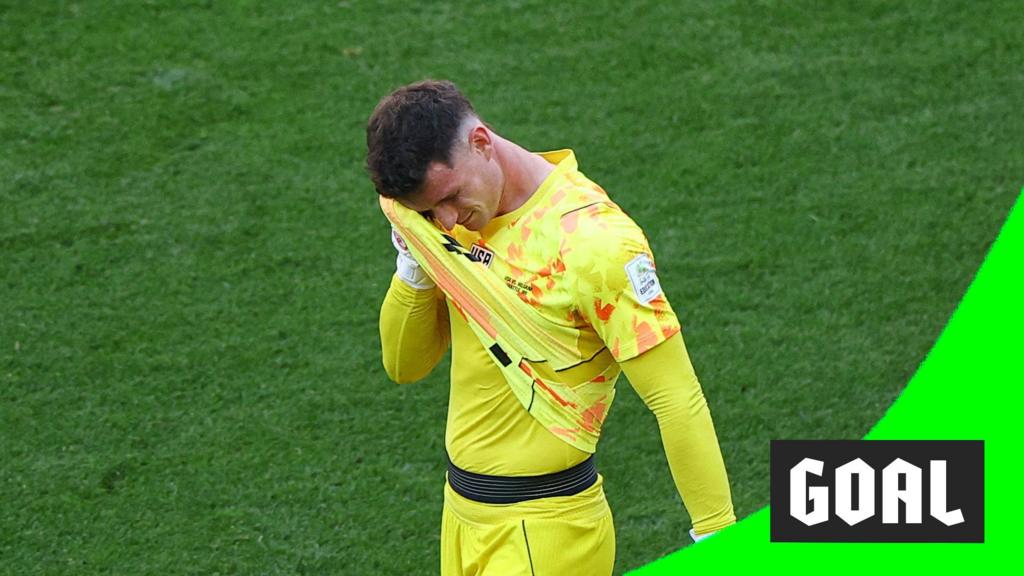
We saw the danger of defensive impatience in the round of 16 match between Belgium and the United States. USA goalkeeper Matt Freese made a massive error in judgment by trying to play out under heavy pressure, which gifted Belgium an easy goal.
You can see the details of that defensive collapse in the BBC's coverage of the USA's round of 16 exit. If Argentina's defenders attempt risky passes out of the back against Egypt's mid-block, they could easily suffer a similar fate.
Salah and the Counter-Attacking Weapon
Targeting the Space Behind Tagliafico
Egypt's primary route to goal will be direct counter-attacks targeted at the space left behind Argentina's left-back. Nicolas Tagliafico has a tendency to push extremely high during Argentina's possession phases, often joining the midfield line to create a numerical advantage. This leaves a massive void on the left side of Argentina's defense that Egypt will look to exploit immediately upon winning possession.
Salah will position himself high and wide on the right flank, waiting for the transition trigger. During the group stage, seventy percent of Egypt's progressive passes were directed toward the right channel. Once Salah receives the ball in space, he can either carry it inside to shoot or look for support runs from his teammates.
To counter this, Argentina's left-sided center-back must be prepared to shift wide and cover the space behind Tagliafico. This defensive shift requires perfect timing, as moving too early will open up space in the center of the box. If Egypt can drag Argentina's center-backs out of their central positions, Salah will find opportunities to slip passes to runners entering the penalty area.
Argentina's Rest Defense Under Scrutiny
Argentina's defensive stability will depend on their rest defense, specifically the positioning of their holding midfielders. Alexis Mac Allister and Enzo Fernandez must remain disciplined, positioning themselves to immediately stop counter-attacks before they gather momentum. If they fail to lock down the central zones, Egypt will transition from defense to attack with devastating speed.
In their last match, Argentina struggled during defensive transitions, conceding three counter-attacking shots from central areas. Their midfielders were caught too high up the pitch, leaving their backline exposed to direct running. Against a forward of Salah's caliber, repeating those positioning mistakes will lead to conceded goals.
The Prediction: A Grinding Argentine Victory
Why Class Will Eventually Tell
While Egypt has the defensive organization to frustrate Argentina for long stretches, their lack of attacking variety will ultimately cost them. Beyond Salah's individual brilliance on the counter, Egypt struggles to create high-quality chances. If Argentina can limit Salah's touches in transition, Egypt will have very few paths to goal.
Argentina also possesses a bench capable of changing the game's tactical dynamics. If their starting plan fails to break Egypt's block, Scaloni can introduce direct, physical wingers to stretch the pitch. This tactical flexibility gives Argentina a major advantage as the match progresses into the second half.
We expect a very tight, tense affair in Atlanta, with Egypt defending deep and Argentina dominating possession. Argentina will likely secure a narrow 1-0 victory, with a late goal breaking Egyptian hearts. Argentina's superior technical quality and squad depth will eventually wear down Egypt's defensive resistance.
Read Next
- England survived the Azteca siege, but Haaland is waiting in Miami
- Why England's chaotic victory at the Azteca is a warning sign
- Arthur Fery’s Wimbledon run is exposing the limits of collegiate grit
- Chelsea will regret letting Johanna Rytting Kaneryd join Lyon
- 🏆 World Cup 2026 — Full Coverage Hub
- 🇦🇷 Argentina World Cup 2026 — Defending Champions Hub
- 🇪🇬 Egypt World Cup 2026 — Salah's Last Dance