The Concentrated Firepower of England's Front Two
England reached the quarter-finals of the 2026 World Cup by the absolute skin of their teeth. They did it through a statistical anomaly that should terrify Thomas Tuchel.
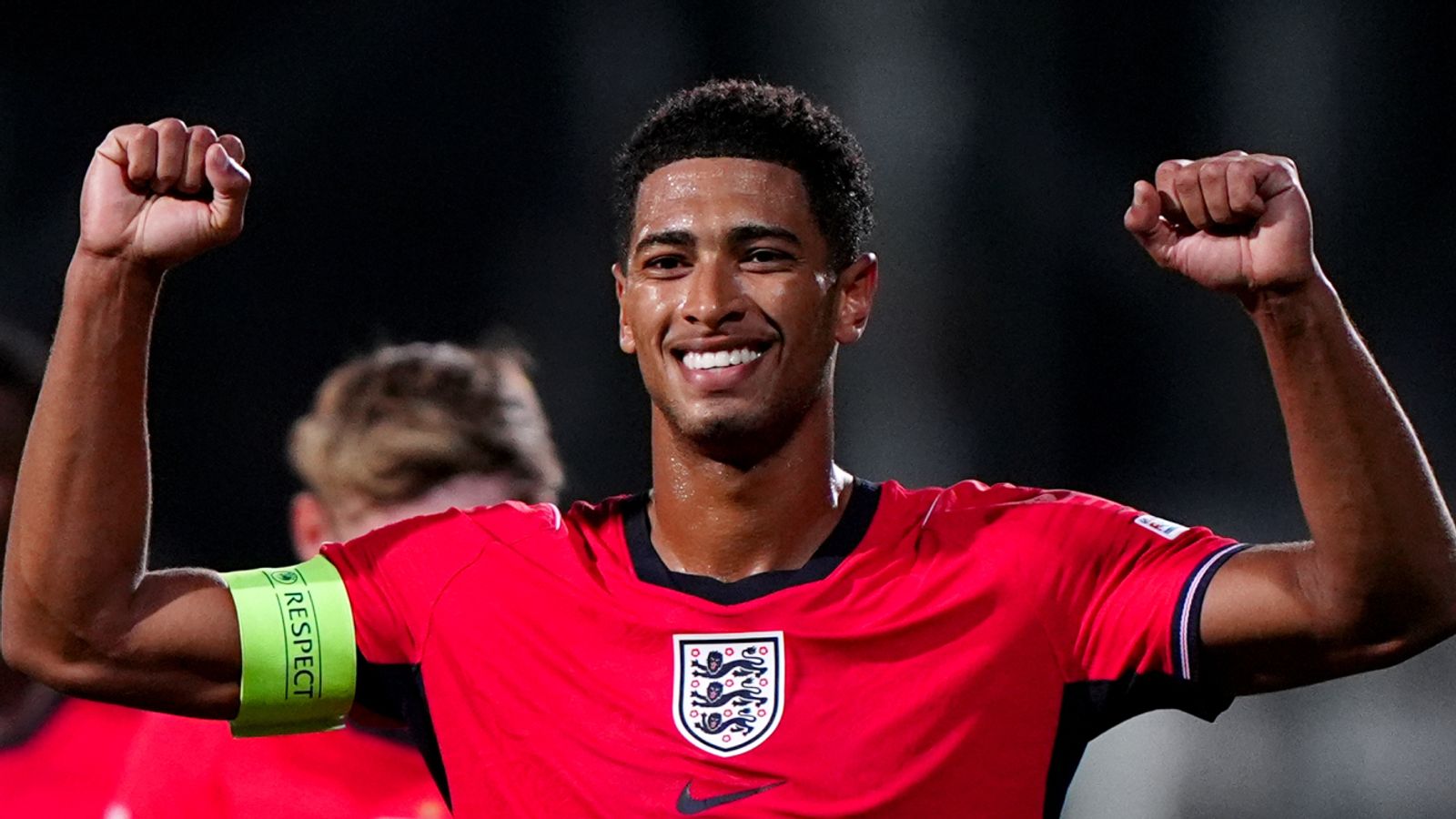
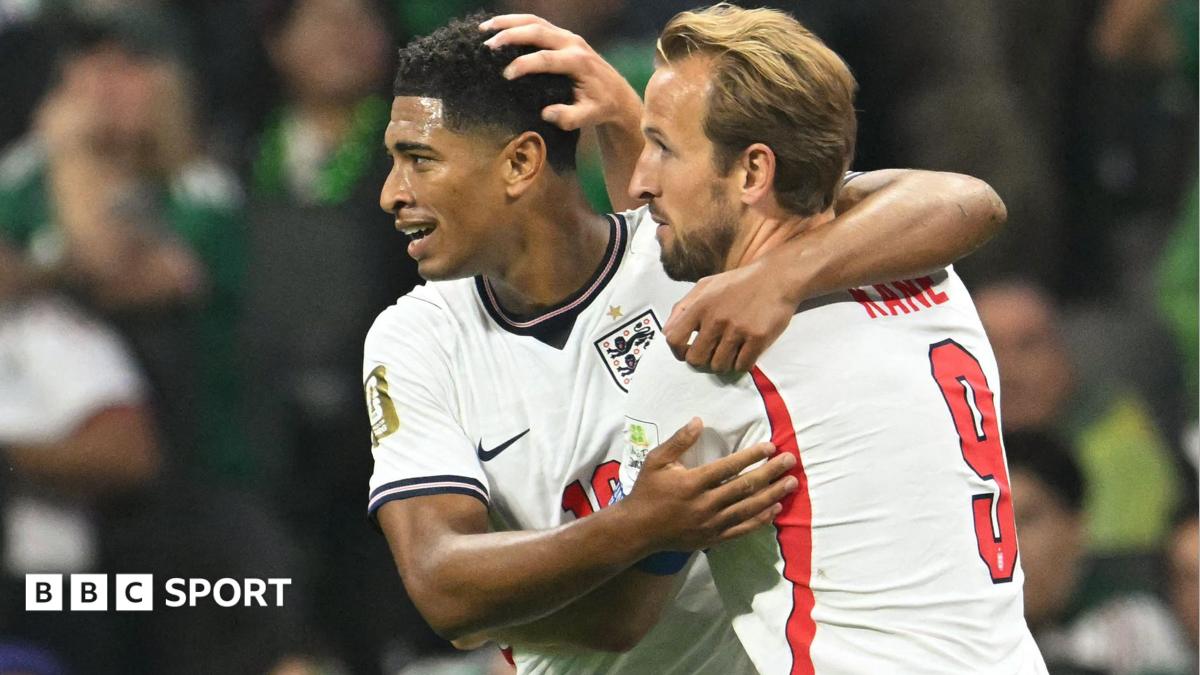
Of the 11 goals England registered across their five matches, a staggering 90.9% were scored by just two men. Harry Kane has found the net six times, while Jude Bellingham contributed four. Marcus Rashford is the only other goalscorer, striking in the 85th minute of a chaotic 4-2 opening victory against Croatia on June 15.
This extreme concentration of offensive output represents a violent departure from England's recent tournament history. During their run to the final at Euro 2024, the goalscoring burden was shared across five players.
Go back to the 2022 World Cup in Qatar, and England scored 13 goals through eight different players. Today, the English attack is a two-man band, operating with almost no final-third contribution from its expensively assembled wings. As BBC Sport analyzed, this dependency has made them highly predictable.
While the raw numbers suggest superstars dragging their country to glory, underlying metrics reveal structural dysfunction. England are not creating a high volume of quality chances; they rely on elite finishers to convert difficult opportunities.
This system survived against Croatia, Panama, DR Congo, and Mexico. However, it represents a high-wire act unlikely to hold as the opposition quality rises. If Norway disconnect the supply line to either Kane or Bellingham in Miami on Saturday, Tuchel has no functional plan B.
Tuchel's Central Congestion: Why the Wings Have Gone Cold
The root of England's reliance on Kane and Bellingham lies in the structural mechanics of Tuchel's 4-2-3-1 system. In possession, this shape morphs into a fluid but narrow 3-2-2-2, with Kyle Walker tucking in as a third center-back and the left-back pushing high.
This asymmetry is designed to build a secure structure against defensive transitions. Unfortunately, its side effect has been the total isolation of England's creative wide players. Phil Foden and Bukayo Saka have frequently found themselves stranded on the touchline, receiving the ball with their backs to goal.
The passing network maps from England's 2-1 victory over DR Congo tell a damning story. John Stones and Marc Guéhi exchanged 43 passes in low-tempo sequences. Declan Rice and Kobbie Mainoo formed a safety-first pivot, rarely progressing play.
Saka had an average of just 1.2 passing options within a 15-yard radius when receiving the ball on the right. Saka and Foden have been reduced to cross-and-hope delivery systems. This has resulted in an abysmal 14.8% cross completion rate.
This central congestion has choked England's overall chance creation. England have averaged 58.4% possession, a metric that suggests control. However, their field tilt—which measures the share of passes completed in the final third—stands at a mediocre 49.8%.
They are keeping the ball, but they are keeping it in harmless areas. The team's total non-penalty expected goals (xG) across their three group matches was a meager 3.12, yet they scored six. This overperformance is unsustainable and points to individual efficiency masking a stagnant system.
The Bellingham Mutation: From Progressor to Shadow Striker
To understand why the ball is not moving fluidly through the midfield, one must examine Bellingham's tactical repositioning. At Real Madrid, Bellingham evolved from a box-to-box midfielder into a late-crashing ten. Under Tuchel, he has mutated further, playing almost as a second striker alongside Kane.
While this has resulted in four goals, it has fundamentally broken England's midfield progression. Bellingham is no longer dropping into the middle third to help Rice and Mainoo escape pressure. Instead, he is occupying the same central spaces as Kane.
Bellingham's statistical profile in this tournament highlights this shift. He has scored his four goals from just nine total shots, representing a conversion rate of 44.4%. This is an elite, striker-level efficiency.
However, this goal threat has come at the expense of his playmaking. Bellingham's final-third pass completion rate has plummeted to 73.2% in this World Cup, compared to the 86.5% he maintained during Euro 2024. He is looking for the killer blow on every touch, completing only 1.4 progressive passes per 90 minutes.
This mutation was visible against Mexico. Bellingham scored in the 36th and 38th minutes, but both goals came from central runs that bypassed the midfield. In the second half, when Mexico adjusted by dropping Edson Álvarez into a back three, Bellingham became a peripheral figure.
He completed only four passes in the final 45 minutes. This left England's midfield disconnected and allowed Mexico to claw their way back.
Kane's Gravity and the Penalty Cushion
Harry Kane's tournament has been a masterclass in spatial manipulation. However, it also exposes the limitations of his physical decline. Kane is no longer the mobile forward who can sprint behind defensive lines.
Instead, he uses his physical gravity to drag center-backs out of position, creating the vacuum that Bellingham runs into. This partnership has been lethal, but it requires Kane to spend long stretches of the game far away from the opponent's penalty area.
Of Kane's six goals, two have come from the penalty spot. These were the opener against Croatia and a penalty kick in the 60th minute against Mexico.
Strip away those spot-kicks, and Kane has four open-play goals from an individual xG of 2.85. Against DR Congo, his two goals in the 75th and 86th minutes were one-touch finishes from low-value areas, totaling an xG of just 0.38. When a striker feeds on half-chances, the margin for error is razor-thin.
When Kane drops deep and Bellingham pushes high, opposition center-backs pin Bellingham. With no threat in behind from Saka or Foden, defensive lines compress the space. England's opponents realized they only need to defend the central 30 yards.
Panama deployed this low-block effectively on June 27, restricting England to sideways passes. It took Bellingham's individual brilliance to break the deadlock in the 62nd minute.
The Defensive Cost of the Wonderwall
The consequence of pushing Bellingham so high to partner Kane is the exposure of England's midfield pivot. Declan Rice is one of the world's best defensive midfielders, but he cannot cover the entire width of the pitch alone. Kobbie Mainoo is a superb press-resistant connector, but his defensive positioning remains developmental.
With Bellingham rarely dropping back to form a midfield three, England's pivot has been consistently overrun on the counter-attack. England have conceded seven goals in five games.
Opponents are bypassing England's counter-press with ease. When DR Congo transitioned, they repeatedly found space behind Rice, leading to Brian Cipenga's early opener in the seventh minute.
Mexico did the same, using lateral combinations to move Rice out of the center and create shooting opportunities for Chávez. England keep clean sheets only when opponents lack the quality to punish their defensive cracks.
Norway and the Impending Central Trap
England now face Norway in Miami with a semifinal spot on the line. Ståle Solbakken's side is tactically disciplined and possesses the exact weapons to exploit England's structural weaknesses. Norway defend in a compact 4-5-1 out of possession, with Patrick Berg anchoring the midfield.
If Tuchel continues with his narrow shape, Bellingham and Kane will find themselves surrounded by a dense forest of Norwegian shirts. Norway also possess the transition threat of Erling Haaland and the playmaking of Martin Ødegaard.
If England lose the ball due to forced central combinations, Ødegaard will have immediate access to Haaland. To survive, Tuchel must instruct his wingers to occupy wider positions and order full-backs to overlap. He must demand Bellingham support the build-up.
If he refuses to adapt, England's World Cup journey will end in Miami. The tactical dependency they refused to break will be their downfall.
Read Next
- Spain's perfect defense is about to face its ultimate test against Belgium
- England's World Cup campaign hit by freak Jordan Henderson injury
- England survived the Azteca siege, but Haaland is waiting in Miami
- Messi and Salah are set for a legacy deathmatch in Atlanta
- 🏴 England World Cup 2026 — Three Lions Hub