
Why Christian Fuchs was right to walk away from Newport County
A Revolving Door at Rodney Parade
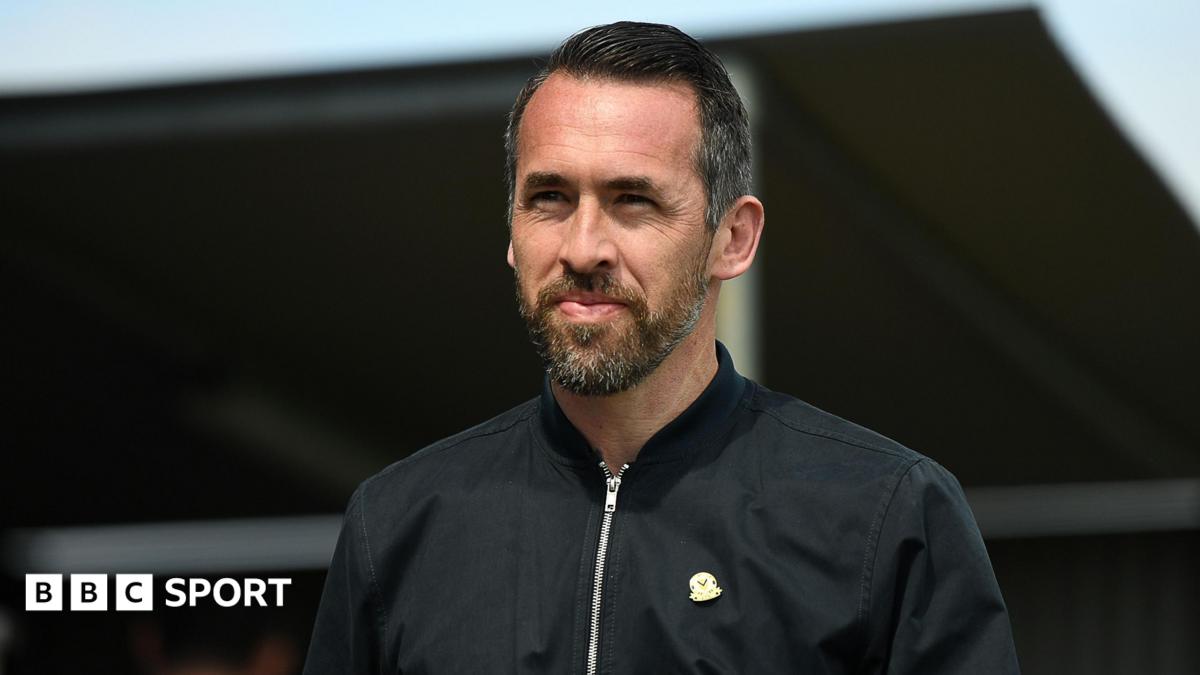
The announcement on June 27, 2026, was as predictable as it was deflating. Christian Fuchs is leaving Newport County, as BBC Sport reported. After just seven months in the dugout, the former Leicester City defender has decided to step away, leaving chairman Huw Jenkins searching for yet another manager.
With this departure, the South Wales club is hunting a fourth manager in little more than two years. It is a statistic that exposes the structural volatility behind the scenes at Rodney Parade. A club cannot build a sustainable identity when the office door has a permanent vacancy sign hanging on it.
Fuchs did his immediate job, keeping the club in EFL League Two after taking over a sinking ship in November 2025. Yet his exit before pre-season training begins points to a deeper malaise. The relationship between a head coach and a hands-on owner like Jenkins is fraught with tactical and operational tension.
Tactical Passivity and the Hughes Collapse
The Hughes Collapse
To understand Fuchs' tactical choices, one must look at the wreckage he inherited. His predecessor, David Hughes, had attempted to implement an expansive, possession-based style. The results were disastrous, leaving Newport at the bottom of the table in November.
Hughes' insistence on playing out from the back with a squad lacking technical security resulted in a win rate of just 18.18%. Newport conceded 42 goals in his 22 games in charge. The team played in a disjointed 4-3-3 that left the central defenders entirely unprotected by a floating midfield.
Fuchs' Defensive Low Block
Fuchs immediately abandoned these expansive ambitions. He implemented a low-block 5-4-1 structure designed to protect the penalty box. The priority was defensive spacing, reducing the vertical distance between the midfield and the defensive lines to under 15 yards.
This pragmatic shift made Newport harder to beat. By narrowing the defensive corridors, they forced opponents to play around them rather than through them. Yet this defensive solidity was a temporary shield rather than a cohesive style of play.
Over his 30 league games in charge, Fuchs recorded a win rate of just 30%. This was enough for survival, but the underlying numbers paint a worrying picture. Newport averaged only 38% possession during his tenure, willingly relinquishing the ball in almost every contest.
By dropping so deep, Newport invited relentless pressure. The team suffered 16 defeats under Fuchs, often unable to stem the tide once opponents found a way through. When the defensive block was breached, Fuchs lacked a backup plan to chase games.
The attacking transition under the 5-4-1 was painfully limited. When Newport won the ball deep in their own third, the distance to the isolated striker was too vast. Bobby Kamwa and Courtney Baker-Richardson were forced to chase long clearances with minimal support from midfield.
Furthermore, the defensive structure lacked active pressing triggers. Newport rarely harassed opponents in the middle third of the pitch. Instead, they dropped off and allowed opposition playmakers time to dictate the tempo of the game.
This lack of tactical flexibility was a major issue. Against possession-heavy sides, Newport were often pinned inside their own 18-yard box for long stretches. The lack of an outlet meant the defense was constantly under siege, leading to late concessions and dropped points.
Fuchs' reliance on a low block also limited the development of the club's younger players. Without the ball, players spent their minutes defending their own box rather than developing their progressive passing skills. The focus was survival, not growth.
The Holker Street Escape
A Disastrous Opening
Nothing illustrated the limitations of this passive approach better than the final day of the season on May 2, 2026. Newport traveled to Holker Street to face Barrow, needing a result to guarantee their league status. The performance for the first hour was a microcosm of their season's struggles.
Barrow took the lead in the 8th minute when Charlie McCann found space between the lines and fired past Jordan Wright. Newport's midfield had failed to track the runner, exposing the central defenders once again. The visitors looked devoid of ideas and offensive spark, unable to retain possession.
The game turned on a single moment in the second half. A defensive lapse resulted in a penalty for Barrow, giving Josh Gordon the chance to double the lead. Jordan Wright guessed right, diving low to make a critical save and keep the deficit at one goal.
The Shift to 4-4-2
That save galvanized Newport and forced Fuchs into a tactical shift. He abandoned the five-man back line, introducing Harrison Biggins to midfield and shifting to a flat 4-4-2. The change allowed Newport to contest second balls higher up the pitch.
The tactical gamble paid off. Tom Davies leveled the score in the 75th minute with a header from a deep cross. Eight minutes later, Bobby Kamwa cut inside from the left wing and curled home the winner to secure a 1-2 victory.
The win kept Newport up, finishing 20th with 48 points. Yet relying on a penalty save and two late goals against a relegated side is a dangerous way to survive. It was an escape born of individual determination rather than tactical control.
Had Wright not saved Gordon's penalty, Newport would likely have faced relegation. That thin margin between survival and disaster cannot be ignored. The Barrow match was a warning sign that the club's current path is unsustainable.
Boardroom Philosophy and Recruitment in a Vacuum
The Swansea Model Refused
To understand why managers keep leaving Rodney Parade, one must examine Huw Jenkins' sporting model. Jenkins completed his majority takeover in January 2024, acquiring a 52% stake in the club. He brought with him a clear vision of how a football club should be run, based on his successful years at Swansea City.
The club released a statement, as carried by BBC Sport, thanking Fuchs for his "hard work, commitment and professionalism" during his seven-month tenure.
While this structure can work, it requires absolute alignment between the owner and the manager. At Newport, that alignment has been entirely missing. Managers are hired to implement a style, yet they are given players who do not fit their tactical systems.
Graham Coughlan left in June 2024 because he wanted autonomy over squad assembly. His successor, Nélson Jardim, managed to keep the team up before departing by mutual consent in April 2025. Then David Hughes lasted only 176 days before his dismissal, followed by Fuchs' seven-month tenure.
A manager who cannot select his own players will always struggle to implement a cohesive style. When results falter, the manager takes the blame, even if the tools provided were inadequate. This structural friction makes the manager's position at Rodney Parade almost untenable.
The high manager turnover has also affected the club's recruitment. With each new manager comes a shift in tactical demand. This results in a squad composed of players signed for different systems, leading to a lack of cohesion on the pitch.
Recruitment in a Vacuum
This summer's transfer activity highlights this exact issue. Newport has already completed the signings of striker Christian Doidge and forward Yahya Bamba from Forest Green Rovers. They have also brought in midfielder Harrison Biggins on a permanent deal following his loan spell.
These are sensible signings on paper. Doidge offers physical presence, Bamba provides pace, and Biggins adds creativity. Yet these players have been signed before a new manager has even been appointed.
Whoever takes the job will have to fit these pieces into their system, regardless of their own tactical preferences. If the new coach prefers a high-pressing, possession-based game, they may struggle to integrate players signed for a more direct, transitional style.
This recruitment in a vacuum is a classic symptom of Newport's structural issues. The board is building a squad based on availability and individual profile, rather than a coherent tactical blueprint. The new manager will inherit a squad they did not choose, facing the same limitations that frustrated Fuchs.
Furthermore, signing players without a manager in place undermines the authority of the incoming coach. It sends a clear message that the board, not the manager, controls the sporting direction of the club. This dynamic makes it difficult to attract high-quality coaching candidates.
Without input from the manager, these signings also carry a high risk of failure. If the new manager cannot find a role for Bamba or Doidge, the club will be left with expensive players on the bench. This is a luxury a club with Newport's financial constraints cannot afford.
Breaking the Cycle
Newport County cannot afford another short-term appointment. The next manager must be someone who can work within Jenkins' structure without sacrificing tactical identity. If the club continues to burn through managers at this rate, relegation to the National League will become inevitable.
The board must define what they want from the head coach position. If they want a coach who simply works with the players provided, they must target someone comfortable with that limitation. Hiring ambitious managers and then restricting their influence is a recipe for failure.
Rodney Parade needs stability. Christian Fuchs did well to guide the club to safety, but his quick departure shows that survival is not enough. The structural cracks at Newport County are widening, and the next appointment will determine whether they can finally mend them.
If Jenkins wants to replicate his Swansea success, he must realize that stability requires trust. The board must trust the manager to shape the team, or accept the consequences of a revolving door. The clock is ticking, and Newport cannot afford another wasted season.
EA SPORTS FC 26 Standard Edition - PlayStation 5
The beautiful game gets a massive tactical upgrade.
Frequently Asked Questions
When did Christian Fuchs leave Newport County?
What tactics did Christian Fuchs use to keep Newport County in League Two?
Who was Christian Fuchs' predecessor at Newport County?
What was Christian Fuchs' win rate at Newport County?
Who were the primary strikers under Christian Fuchs at Newport County?
More Coverage
Chelsea survived Austria Vienna, but their defensive numbers are alarming
2 days, 19 hours ago
Pocognoli's first Scotland squad signals a massive European shift
3 days, 22 hours ago
Celtic are top of the league, but their numbers reveal a collapse in progress
4 days, 23 hours ago
Wrexham's wartime hero Peter Baines remains football's most fascinating puzzle
1 week ago
Pedro Neto's new deal reveals Xabi Alonso's tactical vision for Chelsea
2 weeks, 1 day ago
Xabi Alonso's Chelsea are pure chaos and the numbers prove it
3 weeks, 5 days agoMore Analysis
Chelsea survived Austria Vienna, but their defensive numbers are alarming
2 days, 19 hours ago
Pocognoli's first Scotland squad signals a massive European shift
3 days, 22 hours ago
Celtic are top of the league, but their numbers reveal a collapse in progress
4 days, 23 hours ago
Wrexham's wartime hero Peter Baines remains football's most fascinating puzzle
1 week ago
Pedro Neto's new deal reveals Xabi Alonso's tactical vision for Chelsea
2 weeks, 1 day ago