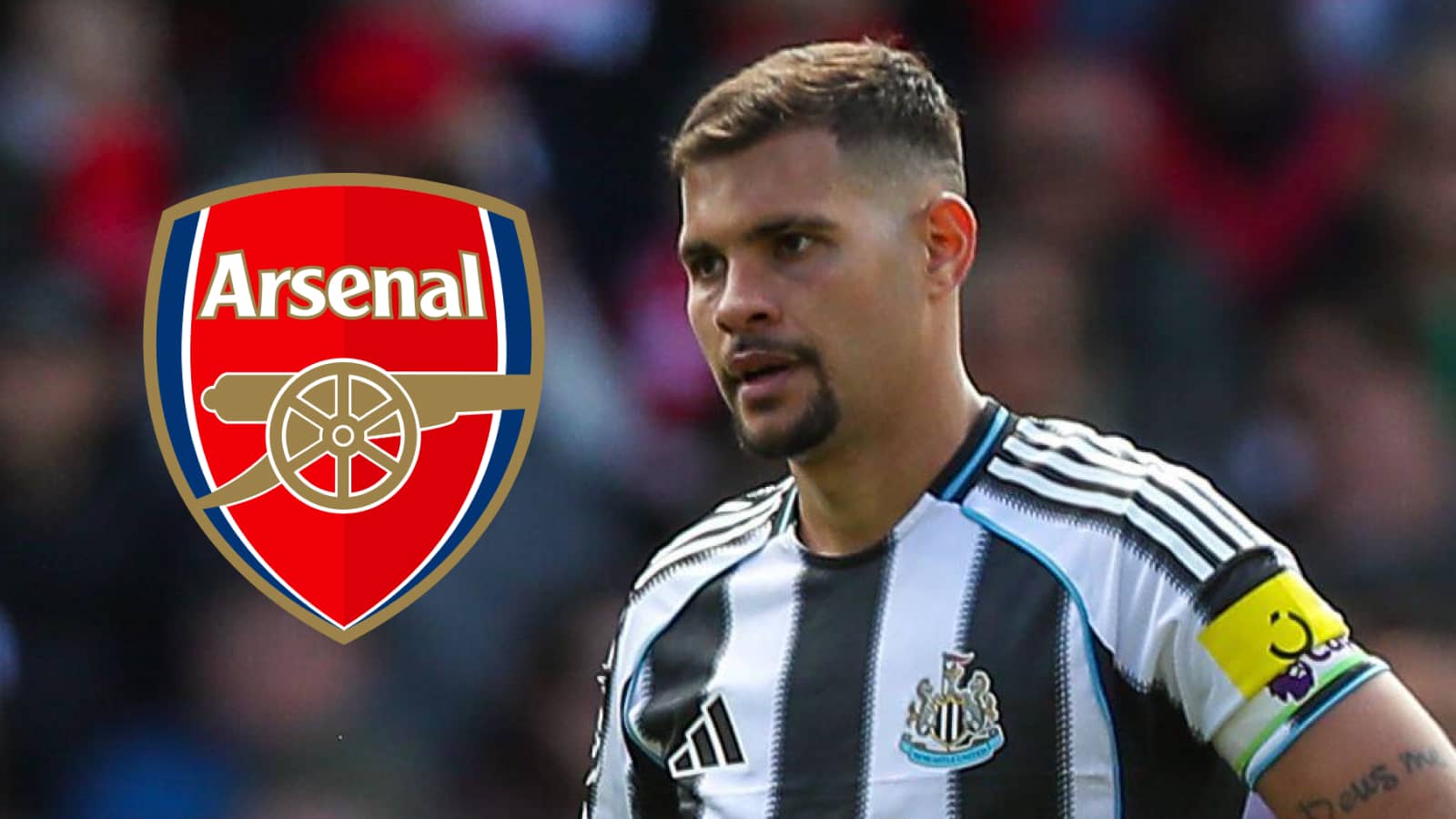
Newcastle United’s midfield completed just 78.4% of their passes under pressure when opponents successfully cut off the passing lanes to Bruno Guimaraes last season. That represents an 8.2% drop from their baseline average of 86.6% when the Brazilian was allowed to dictate terms from deep. It is a single statistic that explains both Newcastle’s vulnerability in transition and why the Premier League's elite are circling St James' Park this summer.
Arsenal’s pursuit of Guimaraes is not a sudden whim, but a calculated tactical play to solve their left-sided midfield progression issues. The Gunners have already seen an initial inquiry rebuffed, but they are preparing a second approach after being told the player is not for sale. Fabrizio Romano's confirmation that Newcastle intend to hold firm has not deterred Edu and Mikel Arteta, who view the 28-year-old midfielder as the final piece of their tactical puzzle.
At the same time, Tottenham Hotspur are testing Newcastle's resolve on a second front. Roberto De Zerbi has identified Sandro Tonali as his primary target, with Spurs returning with an improved proposal after their initial £75m offer was rejected. Newcastle are holding out for £100m, creating a dual-front transfer battle that could completely reshape the Magpies' midfield structure before the new campaign begins.
The Guimaraes Dilemma: Why Arteta Wants the League’s Best Out-Ball
Arsenal’s Progression Problem
Under Arteta, Arsenal's build-up relies heavily on the double pivot formed by Declan Rice and a dropping inverted full-back or Jorginho. While Jorginho offers elite line-breaking passing, his physical limitations in defensive transitions are clear, averaging just 1.4 tackles per 90 minutes. Thomas Partey's injury record makes him unreliable, leaving Arsenal short of an elite ball-carrier who can also anchor the midfield.
Last season, Rice was forced to drop deep during build-up phases, limiting his impact in the final third. Compare Rice's forward passing accuracy from deep zones (78.2%) with Guimaraes (86.1%). When forced to progress the ball from the defensive third under pressure, Rice prefers safe horizontal passes, whereas Guimaraes actively seeks vertical lines.
By adding Guimaraes, Arsenal can free Rice to play in a more advanced box-to-box role, where his physical driving runs are most effective. Guimaraes averaged 6.8 progressive passes and 2.4 progressive carries per 90 minutes last season. Significantly, he registered 3.1 tackles and interceptions per 90 in the middle third, proving he can win the ball back high up the pitch to sustain pressure.
The Tactical Upgrade
The Brazilian's ability to resist the first phase of the press is what sets him apart. He completed 88.4% of his passes under high pressure last season, placing him in the 95th percentile of midfielders across Europe's top five leagues. His quick body turns and low center of gravity allow him to bypass aggressive pressing triggers, transforming defensive actions into attacking transitions in a split second.
This pressing resistance is precisely what Arsenal lacked in their decisive Champions League exits. According to Fabrizio Romano, Arsenal are determined to land the midfielder despite Newcastle's initial stance. The Gunners are one of six clubs contacted regarding the midfielder's availability, with Manchester City also monitoring his situation closely.
If Arsenal manage to secure his signature, it will mark a significant shift in their build-up patterns. Instead of relying on a rotating cast of inverted full-backs to aid progression, Arteta can construct a stable, central platform. This would allow Martin Odegaard to operate exclusively in the final third, rather than dropping deep to help progress the ball.
De Zerbi’s Double-Pivot Blueprint and the Tonali Target
Spurs' Missing Link
At Tottenham, Roberto De Zerbi is looking to implement his signature deep build-up style. His system demands a very specific type of deep midfielder who can invite pressure, wait for the opponent's press to commit, and then execute rapid vertical passes to break the lines.
Spurs have seen a second approach for Sandro Tonali rejected, with Newcastle holding out for £100m after turning down a £75m proposal. De Zerbi has identified Tonali as his top target, believing the Italian has the exact technical skillset required to operate in his double pivot. Tonali is reportedly open to the move, keen to explore his options in the capital after a disruptive period in the North East.
Spurs' current options, such as Yves Bissouma and Pape Matar Sarr, are excellent physical ball-winners but lack the tactical discipline and passing range De Zerbi demands. Bissouma’s turnover rate under pressure was 14.3% last season, whereas Tonali maintained a turnover rate of just 9.1% during his final season at Milan.
Tonali’s Statistical Fit
A comparison of Tonali’s statistical profiles reveals how underutilized he has been in Eddie Howe's system. At AC Milan, Tonali averaged 5.4 progressive passes and 2.1 key passes per 90 minutes. At Newcastle, those numbers dropped to 3.2 progressive passes and 1.1 key passes per 90, as Howe favored a more physical, direct transition model.
In Howe's vertical system, Newcastle often bypass the midfield entirely, relying on direct long balls to the wingers. This approach marginalized Tonali’s playmaking ability, forcing him into a high-intensity pressing role that did not suit his strengths. Under De Zerbi, Tonali would return to a possession-based system where his vision and passing range would be the central focus.
Tonali’s defensive numbers also suggest he is better suited to a structured double pivot. He won 62.5% of his ground duels at Milan, compared to just 51.3% at Newcastle, where the chaotic, end-to-end nature of the games left him isolated in wide areas.
The Financial Reality and Newcastle's Tactical Crossroads
The Profit and Sustainability Balancing Act
Newcastle find themselves in a precarious position. The club is under pressure to comply with the Premier League’s Profit and Sustainability Rules, meaning they may be forced to sanction a major sale to fund their own transfer business.
Selling Tonali for £100m would represent a significant profit on the £55m they paid Milan, but it would leave a massive hole in a squad that already lacks depth. If they lose both Tonali and Guimaraes, Eddie Howe’s tactical setup will require a complete overhaul.
Newcastle's expected goals against (xGA) without Guimaraes jumped from 1.34 to 1.87 per 90 minutes last season. The team conceded 2.1 goals per game in matches where the Brazilian did not start, compared to 1.2 goals per game when he was in the lineup. This statistical drop-off highlights how dependent Newcastle are on their midfield star to shield their fragile defensive line.
The Cost of Inaction
Keeping unhappy players is a high-risk strategy that rarely pays off in the modern game. If Guimaraes and Tonali are forced to stay against their wishes, their performance levels could drop, dragging Newcastle down the table.
Last season, Newcastle's high-press PPDA (Passes Per Defensive Action) rose from 10.2 to 12.8 when Tonali and Guimaraes were separated, showing a clear lack of cohesion. If the club rejects £175m in total offers and the players underperform, Newcastle risk devaluing their assets while missing out on European qualification once again.
The decision facing Newcastle is not just about money, but about tactical identity. If they sell, they can rebuild the squad with players who fit Howe’s high-pressing style. If they keep them, they must adapt their system to get the best out of their two most talented midfielders.