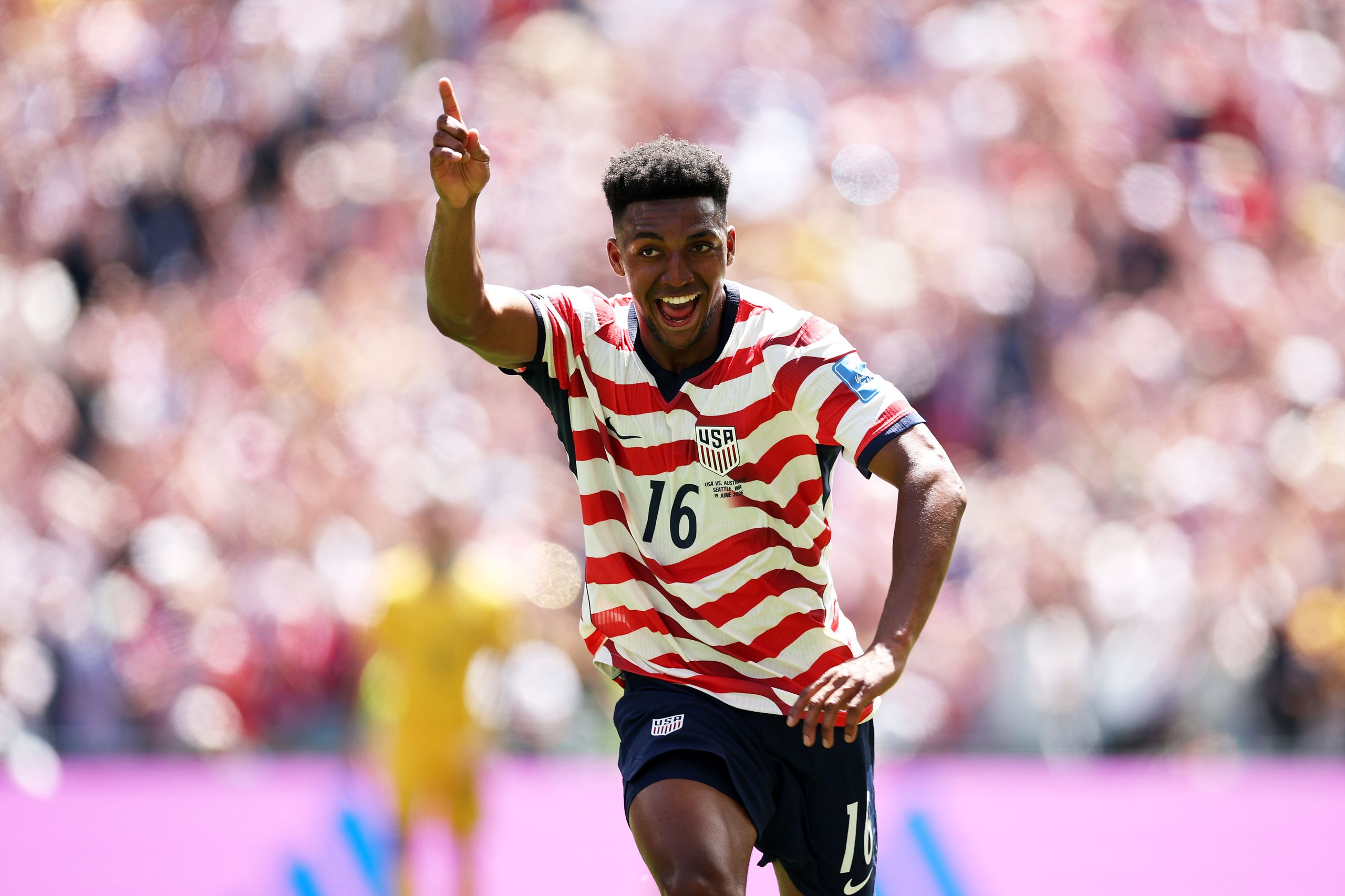
The post-Australia euphoria has settled into a comfortable reality for the United States Men’s National Team. Having secured a 4-1 victory over Paraguay on June 12 and a clinical 2-0 win against Australia on June 19, the US has locked down the top spot in the group. Their place in the Round of 32 is booked, with a date against Bosnia and Herzegovina awaiting them.
Tonight's clash at SoFi Stadium in Los Angeles is, on paper, a complete dead rubber. US manager Mauricio Pochettino is expected to rotate his starting XI heavily, making up to nine changes to preserve his key players for the knockout stages. Yet, this match is far from meaningless for the players stepping into the spotlight.
In tournament football, a team’s ceiling is often determined by the quality of its bench. If the starting group suffers injuries or suspensions in the knockout rounds, these depth players must perform immediately. Pochettino needs to know exactly who he can trust when the pressure mounts.
Weston McKennie is set to captain this rotated side, bringing veteran leadership to a lineup filled with hungry players looking to make a statement. For supporters killing time before kickoff, testing their knowledge with the United States soccer quiz might pass the hours. But Pochettino has a much more pressing tactical evaluation on his hands.
He must determine if his reserve players can execute his complex positional system without a drop-off in defensive stability. A lack of concentration tonight could ruin individual chances of seeing any minutes in the knockout phase. The manager will be watching every movement with a notebook from the technical area.
Analyzing Pochettino’s Lopsided Build-Up Template
Pochettino’s tactical framework relies on a lopsided 3-2-5 shape when building out from the back. Under normal circumstances, the left-back tucks inside to form a back three, while the right-back pushes high up the flank. This structural shift allows the left winger to drift inside and occupy the half-spaces between the opponent's midfield and defensive lines.
The starting unit executed this pattern beautifully in the first two group games, registering a 88% pass completion rate in the opponent's half. Tonight, the responsibility of maintaining this structural integrity falls on the reserve players. Auston Trusty is expected to start on the left side of the defense, a role that requires high tactical discipline.
Trusty must balance his positioning to prevent counter-attacks while supporting the build-up. The midfielder sitting in front of him will likely be Sebastian Berhalter, who has shown good distribution in domestic play but lacks international experience. This midfield pivot is the most vulnerable area of the rotated squad.
In the previous matches, Johnny Cardoso and Tyler Adams provided a defensive shield that limited opponents to just 0.65 expected goals (xG) per game. Berhalter is a tidy passer but lacks the defensive range or the vertical anticipation to stop quick transitions. If he is caught too high up the pitch, the central defenders will be exposed to direct runs from the Turkish attackers.
Pochettino's pressing triggers must also be executed with precision. Against Australia, the front line triggered a high press whenever the opponent's left-back received the ball facing his own goal. The US reserves must recognize these triggers instantly or risk being bypassed by a single line-breaking pass.
We must also consider the physical fatigue of the backup defenders who have not played competitive minutes in weeks. Trusty and his central defensive partner will need to communicate constantly to maintain the offside line. Any breakdown in coordination will allow Türkiye's quick forwards to run clean through on goal.
Montella’s Transition Threat and Defensive Leaks
Türkiye enters this match with zero points, having already been eliminated after successive defeats. Despite their poor tournament showing, Vincenzo Montella’s team remains a dangerous opponent. They play an aggressive, high-energy style that can force turnovers in high areas.
The Turkish attack features Arda Güler and Baris Yilmaz, two players capable of exploiting defensive disorganization. Montella's teams are built to strike quickly on the counter-attack. When they win the ball, they look to feed Güler in the right half-space immediately.
From there, Güler uses his vision to slice open defenses or shoot from distance. In their match against Australia, Türkiye created three clear-cut chances within the first 20 minutes through this exact sequence. Their directness will test the recovery speed of the US backline.
However, Türkiye’s defensive organization has been shambolic throughout the tournament. Their mid-block collapsed repeatedly in the previous games, leaving a 25-yard gap between their midfield and defensive lines. Opponents exploited this space, scoring five goals against them in two matches.
If the US reserves can play quick, forward passes into those vacant spaces, they will find plenty of opportunities to score. Türkiye's defenders have also struggled with aerial duels, winning only 42% of their challenges in the box. This weakness could be exploited by US set-piece routines.
Montella has also faced heavy criticism in the Turkish press for his tactical rigidity. He has refused to drop his defensive line even when facing fast attackers who thrive on space. This stubbornness will likely cost his team again if the US wingers exploit the space behind the full-backs.
The Refereeing Dimension at SoFi Stadium
Officiating will play a significant role in how this match unfolds. Algerian referee Mustapha Ghorbal has been appointed to officiate the match. He will be assisted by Mokrane Gourari and Abbes Akram Zerhouni, with Omar al-Ali serving as the fourth official.
Ghorbal is a referee who prefers to let the game flow, often keeping his cards in his pocket during the opening stages. At the 2025 Club World Cup, Ghorbal oversaw the match between PSG and Inter Miami. In that game, he allowed several borderline challenges to go unpunished, which led to a highly physical second half.
In a match with little at stake for either side, players might make late challenges or take risks. Ghorbal's lenient style could allow the match to become overly physical if he does not establish control early. The US players must adapt to this threshold for fouls immediately.
McKennie's leadership will be vital in managing the US team's discipline and communicating with the referee. The US cannot afford to pick up needless injuries or suspensions ahead of the Round of 32. A cool head in the midfield will prevent the game from spiraling into a series of ugly fouls.
Ghorbal's assistant referees will also need to be sharp with their offside calls. Türkiye's defensive line plays extremely high, and the US wingers will be timing their runs to the millisecond. Any delayed flag could result in controversial moments that heat up the atmosphere on the pitch.
Tactical Watchpoints and Prediction
We must watch how Pochettino's side handles the transition from their attacking 3-2-5 to a defensive 4-4-2 mid-block. When the ball is lost, the right-back must sprint 40 yards to recover his defensive position. If Türkiye can exploit this recovery phase, they will create overloads on the wings.
Another key area is the performance of US winger Cade Cowell. Cowell's speed can stretch Türkiye's narrow defensive line, but his final ball has been inconsistent. He must make better decisions in the final third to justify his inclusion in the squad.
We will also monitor the spacing between the US midfield pivot and the center-backs. If Berhalter drops too deep, he will invite pressure and leave the second balls to Türkiye's midfielders. The distance between the lines must remain under 12 yards to maintain control.
While this match is technically a dead rubber, our Turkiye vs United States score prediction suggests a highly chaotic and entertaining game. Pochettino's heavily rotated lineup will struggle with defensive chemistry, particularly in the transition phases. Without their regular starters, the US will likely concede chances to a Turkish side playing with freedom.
Türkiye has nothing to lose and will push players forward to end their campaign on a positive note. Güler will exploit the space behind the US midfield, creating opportunities for Yilmaz. However, Türkiye's own defensive issues will not disappear overnight.
The vacant spaces in their mid-block will allow the US attackers to create plenty of chances. Expect an open, back-and-forth game with defensive errors from both sides. We predict a chaotic 2-2 draw at SoFi Stadium, a result that keeps the US unbeaten while giving Türkiye a respectable exit.
Read Next
- Reece James faces another hamstring setback in major blow to England
- The World Cup quarter-finals are about to expose the biggest frauds in football
- Why the World Cup Round of 16 will expose the pretenders
- Thomas Tuchel is paying the price for his baffling right-back gamble
- 🏆 World Cup 2026 — Full Coverage Hub
- 🇺🇸 USMNT World Cup 2026 — Team USA Coverage Hub
- ⚽ MLS 2026 Season Hub — World Cup Year Guide