The Illusion of Martinelli's Miracle
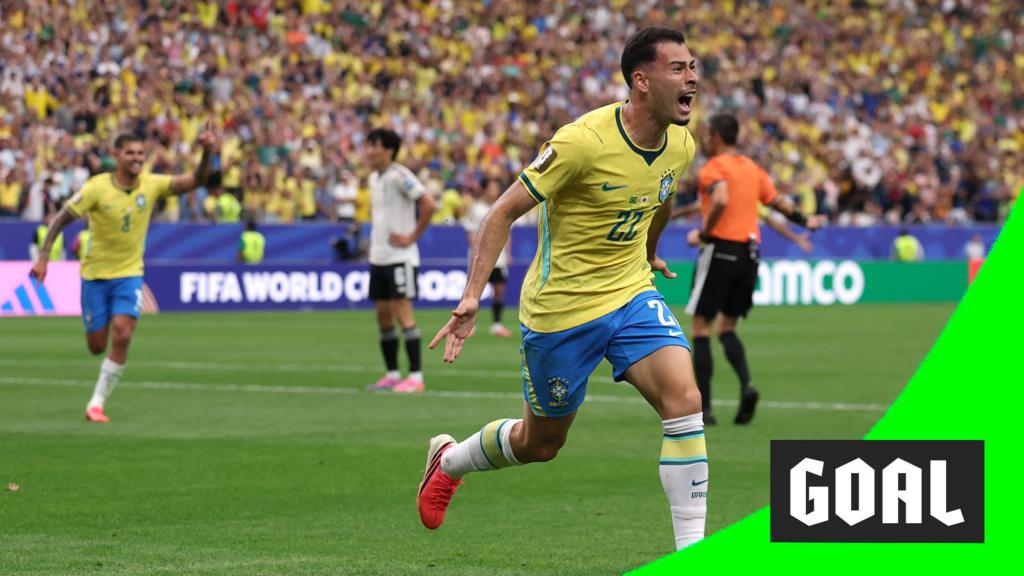
Papering over structural cracks is a grand Brazilian footballing tradition. Gabriel Martinelli's rescue act in the 96th minute against Japan was the latest display of tactical camouflage. As the BBC coverage detailed, the Arsenal winger popped up in the dying seconds to secure a ticket to the round of 16.
It was a moment of individual quality that sent the bench into raptures. Yet, the celebration masked a performance that was tactically bankrupt for the preceding 95 minutes. Brazil did not systematically dismantle Japan; they simply survived them.
Before Martinelli's late intervention, the Seleção had registered a meager 1.12 xG over the entire match. Japan, operating in a compact 5-4-1 mid-block, restricted Brazil to sterile possession in non-threatening zones. Brazil's center-backs exchanged 142 passes between themselves, a clear sign of a team unable to break the first line of engagement.
The heat maps from the match tell a damning story of winger isolation. Vinicius Júnior was isolated on the left touchline, frequently facing double-teams without an overlapping fullback to relieve the pressure. When Martinelli entered in the second half, he offered directness but did little to solve the gaping vacancy in central areas.
The Spacing Crisis in the Double Pivot
If Brazil think this style of play is sustainable, the round of 16 will offer a brutal reality check. Brazil's biggest problem lies in the middle of the pitch. Dorival Júnior deployed a double pivot of Bruno Guimarães and João Gomes, a pairing that looks solid on paper but fails in practice.
The spacing between the two midfielders and the defensive line was consistently too wide. Japan exploited this gap repeatedly, finding their attacking midfielders in the half-spaces with ease. Consider the sequence in the 34th minute.
Marquinhos had the ball deep in his own half with no passing lane forward. Guimarães was positioned 25 meters away, shadowed by two Japanese midfielders, while Gomes had dropped almost into the left-back slot. Japan intercepted the eventual long ball and launched a counter-attack that forced a desperate sliding tackle from Éder Militão.
This was not an isolated incident. Throughout the group stage, Brazil's midfield has struggled to control transitions. Opponents are playing through them with alarming speed, averaging 4.3 vertical transitions per game that result in shots.
The Disconnection of the Front Four
An elite opponent will not waste the opportunities that Japan squandered in the final third. The tactical disconnect extends to the attacking quartet. Lucas Paquetá, playing as the nominal ten, was constantly caught between dropping deep to help progress the ball and staying high to support the striker.
This left him in a footballing no-man's-land where he completed just 68% of his passes in the final third. When the playmaker cannot find his targets, the entire attacking structure collapses. Because the midfield cannot progress the ball cleanly, Brazil has resorted to individual dribbles.
Vinicius Júnior and Rodrygo attempted a combined 18 dribbles against Japan, succeeding in only six. This reliance on individual brilliance is a desperate strategy, not a coherent tactical plan. It forces the forwards to receive the ball with their backs to goal, far from the penalty area.
Against organized defensive units, this approach is easily neutralized. Japan's right-back did not allow Vinicius any space to turn, forcing him backward or into congested central areas. Without vertical passes from deep, the front line is reduced to spectators for long stretches of the game.
The Defending Transition Nightmare
When Brazil lose the ball, the structural flaws become even more apparent. Because the team is stretched so wide during build-up, they cannot execute an effective counter-press. When possession is turned over, the opponents find massive corridors of space to exploit on the flanks.
Japan's wing-backs had a field day attacking the spaces left behind Danilo and Wendell. In the 58th minute, a simple interception in midfield led to a three-on-two counter for Japan. Only a poor final pass prevented an opening goal that would have changed the entire complexion of the group finish.
Brazil are currently conceding an average of 1.8 big chances per 90 minutes, a figure that is unacceptable for a team with title aspirations. The defensive transition is further compromised by the lack of mobility in the backline. Marquinhos has lost a yard of pace, and Militão is still looking for his pre-injury sharpness.
When they are left unprotected by a disjointed midfield, they are forced to drop deep, which only increases the space available to the opponent's creators. Brazil's round of 16 opponent is Uruguay, a team designed to exploit exactly these weaknesses. Marcelo Bielsa's side is a high-octane pressing machine that thrives on central turnovers.
Why Uruguay Will End the Brazilian Campaign
With Federico Valverde and Manuel Ugarte anchoring their midfield, Uruguay will smother Brazil's slow build-up from the very first whistle. Uruguay's defensive line plays incredibly high, compressing the space in midfield where Guimarães and Gomes struggle to operate. If Brazil attempt the same lateral, slow passing sequences they used against Japan, Valverde will pick them apart.
Uruguay lead the tournament in PPDA (Passes Per Defensive Action) with a relentless 7.4 PPDA, meaning they allow opponents almost no time on the ball. Furthermore, Darwin Núñez's vertical runs will terrify Brazil's center-backs. With Facundo Pellistri and Maximiliano Araújo providing width and pace on the counter, Uruguay have the tools to punish every single turnover.
They will not need 96 minutes to find the back of the net. The prediction is clear: Uruguay will win this match comfortably. Expect Bielsa to instruct his players to target Bruno Guimarães early, forcing him into errors near his own penalty box.
Brazil's reliance on late magic from the likes of Martinelli will run out of road against a team that does not beat itself. The final whistle in the round of 16 will mark the end of Dorival Júnior's experiment. Brazil will fall 3-1 in a match that will expose their tactical imbalance for the world to see.
It is time for the Seleção to realize that individual stars cannot replace a functional midfield structure. The tactical complacency must end before the next World Cup cycle.
Read Next
- Thomas Tuchel needs to stop overthinking the Jude Bellingham debate
- Harry Kane just broke the record but England still look stuck in second gear
- Carlo Ancelotti has a plan for Brazil, but Japan is not Manchester City
- Germany's World Cup defense collapses as Nico Schlotterbeck is ruled out
- 🇧🇷 Brazil World Cup 2026 — A Seleção Hub