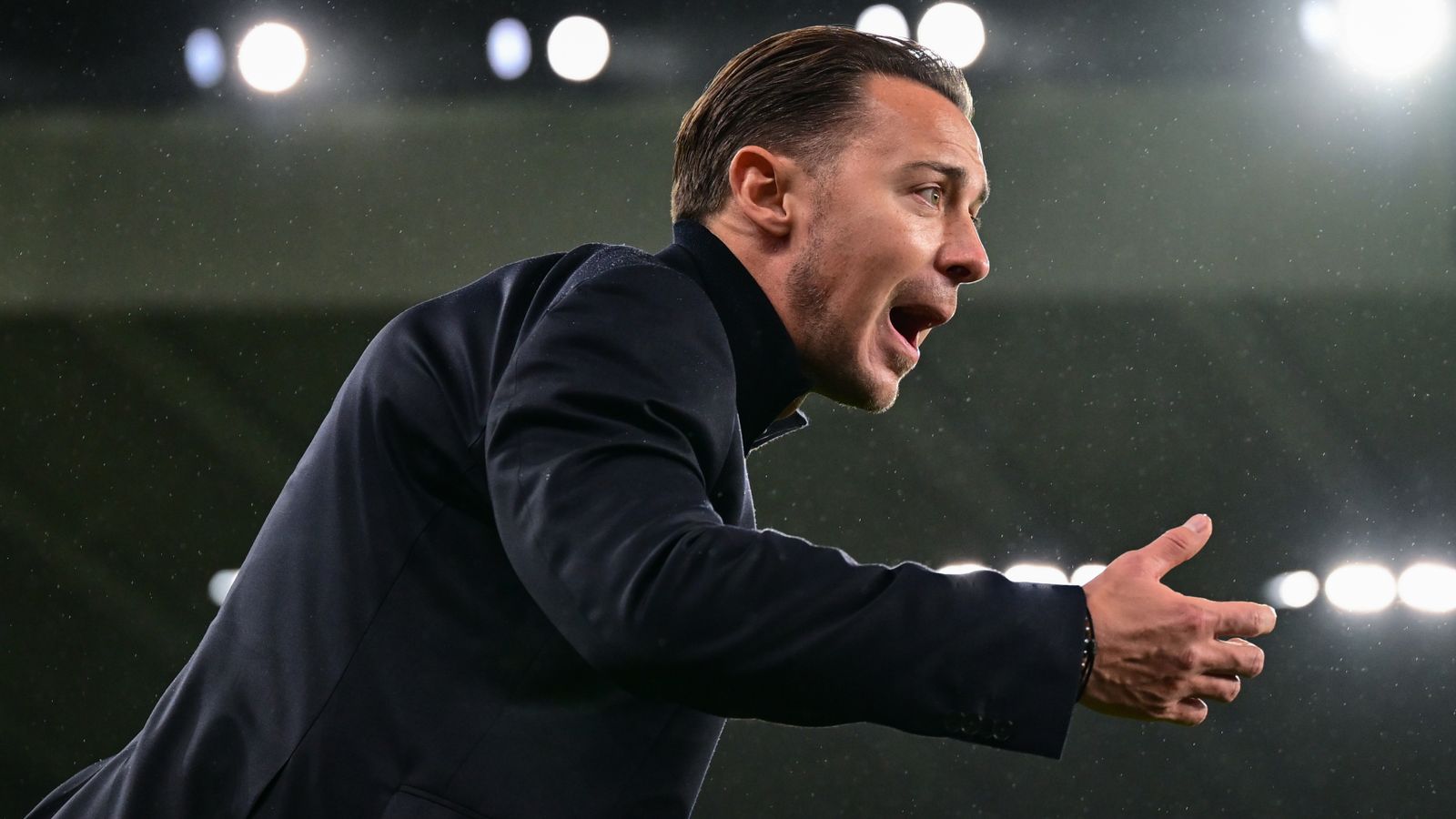
The Monday Night Autopsy at St James' Park
Walk out of St James' Park after a defeat like Monday's and the anger is immediate. Newcastle had just sleepwalked through a dreadful 1-0 home loss to Everton. Supporters trudged down the Gallowgate steps thoroughly disgusted by the lack of intent.
The mood turned far sharper forty-eight hours later. As Craig Hope reported in the Daily Mail, the frustration inside the dressing room has reached boiling point. The players do not understand their manager.
Newcastle’s players are ‘confused’ by what Matthias Jaissle wants from them, a source close to the dressing room has told me.
That revelation explains the disjointed mess on the pitch. Immediately after the Everton match, Jaissle openly threw his squad under the bus. He expressed disbelief that his team failed to follow tactical patterns rehearsed during training.
Jaissle highlighted three glaring grievances. He accused the side of pressing poorly, moving possession far too slowly in the attacking half, and resorting to long balls. He claimed that bypassing the midfield was never his instruction.
The dressing room pushed back quickly through senior figures. The players insist they still back Jaissle and accept personal responsibility for poor displays. Yet they admit feeling entirely lost on matchday.
When defenders receive possession under pressure, they look up and see empty corridors. Without clear passing angles, hitting hopeful clearances becomes an involuntary reflex. Players boot the ball long because the setup gives them no safer outlet.
The heart of this tactical paralysis lies in the shape. Jaissle continues to deploy an attacking midfielder in the hole behind the striker. The problem is simple: Newcastle do not have an established specialist for that role.
Forcing a system without the necessary personnel guarantees failure. Deep midfielders end up isolated while the front line waits for passes that never arrive. It leaves the team completely disconnected across sixty yards of grass.
The £81m Bench and Tomas Amaral's Vision
The confusion on the field looks even more damning when you examine the dugout. Newcastle spent heavily in the summer window to equip this squad with elite talent. Right now, those expensive recruits are gathering dust.
Consider the curious case of Matias Fernandez-Pardo. The Belgian forward arrived from Lille in a marquee £51m transfer with ambitions to lead the line as a central striker. Jaissle had other ideas.
The manager chose William Osula as his preferred number nine instead. To make matters worse, Fernandez-Pardo missed two consecutive matches battling a tricky virus. Even after returning to training last weekend, he was told he was not ready for Everton and must now battle for minutes on the wing.
Then there is Aladji Bamba. The 20-year-old midfielder signed from Monaco for £30m, yet he has managed a microscopic 27 minutes on the pitch all season.
Bamba has not played a single competitive minute since September 19. With only twelve senior career starts behind him, onlookers expected Newcastle to arrange a winter loan. The club ruled that out immediately, pointing to his impressive development in training sessions.
That decision creates an absurd paradox. Newcastle refuse to loan Bamba because they value his talent, yet Jaissle refuses to start him in the Premier League. Leaving eighty-one million pounds of summer investment on the bench while the starting eleven stumbles is terrible resource management.
This standoff arrives just as Tomas Amaral begins his work as head of recruitment. The 35-year-old Portuguese talent spotter joined last month with a reputation as a meticulous researcher. He previously scouted Enzo Fernandez for Benfica before serving as sporting director at Spartak Moscow.
Amaral advocates building around a coherent playing identity rather than amassing shiny names. His approach relies on maintaining two distinct player lists: one targeting talent good enough for the badge, and another tailored to the manager's tactical blueprint. He explicitly believes recruitment analysts must challenge coaches instead of rubber-stamping requests.
Other Premier League clubs show far greater tactical alignment. As TEAMtalk revealed, Chelsea manager Xabi Alonso handed teenager Estevao his first league start against Manchester United precisely because United were considered physically vulnerable. Alonso designed a targeted match plan and secured a clean 2-0 victory.
Meanwhile, Leeds United are taking aggressive steps to fix their five-game winless drought. As TEAMtalk reported, Leeds are actively pursuing Galatasaray playmaker Gabriel Sara to address their creative deficiencies in the final third. Decisive clubs identify tactical weaknesses and correct them swiftly.
Midfield Disarray and the Saturday Trip to Fulham
Any hopes Jaissle had of quietly solving this tactical puzzle in training have vanished. Newcastle travel to Craven Cottage to take on Fulham this Saturday. The squad arriving in West London will be severely depleted.
Jacob Ramsey is unavailable after picking up a straight red card against Everton. His suspension wipes out Newcastle's most dynamic box-to-box presence at a moment when midfield options are already razor-thin.
Joelinton represents an even greater medical headache. The 30-year-old Brazilian suffered muscle discomfort during the closing stages against Everton on Monday. The medical department hopes the pain stems from severe cramp, but his history warrants extreme caution.
Joelinton only returned to action three weeks ago after spending the entire summer rehabilitating a thigh injury. Given his past issues with recurring hamstring tears, risking him at Craven Cottage could sideline him for months.
Lewis Miley does provide some relief. The 20-year-old midfielder is available for selection after recovering from a nagging glute issue. Miley was desperate to feature against Everton and his return gives Jaissle a composed presence in possession.
Yet personnel returns will not fix systemic flaws. Supporters are loudly clamoring for teenage prodigy Sean Steur to start in central midfield. Jaissle has resisted that clamor, arguing that Steur and Nico Gonzalez cannot function together in a double pivot.
That stubborn refusal infuriates matchgoers. Why persist with a failing setup when dynamic young talent is ready to play? Fans will always back a fearless academy graduate over experienced professionals who look paralyzed by tactical indecision.
The wider youth development picture makes the first-team stagnation look even stranger. Newcastle recently welcomed 16-year-old Gambian prospects Omar Marong and Alieu Saine for a two-week trial following their triumph at the West African Under-17 Championship. Saine bagged four tournament goals, while Marong captained the side.
Furthermore, 18-year-old academy starlet Matheos Ferreira has just been summoned to the Brazil Under-20 squad for matches against Japan and Singapore. The Ashington-born midfielder qualifies for England, Italy, and Brazil, and has been shining as an attacking midfielder in Newcastle's youth ranks. Newcastle possess natural playmakers in their system, yet the senior side plays like a team without a clue.
Why Jaissle Must Ditch the System Immediately
Supporters on Tyneside have broken into distinct factions over this crisis. The debate dominates pub conversations, online forums, and call-in shows across the North East.
A single bulleted breakdown illustrates how divided the fan base has become:
- Jaissle defenders maintain that intricate pressing strategies require months of patience and argue senior players must execute their training drills properly.
- Pragmatic skeptics point out that shoehorning players into an unnatural formation while eighty-one million pounds of talent sits unused is indefensible.
- Youth advocates argue that starting Sean Steur and embracing academy hunger would instantly inject urgency into a stagnant side.
The skeptics hold every winning card in this debate. It is unfair for a head coach to berate his defenders for kicking long balls when his shape actively destroys passing triangles. When players have no progressive passing routes, kicking long is basic self-preservation.
The manager already knows his current formula is flawed. Jaissle seriously contemplated abandoning the formation and returning to a 4-3-3 prior to the away fixture against Crystal Palace last month. Reverting to that shape is the most logical step available.
A standard 4-3-3 solves several compounding dilemmas simultaneously. It removes the nonexistent number 10 role, shelters the back four, and creates natural triangles out wide. It also allows Steur, Miley, and Gonzalez to share defensive duties without forcing an awkward two-man pivot.
Managers who survive in English football recognize when their tactical dogmatism is hurting the team. St James' Park loves high-intensity, aggressive football, but it will never accept passive, confused performances. If Jaissle refuses to adjust his scheme on Saturday, the backlash from the stands will become deafening.