
Harry Kane just broke the record but England still look stuck in second gear
The Anatomy of the Record Goal
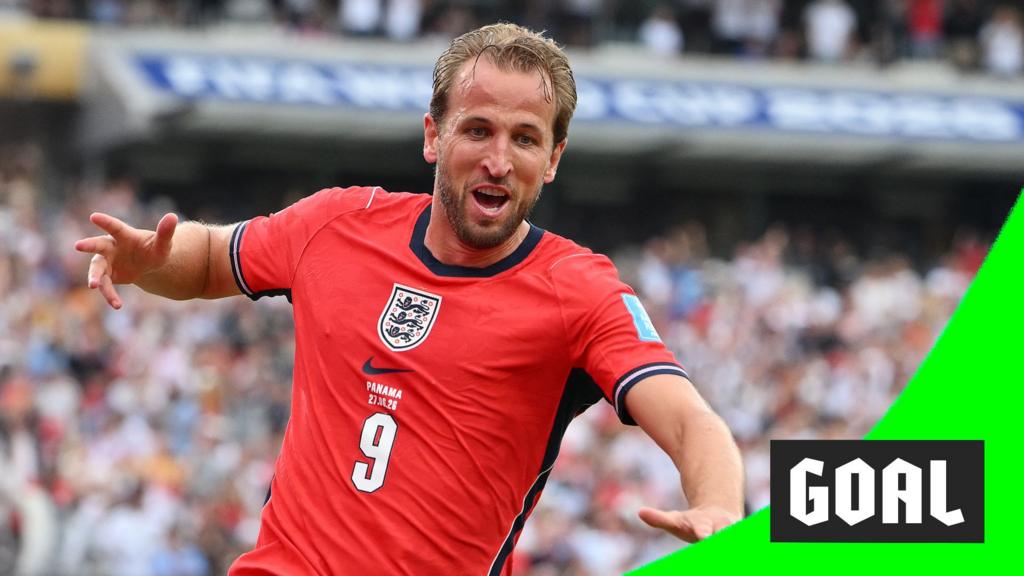
The record-breaking moment itself was almost anticlimactic. When Harry Kane turned the ball past the Panama goalkeeper to make it 2-0 in England's final Group L fixture, he did not just double his side's advantage. He claimed sole possession of a piece of English football history, moving to 11 goals and overtaking Gary Lineker.
Yet the celebration was businesslike, reflecting a player who has spent a decade treating goalscoring as a clinical exercise in geometry rather than an emotional release. This was the moment Kane entered uncharted statistical territory for his country, but the tactical reality of how England arrived at this point suggests a much steeper climb ahead.
Panama offered the perfect compliant opposition for a historic milestone. Operating in a passive 5-4-1 mid-block, the Central Americans showed little interest in contesting the half-spaces, allowing England's center-backs to progress the ball virtually unchallenged. In these conditions, Kane's record-breaking goal was the product of patient, almost tedious, horizontal circulation.
To understand the significance of Kane's 11th tournament goal, one must dissect the structural shifts that allowed it to happen. Unlike Gary Lineker, who functioned as a pure apex predator occupying the shoulders of central defenders, Kane has spent this tournament operating as a hybrid nine-and-a-half. He drops into the midfield line to create a numerical superiority, dragging one of Panama's three center-backs out of position.
This structural manipulation was exactly what led to the second goal. England's left-sided center-back played a crisp vertical pass into the half-space, finding Kane who had dropped ten yards off the defensive line. By drawing the closest defender with him, Kane opened a passing lane for the overlapping midfielder.
The sequence progressed with rapid execution. A quick exchange of passes put the ball back in the penalty box, where Kane had already recycled his run to exploit the space he had just created. It was a textbook demonstration of modern positional play, but it also highlighted a recurring theme in this English side: the complete dependence on their captain to both orchestrate and finish their attacking moves.
Surpassing Lineker in a Different Era
To put Kane's achievement in context, we must look at the nature of his goals compared to those of Gary Lineker. Lineker was the ultimate penalty-box vulture, a forward who thrived on the service of wingers like Chris Waddle and John Barnes. Of Lineker's ten World Cup goals, almost all were one-touch finishes inside the six-yard box, the product of elite anticipation and raw speed over short distances.
Kane represents a completely different archetype of the modern central striker. He has achieved his tally across three tournaments by acting as both the hammer and the anvil of the English attack. In 2018, his golden boot campaign was heavily padded by penalties and set-piece deflections, but his subsequent tournament goals have required a far higher degree of self-sufficiency.
Against Panama, we saw the culmination of this stylistic evolution. Kane spent large stretches of the first half operating in his own half, acting as a bounce pass option for the defensive line. This dropping action drew Panama's central midfielder out of the defensive block, creating a pocket of space that England's inverted wingers could exploit.
When the second goal came, it was not the result of a winger beating his man on the outside and crossing. It was a central combination sequence, initiated by Kane's depth manipulation and completed by his late arrival into the box. As the BBC video highlights show, the finish itself was trademark Kane: a precise, low strike that gave the goalkeeper no chance.
The Positional Dilemma in England's System
While the history books will celebrate the record, a cold tactical analysis of England's current system reveals significant structural friction. By dropping so deep, Kane frequently occupies the exact spaces where England's creative midfielders like to operate. When he retreats into the center circle, he drags a defender with him, but he also congests the zone that should be occupied by the team's primary playmakers.
This positional overlap was visible multiple times in the first half against Panama. On several occasions, a midfielder carrying the ball forward found Kane standing in his direct path, leading to a deceleration in England's transition. Instead of a rapid vertical attack, England were forced to reset, allowing Panama to get ten men behind the ball and re-establish their defensive block.
Against Panama, this stagnation went unpunished because the opposition lacked the technical quality to launch meaningful counter-attacks. But against elite European or South American opposition in the knockout rounds, this slow build-up will be a fatal flaw. The lack of run-in-behind threats when Kane drops deep makes England incredibly predictable to defend against.
If Kane is always dropping to receive the ball, who is stretching the opposition's defensive line? In previous matches, England relied on fast wide forwards to make diagonal runs into the space vacated by Kane. In this game, however, the wingers remained pinned to the touchlines, resulting in a massive gap between England's midfield possession and the opponent's penalty area.
Panama's Structural Failure and the Set-Piece Trap
Panama's game plan was clear from the opening whistle: sit deep, clog the center of the pitch, and force England wide. They deployed a low block that occasionally resembled a six-man defensive line, hoping to deny England any space in the penalty box. However, their defensive discipline broke down under the simplest of tactical variations.
The first goal, which broke Panama's resistance, came from a poorly defended corner routine where Kane's blocking run allowed a teammate to escape his marker. Once forced to chase the game, Panama's shape began to fray, with their midfielders stepping out too late to pressure the ball. This opened up the channels that England exploited for the historic second goal.
Panama's defensive metrics in this match were poor, conceding an expected goals value of 0.65 xG from open play in the first half alone. Their central defenders struggled to communicate when passing on marking duties as Kane rotated with the midfielders. This lack of coordination was fully exposed when Kane ghosted between the center-backs to convert the low cross for his historic goal.
Yet, the ease with which England unlocked Panama should not breed complacency in the coaching staff. Panama's pressing intensity was virtually non-existent, allowing England's double pivot to dictate the tempo without any physical pressure. A more aggressive opponent would have pressed England's deep playmakers, forcing turnovers in dangerous areas of the pitch.
The Tournament Specialist: Decoding Kane's World Cup Anomaly
To understand why Kane has succeeded where other modern English icons struggled, we must examine the history of England forwards at the World Cup. Wayne Rooney, arguably the most talented forward of his generation, finished his international career with just a single World Cup goal to his name. Michael Owen, despite his explosive start in 1998, ended his career with four tournament goals, his body breaking down before he could establish a long-term legacy.
Kane's longevity and consistency in tournament football are unprecedented in English history. Here is how the leaderboard of England's top World Cup goalscorers looks after today's match:
- Harry Kane: 11 goals
- Gary Lineker: 10 goals
- Geoff Hurst: 5 goals
- Bobby Charlton: 4 goals
- Michael Owen: 4 goals
His ability to sustain his performance levels across multiple tournament cycles is a product of his physical adaptability. As he has lost his initial burst of acceleration, he has compensated by improving his positioning and his distribution, transforming himself into a playmaker who happens to wear the number nine shirt.
This adaptability is the reason Kane remains the first name on the team sheet, even when his physical output appears to be declining. He does not need to outrun defenders to be effective; he simply outthinks them. By reading the defensive triggers of the opposition, he knows exactly when to drop and when to make the run into the penalty box.
However, this stylistic transition has come at a cost to England's overall attacking speed. In the past, England could rely on rapid transitions to catch opponents off balance. Today, under the current system, every attack is a slow, methodical build-up that relies on Kane's ability to retain possession under pressure, which he did against Panama with an impressive 83 percent success rate in the final third.
The Physical Tax of the North American Summer
The logistical challenges of this World Cup cannot be ignored when evaluating England's tournament prospects. With games spread across three countries and multiple time zones, the physical recovery of key players is as critical as any tactical instruction. For a player like Kane, who has accumulated thousands of competitive minutes for club and country over the last decade, this travel tax is particularly high.
This tournament has already seen its share of high-stakes drama, from the tactical gamble that saved Australia's campaign to England's slow-burn progression. But unlike Popovic's squad, England cannot afford to run their core players into the ground. Against Panama, Kane played the full match despite the comfortable lead and the scorching heat.
This decision by the manager is open to serious criticism. With the match effectively won and Panama showing no offensive threat, keeping Kane on the pitch was an unnecessary risk that could backfire in the knockout rounds. England's coaching staff seems terrified of playing without their captain, a dependency that limits their tactical flexibility.
If Kane were to suffer an injury or simply run out of steam in the later rounds, England have no viable alternative who can replicate his dual role as playmaker and finisher. The failure to blood a backup striker during the group stage is a missed opportunity that could haunt England when the competition intensifies. A look at the physical metrics shows a clear decline in Kane's sprinting frequency as the matches progress.
While his intelligence allows him to conserve energy, the demands of playing every four days in high humidity will eventually catch up with him. Without tactical rotation, England are gambling their entire tournament on the durability of one man's hamstrings.
Unlocking the Next Phase: Tactical Adjustments for the Knockouts
To transition from beating group-stage minnows to challenging the tournament favorites, England must address the congestion in the central corridor. One solution is to deploy a runner who can consistently run beyond Kane when he drops deep. This would force the opposition's defensive line to drop back, creating the space that Kane needs to receive the ball and turn.
Another option is to adjust the starting positions of the wide players. Instead of keeping them pinned to the touchline, the manager could instruct them to tuck inside earlier, acting as secondary strikers who can attack the box directly. This would alleviate the goalscoring burden on Kane and make England's attack far more dynamic and difficult to mark.
The double pivot must also take more responsibility for ball progression. Too often against Panama, the midfielders played safe, horizontal passes, refusing to take the risks necessary to break the lines. If the midfield cannot progress the ball independently, Kane will continue to drop into the center circle, and England will remain stuck in their predictable, slow possession cycle.
These adjustments are not merely theoretical; they are essential for England's survival in the knockout stages. The defensive structures they will encounter in the next round will be far more sophisticated than Panama's passive block. If England do not evolve their attacking patterns, their tournament run will end as soon as they meet a team capable of neutralizing Kane's dropping movements.
Roku Express 4K+ | Streaming Player
Never miss a Premier League kickoff with crystal clear 4K streaming.
Frequently Asked Questions
Who did Harry Kane overtake as England's all-time tournament scorer?
How did Harry Kane score his record-breaking goal against Panama?
What tactical role does Harry Kane play compared to Gary Lineker?
What defensive setup did Panama use in their match against England?
How do the goalscoring styles of Gary Lineker and Harry Kane differ?
More Coverage
Liverpool's £90m Van Dijk replacement comes with a massive tactical catch
53 minutes ago
England lost to Spain again, so why is nobody screaming at Thomas Tuchel?
23 hours ago
Cole Palmer made the right call prioritizing Chelsea over the Nations League
1 day, 3 hours ago
Top 10: Top Moments from England's 3-2 Nations League Thriller Against Spain
1 day, 5 hours ago
Jordan Pickford's two-match absence exposes Thomas Tuchel's defensive gamble
1 day, 6 hours ago
Tuchel's England look completely rattled by Man City's guilty verdict
1 day, 7 hours agoMore Analysis
Liverpool's £90m Van Dijk replacement comes with a massive tactical catch
53 minutes ago
England lost to Spain again, so why is nobody screaming at Thomas Tuchel?
23 hours ago
Cole Palmer made the right call prioritizing Chelsea over the Nations League
1 day, 3 hours ago
Top 10: Top Moments from England's 3-2 Nations League Thriller Against Spain
1 day, 5 hours ago
Jordan Pickford's two-match absence exposes Thomas Tuchel's defensive gamble
1 day, 6 hours ago