Natalia Arroyo's Structural Puzzle
Natalia Arroyo has spent her first eighteen months at Aston Villa trying to solve a structural puzzle. The Spanish coach has established a clear possession profile in the Midlands. Villa averaged 54.2% possession last season, a marked increase from the 48.7% recorded during the previous campaign.
Yet, this possession frequently lacked teeth. In the final third, Villa's field tilt of 42.1% suggested a team struggling to sustain territory in the opposition half. They were easily pushed wide, forced into low-value crosses that opposing defenses cleared with ease.
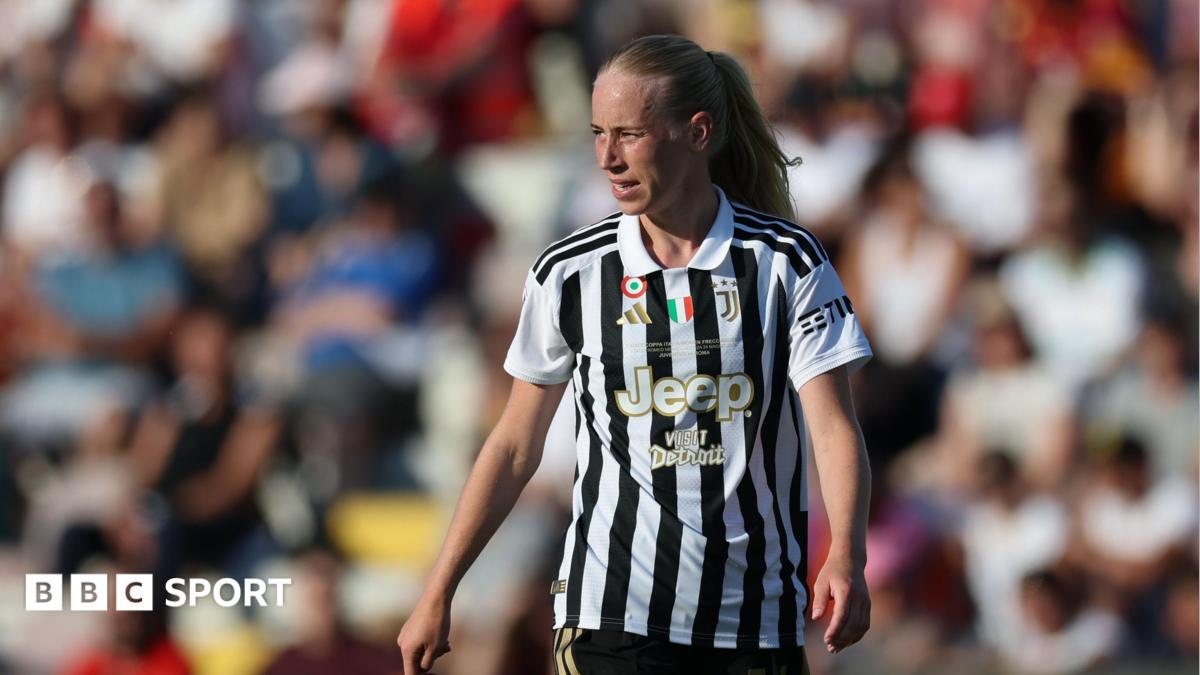
The acquisition of Denmark striker Amalie Vangsgaard, announced today on July 1, 2026, is a direct response to this bottleneck. As the BBC reported today, the forward has completed her move from Juventus. She enters a squad desperate for central presence and physical threat.
"very excited for this new adventure"
The Danish forward expressed she is "very excited for this new adventure" as she relocates to England. It is a signing that signals a major tactical shift for Villa. Arroyo is moving away from the rigid positional play of last autumn in search of dynamism.
Arroyo wants a physical, direct reference point in the box. Last season's attack was too predictable, too easy to defend against. Opponents simply sat deep, clogged the central lanes, and dared Villa's wingers to beat them on the outside.
This signing is also about changing the squad's physical profile. Villa's front line last year lacked height and presence, averaging just 167cm. Vangsgaard, standing at 178cm, immediately alters that balance and gives them a target for direct build-up play.
Dismantling the Numbers: Vangsgaard's Real Value
Critics will immediately point to Vangsgaard's scoring record in Turin. On paper, her output of 3 goals in 19 Serie A Femminile appearances last season looks underwhelming. But raw numbers obscure her tactical utility in a defensive system.
At Juventus, Vangsgaard was rarely used as a traditional number nine. Massimiliano Canzi utilized her in a fluid front three, often asking her to make sacrificial runs. Her movement opened up space for Cristiana Girelli to exploit in the box.
Her Serie A shot map shows a player taking 64% of her shots from wide angles. Her non-penalty xG per 90 was 0.28, which she matched closely. She was simply not playing in a system designed to maximize her finishing ability.
To understand her true value, one must look at her final season at Paris Saint-Germain. In France, she recorded 8 goals in 27 appearances. She played as a central focal point in a possession-heavy team that dominated opponents.
Her progressive passes received stood at 6.8 per 90. That rank placed her in the 88th percentile for forwards in European competition. She is a target player who connects the lines, not just a penalty-box finisher.
Her pass completion rate under pressure was 74.2% last season. This is a high number for a forward operating in tight central spaces. She will give Villa the ability to retain possession under pressure in the attacking third.
Vangsgaard also averaged 4.2 aerial duels per 90, winning 58% of them. This statistic is critical for a team that struggled to win second balls. Her ability to flick headers on to runners will unlock Villa's wingers.
The Rachel Daly Partnership and Tactical Shifts
The most pressing question for Arroyo is how to pair Vangsgaard with Rachel Daly. Daly remains Villa's most potent offensive weapon. But last season, Daly was frequently isolated and starved of quality service.
Opposing center-backs could double her, knowing Villa lacked another vertical threat. Daly's shot volume fell to a career-low 2.1 per 90. She was forced to drop deep to find the ball, leaving the box empty.
Vangsgaard's arrival allows Arroyo to transition to a 4-4-2 diamond. Vangsgaard can act as the physical ceiling of the team, pinning the center-backs. She can occupy the defense, winning long balls and holding up possession.
This will free Daly to operate in the half-spaces. Daly can drop off the front line, exploiting the space between the midfield and defensive lines. It is a role she excelled at during her time in the NWSL.
If they play together, the spacing must be precise. If both players occupy the same vertical channel, they will congest the box. Arroyo must coach them to make opposite runs to stretch defenses.
When Vangsgaard drops deep, Daly must run in behind. When Daly goes wide, Vangsgaard must occupy the center. This rotation will make Villa much harder to mark for compact defenses.
This tactical flexibility is what Villa have lacked. Last year, they had no Plan B. When Daly was marked out of the game, the team ran out of ideas and struggled to score.
It also relieves the scoring pressure on Daly. The England international was responsible for 42% of Villa's goals last season. Sharing that burden is essential for Villa to climb the table.
Arroyo's defensive structure relies on a high press. Last season, Villa registered a PPDA of 9.4. This was the third-most aggressive press in the division, behind only Chelsea and Arsenal.
Vangsgaard fits this defensive profile perfectly. At Juventus, her defensive actions in the attacking third were elite. She averaged 1.8 tackles and interceptions per 90, high for a forward.
Her primary pressing trigger is the backward pass to the center-back. When the opponent's defender shapes to play back, Vangsgaard sprints to cut off the passing lane. This forces a rushed clearance or a turnover.
Villa's central midfielders, Jordan Nobbs and Missy Bo Kearns, are positioned to win these second balls. If Vangsgaard's spacing is off, however, the press crumbles. In Italy, she was sometimes caught too high.
This left a gap behind her that opponents exploited. Chelsea will look to exploit this exact gap in the upcoming pre-season clash. Villa must be careful not to overcommit in their initial press.
Here are the three tactical keys Villa must execute in their out-of-possession phase:
- Lock the opponent's defensive midfielder in a cover shadow to prevent central progression.
- Force the build-up wide into the pressing trap near the touchline.
- Maintain a high defensive line to keep the midfield compact and restrict space.
If they fail in any of these areas, Chelsea will pick them apart. The transition defense will be tested immediately. Arroyo cannot afford to let Chelsea control the tempo from deep positions.
The Chelsea Benchmarks and Bescot Prediction
The pre-season match on July 12 at Bescot Stadium is the perfect laboratory for Arroyo. Chelsea Women, under Sonia Bompastor, are the benchmark for tactical discipline. Bompastor's side plays a fluid 4-2-3-1.
Chelsea transition quickly through Erin Cuthbert and Sjoeke Nüsken. They do not waste time in possession. They seek to exploit space behind the opposition line as soon as it opens.
Chelsea's center-back pairing of Millie Bright and Kadeisha Buchanan will provide Vangsgaard with a physical test. Bright is dominant in the air, winning 72% of her aerial duels last season. Vangsgaard must use her body to shield the ball.
She cannot rely solely on her height. If she is bullied by Bright, Villa's build-up play will stall. Nobbs and Dali will be forced to play backward, under pressure from Chelsea's counter-press.
Vangsgaard is famously effective in the air. Her most famous moment came in the 90th minute of Denmark's 2023 World Cup opener against China. She rose above the defense to loop a header home from a corner.
Villa have historically struggled from set-pieces. Last season, they scored just four goals from corners. Adding Vangsgaard gives them a genuine target in the box.
Arroyo has spent the early weeks of pre-season working on block schemes. Daly and Anna Patten will act as blockers. They will free Vangsgaard to attack the near post.
Chelsea, however, are notoriously difficult to break down on set-pieces. They conceded just three goals from corners in the entirety of last season. It will be a battle of strength and timing.
For all the excitement surrounding the new striker, Villa's midfield remains a concern. The partnership of Nobbs and Kearns lacks defensive cover. Neither player is a natural ball-winner.
Nobbs averaged 1.2 tackles per 90 last season. Kearns averaged 1.4. When Villa lose possession, their midfield is easily bypassed, leaving the defense exposed.
Vangsgaard's presence up front does not solve this issue. In fact, if Arroyo plays a two-striker system, it removes a midfielder. This will put even more pressure on the remaining players.
If Chelsea dominate the center of the pitch, Vangsgaard will be starved of service. She will become a spectator. She suffered from this during Juventus' defeat to Roma in March.
Arroyo must find a way to balance the team. Playing a deeper defensive block might be necessary. This would protect the midfield but limit Vangsgaard's effectiveness in transition.
Pre-season results are notoriously difficult to predict. Managers prioritize fitness and tactical experimentation over scorelines. However, this match is a indicator of Villa's direction.
Arroyo needs to show that her team can compete with the league's elite. Chelsea are further along in their preparation. Bompastor has a settled squad and clear patterns of play.
Villa are still integrating new pieces. Vangsgaard will start, but she will look rusty. She will struggle to find her rhythm against Bright and Buchanan.
Expect Chelsea to exploit Villa's midfield gaps on the counter. The London side will create high-value chances transitionally. Villa's rest defense will be tested to its limit.
Chelsea will secure a comfortable 3-1 victory. Vangsgaard will show flashes of her aerial ability, but Villa's defensive transition will cost them. It will be a sobering start to the new era.