Mauricio Pochettino arrives at Carrington next week with a mountain of structural problems sitting on his desk. Manchester United have slumped into another miserable autumn, looking sluggish, disjointed, and entirely bereft of a cohesive tactical identity. Walking into that training complex right now feels like entering a club trapped in an endless cycle of false dawns and interim hangovers.
Supporters have been forced to watch Arsenal sit at the summit of English football as defending champions. The Gunners might be dull to watch, but Declan Rice gives them elite control in the middle of the pitch. United, by contrast, look completely unequipped to mount any sort of title challenge in the near future.
Yet amidst all the organizational confusion and boardroom neglect, Pochettino faces one decision that requires zero second-guessing. He must place Bruno Fernandes at the absolute center of his restoration project. The Portuguese playmaker remains the only genuine world-class talent currently operating in this squad.
The Carrick Mirage and the Conditioning Deficit
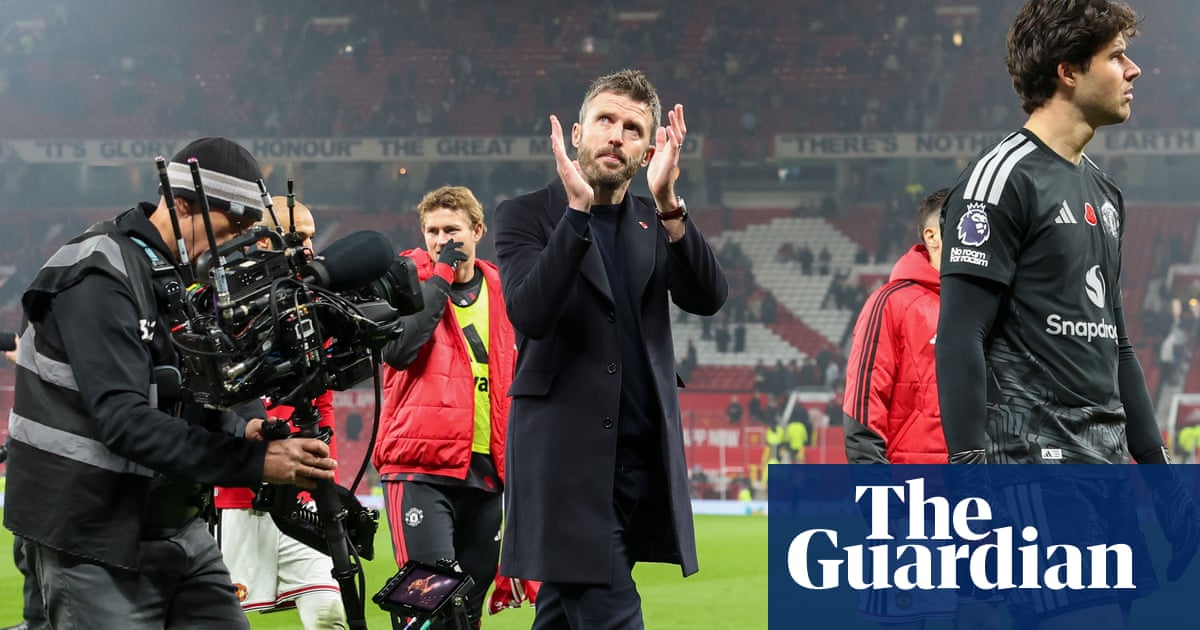
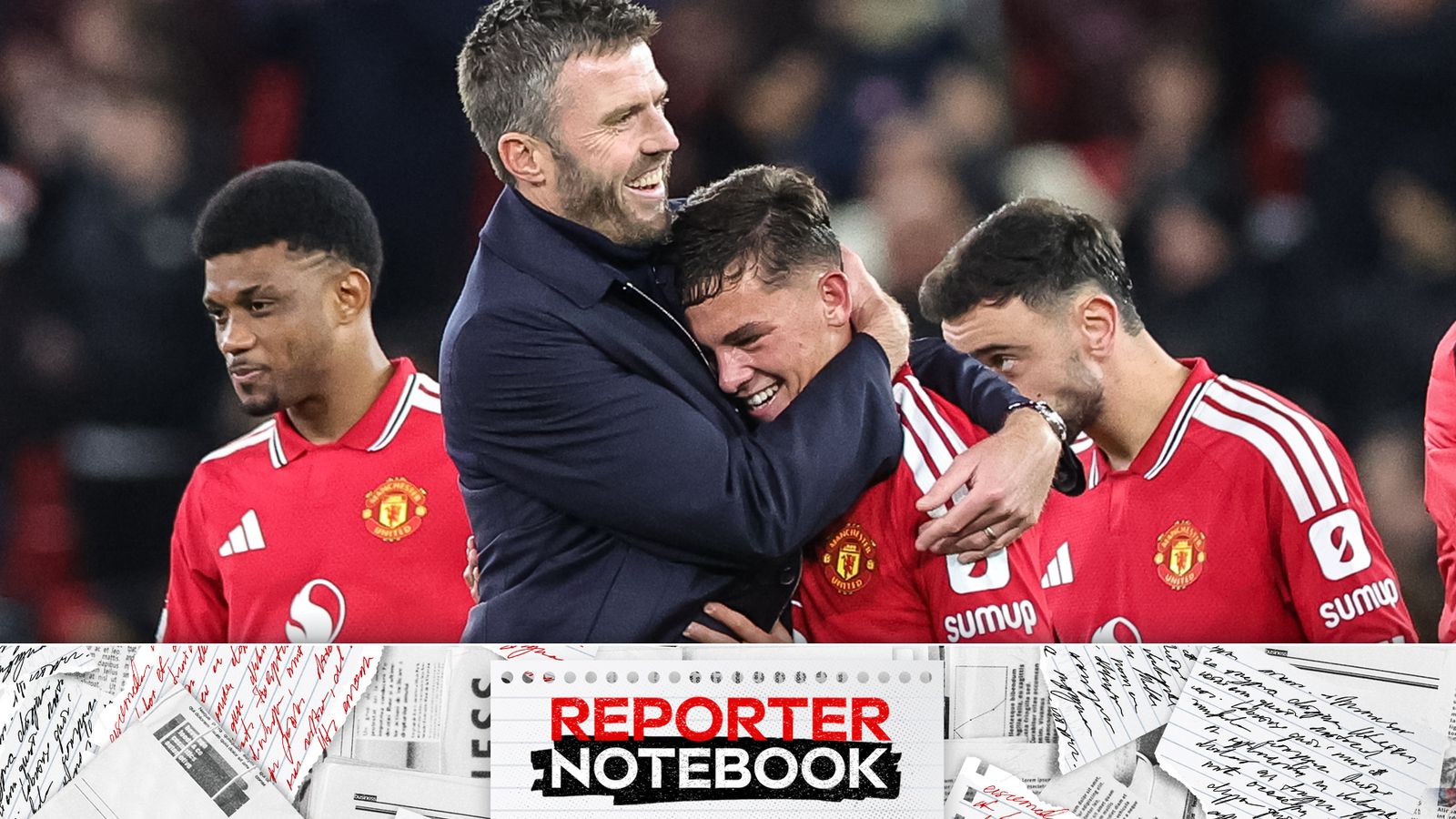
To grasp the scale of the challenge awaiting Pochettino, one only has to dissect the erratic tenure of Michael Carrick over the past calendar year. Carrick undeniably overachieved during the second half of the 2025-26 campaign, galvanizing a broken team to win 12 of its last 17 Premier League fixtures. That spirited run convinced many around Old Trafford that the corner had finally been turned.
That optimistic spring surge turned out to be an absolute mirage. The momentum dissipated almost immediately once this season began, leaving the squad to stumble its way to just one of ten league victories so far. That is alarming form by any objective metric, especially for an institution with title aspirations.
The reality of this squad lies nowhere near either extreme. Carrick overachieved with the tools at his disposal last spring, only to underachieve drastically once the novelty wore off this autumn. The true competitive level of this group sits uncomfortably between those two divergent runs of form.
Anyone watching United this season can see the primary physical defect with the naked eye. The players are simply not fit enough to sustain intense competitive football. They regularly fade out of contests, losing footraces and failing to track runners once matches move into the final thirty minutes.
That conditioning deficit is not just an athletic failure; it reflects a deep-seated complacency within the club. When footballers arrive at such a grand institution, far too many assume they have already reached the summit of the game. That self-satisfied attitude corrodes standards on the training pitch and breeds lethargy on matchdays.
That lack of urgency is hardly surprising when leadership at the highest level sets such a careless tone. Principal owner Avram Glazer famously declared that on-pitch success is not needed to maintain commercial power. When the boardroom treats winning as a secondary pursuit, complacency inevitably trickles down through the entire dressing room.
Fixing the physical conditioning of this group will be a grueling, long-term assignment for Pochettino and his staff. You cannot rebuild cardiovascular endurance in the middle of a congested winter schedule without causing an epidemic of muscle injuries. It is a long haul that will require patience, intelligent load management, and months of hard work.
A Decade of Shopping in the Second Tier
The physical shortcomings of the squad are compounded by a recruitment strategy that has been fundamentally flawed for over a decade. Rather than pursuing elite, best-in-class operators, United have settled into a habit of signing players who offer decent value without moving the needle. The result is an expensive roster stuffed with mid-tier talent.
Recent transfer activity provides clear evidence of this persistent blind spot. Names like Youri Tielemans, Andrey Santos, and Carlos Baleba have arrived to fill vacancies in the middle of the park. These are perfectly competent footballers, but none of them belong in the top bracket of European talent.
Teams that achieve meaningful success at the highest level almost always rely on at least one world-class operator. Leicester City proved that when they shocked the world to win the title in 2015-16, driven by a version of Jamie Vardy who was truly elite for that historic period. Arsenal may play conservative, robotic football, but Declan Rice gives them an undisputed world-class anchor.
United, meanwhile, have surrounded their squad with players who are solid rather than transformative. Tielemans brings technique, Santos offers energy, and Baleba provides physical presence, yet none of them strike fear into elite European opposition. A squad built around decent value will inevitably deliver mid-table performances.
Pochettino will certainly see some transfer movement after Christmas as the winter window opens. However, nobody should expect a dramatic roster overhaul in the middle of the season. Turning over a poorly constructed squad cannot be achieved in a single window, meaning the incoming manager must rely heavily on the elite quality already inside the building.
Evaluating the Captain Beyond the Pitch-Side Frustrations
That harsh reality brings the conversation straight to Bruno Fernandes. As Mirror Football reported, sorting out the future of the Portuguese midfielder is the most pressing matter awaiting Pochettino at Carrington. Fortunately, it is also the easiest dilemma to resolve.
There is a vocal contingent of supporters and pundits who argue that Fernandes represents part of United's cultural problem. They point to his persistent complaining toward referees and his habit of flailing his arms in frustration whenever teammates misplace passes. These histrionics are not particularly palatable, and watching him sulk during difficult matches is genuinely exasperating.
His form has also dipped below the exceptional standards he established during the 2025-26 campaign. Like the rest of the squad, his output has suffered amidst the team's broader collapse, and he could certainly stand to improve his physical conditioning. Pretending he is completely blameless would be dishonest.
Yet framing Fernandes as a liability is total nonsense. He remains the most creative player at Pochettino's disposal by a comfortable distance, possessing vision and passing range that nobody else at Old Trafford can replicate. When United create scoring opportunities against low defensive blocks, he is almost always the architect.
More importantly, Fernandes has been the best signing of the post-Sir Alex Ferguson era by a mile. Through multiple managerial changes and tactical shifts, he has carried an immense creative burden without hiding. His histrionics might grate on opposing fans, but his commitment on the pitch has never been open to question.
The Contract Lever and Pochettino's Rebuild
The immediate administrative concern surrounding Fernandes centers on his contractual status. At 32 years of age, his current deal is scheduled to expire at the conclusion of the season. United hold an option to extend the agreement by a year, a clause the hierarchy will almost certainly activate before January 1.
Fernandes has already turned down a couple of contract extension offers from the club, which has sparked predictable anxiety among supporters. In reality, this is standard negotiating procedure for an experienced international who understands his bargaining position. He wants to assess Pochettino's tactical vision and see tangible signs of progress before committing his final peak years to the project.
Vague murmurs have surfaced suggesting that Fernandes might not fit into Pochettino's demanding collective structure. There is no legitimate evidence to support that theory. While Pochettino demands relentless work rate and tactical discipline, Fernandes has spent his entire career demonstrating an appetite for hard running and high-volume involvement.
Pochettino will undoubtedly aim to build a younger, more energetic side as his Carrington tenure unfolds. Injecting youthful vibrancy into an aging squad is necessary after years of stagnation. However, surrounding developing youngsters with mediocre role players is a recipe for continued failure; youth needs elite guidance to thrive.
Fernandes provides the exact technical anchor that Pochettino needs while he overhauls the rest of the roster. The Portuguese international will respect a manager of Pochettino's pedigree, and the manager will quickly recognize that Fernandes is his only truly world-class match-winner. Keeping the captain at the heart of the team is the only sensible foundation for the rebuild.
Read Next
- Arsenal chasing Endrick shows the January market has lost its mind
- Manchester United are a circus act and INEOS are too cheap to fix it
- Shea Lacey is ready to become Michael Carrick's biggest internal signing
- Man United are about to sack Michael Carrick before the Liverpool trip
- 🇵🇹 Portugal World Cup 2026 — A Seleção Hub