The Historical Deficit in Gelsenkirchen
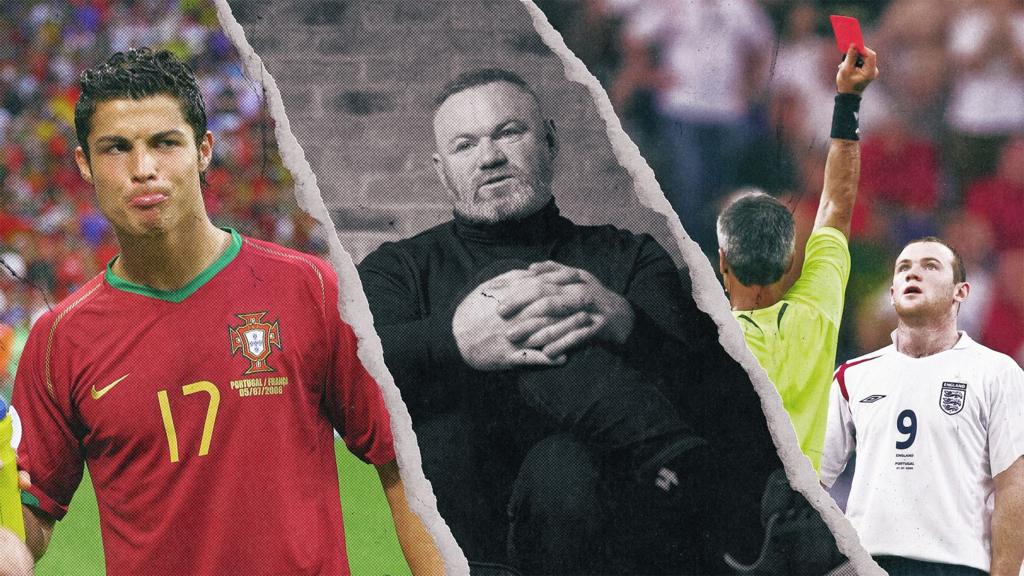
On July 1, 2006, in the Veltins-Arena, Ricardo became the first goalkeeper in World Cup history to save three penalties in a single shootout. While this performance sparked two decades of debate over Wayne Rooney's red card and Cristiano Ronaldo's wink, the statistics suggest a different story. England's demise was not a sudden catastrophe in the 62nd minute, but the predictable consequence of a malfunctioning tactical system.
England's exit is routinely viewed through the lens of individual drama, but the data points to a deeper systemic failure. The match metrics from Gelsenkirchen reveal a team that had structurally compromised its primary attacking threat long before the shootout. By analyzing the tactical deployment, the distribution of possession, and the defensive metrics of the 120-minute contest, we can see how Sven-Göran Eriksson's side ran out of ideas long before they ran out of players.
The Structural Deficit of the 4-1-4-1
Owen's Injury and the Tactical Pivot
England's tactical plans were disrupted when Michael Owen tore his anterior cruciate ligament just 1 minute and 50 seconds into the Sweden match. Consequently, Eriksson abandoned the traditional 4-4-2 alignment to deploy a defensive 4-1-4-1 formation. This system positioned Owen Hargreaves as a single anchor screen behind a midfield quintet tasked with controlling the tempo.
The Demands on a Half-Fit Rooney
This system had a devastating effect on Wayne Rooney's efficiency. In Euro 2004, a fit Rooney had operated in a dynamic partnership, scoring four goals in 297 minutes and averaging a shot every 23 minutes. Recovering from a metatarsal break, he was isolated as a lone striker in 2006, recording zero goals across 253 minutes of tournament play.
The Midfield Disconnect and Attack Isolation
Stifled Passing Lines
During the Gelsenkirchen quarter-final, Rooney touched the ball just 24 times in his 62 minutes on the pitch, with only two touches inside the penalty area. Denied midfield service, he was forced into 14 physical aerial duels against Ricardo Carvalho and Fernando Meira, winning only three. Consequently, the passing lines between England's central midfield and their lone striker were non-existent.
Steven Gerrard completed only two passes to Rooney during the entire hour they shared the pitch, while Frank Lampard completed just one. This occurred despite the duo combining for 36 Premier League goals that season. Their overlapping runs and defensive duties occupied the same central zones, leaving their striker stranded and starving the team of attacking fluidness.
Beckham's Departure and the Loss of Delivery
David Beckham's forced substitution in the 52nd minute due to an ankle injury further disrupted England's attacking shape. Replacement Aaron Lennon brought raw pace but lacked the delivery precision of the captain. The service to Rooney became even more sporadic, making an eventual outburst of frustration feel mathematically inevitable.
The 62nd-Minute Flashpoint and the Ronaldo Factor
The Groin Stamp and the Protest
The tipping point arrived when Rooney, battling Carvalho and Petit in the center circle without support, stamped on Carvalho's groin. The referee brandished a red card, and Cristiano Ronaldo's subsequent protest and wink became the tournament's defining image. Yet, as recorded in the BBC's match retrospective, Rooney's own reflection highlights the cold pragmatism of elite football.
Reflecting on his Manchester United teammate's actions, Rooney later admitted in a BBC interview that he understood the intervention. He recognized that Ronaldo was simply doing what was necessary to secure an advantage for his nation.
"I'd have done the same to get him sent off"
Ronaldo's sprint to the referee was a calculated action that reflected Portugal's tactical edge. They understood that removing England's only forward would force Eriksson's side into a defensive shell. The sending-off reduced England to ten men, but the tactical adjustment that followed produced a highly counterintuitive result.
The Ten-Man Paradox and Hargreaves' Masterclass
The Defensive Architecture of a 4-4-0
Conventional wisdom suggests that losing a player in a major quarter-final leads to defensive collapse, but the statistics here contradict that. After Rooney's dismissal, England dropped into a compact 4-4-0 low block, and their defensive efficiency actually improved. Portugal dominated possession with 57% of the ball, yet their attacking threat completely evaporated.
Portugal registered 20 goal attempts over the 120 minutes, yet the quality of these attempts was remarkably low. England's defensive lines restricted Portugal to speculative long-range efforts, with only nine of those 20 attempts hitting the target. England's defensive discipline was exceptional, forcing Portugal to play around the periphery of the block rather than penetrating the penalty area.
Hargreaves as the Single Screen
The anchor of this defensive resilience was Owen Hargreaves, who produced one of the finest defensive displays in modern England history. He single-handedly disrupted the passing lanes between Luis Figo and Cristiano Ronaldo, forcing Portugal to recycle possession harmlessly across the backline. The statistical impact of England's defensive structure tells the story of this resilience:
- Owen Hargreaves covered 14.8 kilometers during the match, winning seven of his nine ground duels and making six interceptions.
- England's defensive block blocked four shots and made 18 clearances inside their own penalty area.
- Despite playing with a man disadvantage for 58 minutes, England allowed Portugal zero big chances in the penalty area during extra time.
This remarkable defensive output kept England alive, but it came at a massive physical cost. The team was running on empty, unable to transition into attack, setting up a grim inevitability for the penalty shootout.
The Shootout and the Ricardo Record
The Penalty Shootout Deficit
While England's ten-man block successfully forced the match to penalties, it left them with no offensive outlet to win the game before the shootout. The physical exhaustion of defending for an hour with ten men took its toll. When the shootout commenced, England's mental and physical fatigue was exposed by Ricardo's positioning and timing.
Ricardo's saving technique was built on waiting for the penalty taker to commit, refusing to guess early. He saved three penalties in the shootout, diving low to deny Lampard, Gerrard, and Jamie Carragher. Only Hargreaves converted for England, leaving Ronaldo to score the decisive spot-kick and seal a 3-1 victory for Portugal.
The statistics show that England's exit was not simply a matter of bad luck on spot-kicks or a single moment of madness. It was the culmination of a tournament where England scored only six goals in five matches, failed to develop a coherent offensive structure, and relied on individual moments. Twenty years later, the numbers remain clear: tactical rigidity, not Wayne Rooney's red card, was the true author of England's demise.
Read Next
- Why Mexico's altitude trap at the Azteca is England's ultimate nightmare
- Ten years ago today, Wales exposed the Golden Generation's biggest flaws
- Why Thomas Tuchel must unleash Kobbie Mainoo against DR Congo
- Mbappe is playing like R9, but France's midfield is still a problem
- 🏴 England World Cup 2026 — Three Lions Hub
- 🇵🇹 Portugal World Cup 2026 — A Seleção Hub