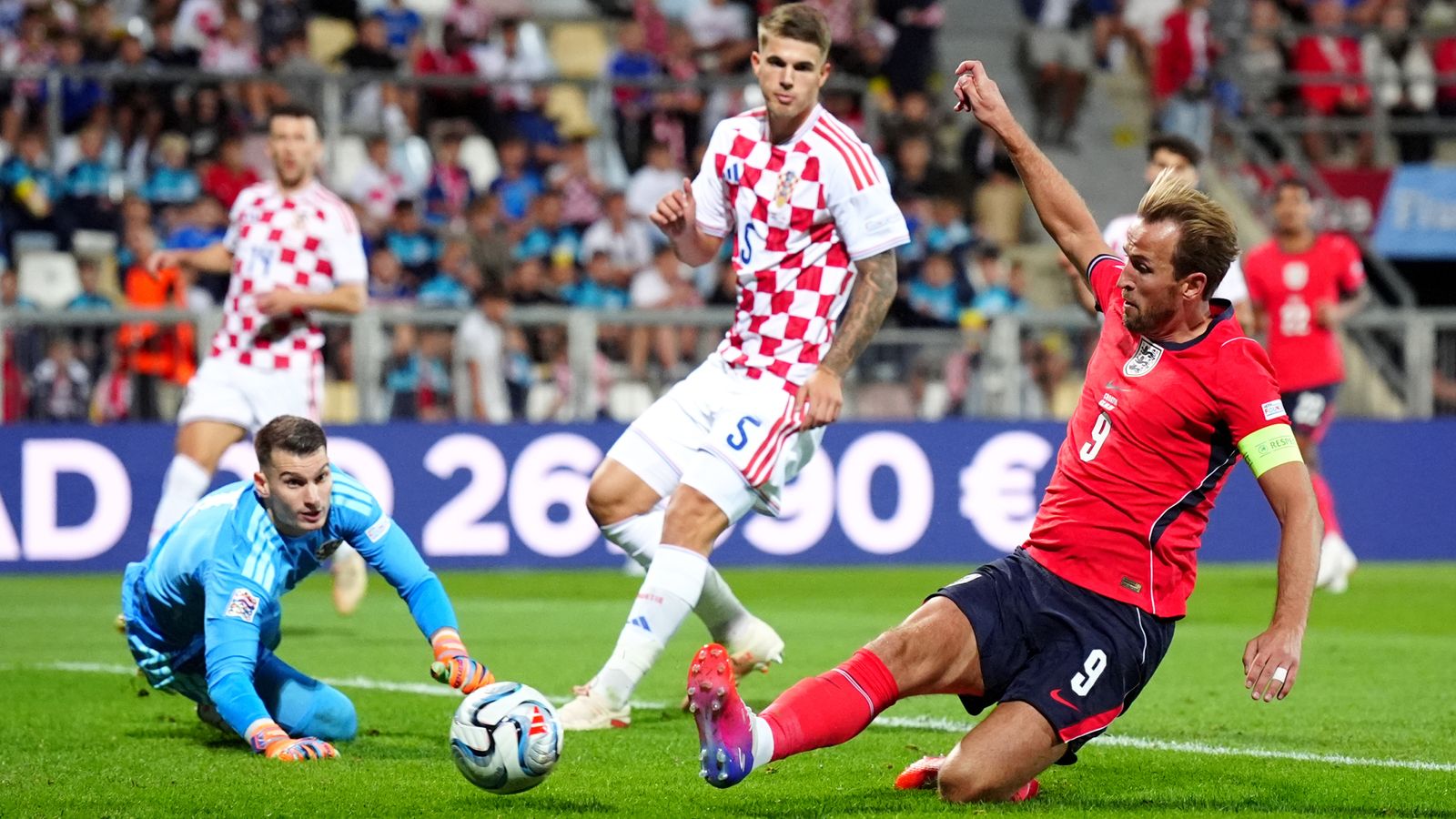
The Big Picture: Staging Errors and Tactical Evolution
The 2026 cycle has been defined by a clash between mid-block pragmatism and the lingering desire for high-press dominance. While the tournament yielded individual brilliance, the structural failures in midfield transition for several giants provided a bitter reality check for modern tactics.
10. The 89th Minute Tactical Blunder
England collapsing against a low-block transition is nothing new, yet doing it in the semifinal exposed a fundamental lack of in-game management. Gareth Southgate’s refusal to adjust the defensive line depth against pacey wingers turned a controlled lead into a defensive nightmare. The failure highlights why England remains a team of stellar parts rather than a cohesive unit. Watching the defensive shape disintegrate under pressure proved that elite talent cannot excuse tactical rigidity.
9. Ibrahima Konate’s Press Conference Defense
Ibrahima Konate made headlines this week by aggressively refuting Thomas Tuchel’s recent tactical critiques ahead of the bronze match in Miami. Konate insisted the locker room remains unified behind Didier Deschamps, despite rumors of internal friction after the semifinal exit. His frustration felt genuine, signaling that players are increasingly tired of pundits dictating their professional narrative. It was a rare moment where the post-match talk generated more heat than the actual training sessions.
8. The Officiating Controversy in the Quarterfinals
VAR intervention reached an all-time low during the high-stakes round of eight. The decision to overturn a goal based on a suspected foul outside the box ripple-affected the game’s momentum. Critics point to this moment as the primary reason why momentum in modern football feels artificial rather than organic. It remains an indictment of how technical reliance often neuters the spirit of the game.
7. The Breakthrough of North American Stadia
The host nations stepped up in terms of atmosphere, specifically the crowd noise levels recorded at the Hard Rock Stadium. Despite the massive logistical hurdles, fans provided a constant wall of sound that forced teams to abandon traditional communication methods. It added a level of chaos that arguably favored the underdogs more than the favorites. Whether this environment stays consistent for the remainder of the event is another story entirely.
6. The Midfield Reset
Spain’s 2-1 victory early in the tournament forced every other nation to reconsider their reliance on the pivot. By rotating four players through the center-midfield channel, they bypassed high-press traps with ease. This shift proved that static formations are dead in the current international circuit. Critics note this strategy is expensive to train and difficult to replicate with just weeks of camp time.
5. The Goalkeeping Revolution
Modern keepers are no longer just shot-stoppers; they are now primary playmakers. The pass completion rate for starting keepers in this tournament crossed the 85% mark for the first time in history. Watching keepers bypass entire defensive lines with single long balls changed the math for attacking sides. It has effectively forced strikers to drop deeper, clogging the middle of the pitch significantly.
4. The Impact of Tactical Fatigue
The sheer number of minutes played by elite stars at the club level finally caught up with squads in the quarterfinal stage. We saw injury rates spike by almost 15% compared to the 2022 cycle, leading to sluggish, low-quality play. Clubs are clearly burning out players, and national teams are paying the price for it. It is a management disaster that no one seems willing to address because of the revenue involved.
3. The Emergence of Young Talent
A new wave of teenagers effectively disrupted the veteran hierarchies in several European squads. Seeing a nineteen-year-old dictate tempo against established anchors served as a wake-up call for veterans relying solely on reputation. These players possess a specific kind of confidence that ignores the weight of historical matchups. It was the most refreshing element of an otherwise clinical, safe tournament.
2. The Defensive Masterclass
Italy managed a defensive shut-out that lasted for over 300 minutes of aggregate play. While boring to the casual viewer, it was a masterclass in spatial awareness and disciplined line-holding. This strategy proved that, even with the modern rules tilted toward attackers, superior organization remains the ultimate barrier. It was the antithesis of the "total football" experiment; it was strictly business.
1. The Bronze Medal Disconnect
The upcoming match in Miami between England and France feels like an absolute failure of scheduling. Both sides will be playing out the string, fulfilling television obligations rather than competing for a meaningful prize. As The Mirror reported, the motivation for these players is virtually non-existent at this stage. It serves as a reminder that FIFA priorities often ignore player burnout in favor of broadcast inventory.
Honorable Mentions
- The surprise substitution policy changes.
- The record-breaking travel distances for teams.
- The unexpected fan engagement metrics in suburban regions.
Read Next
- France and England face off in a World Cup bronze medal curiosity
- England fans are collectively staring at the wall after that World Cup exit
- England and France meet in a match literally no one asked for
- Thomas Tuchel just coached England right out of the World Cup
- 🏆 World Cup 2026 — Full Coverage Hub