The Big Picture
Milan's summer is a high-wire act. The board is balancing squad stability against a backdrop of front-office instability. With contract standoffs and failed recruitment bids dominating the headlines, the Rossoneri must move fast to avoid falling behind Serie A rivals who are spending aggressively.
The Top 10 Rankings
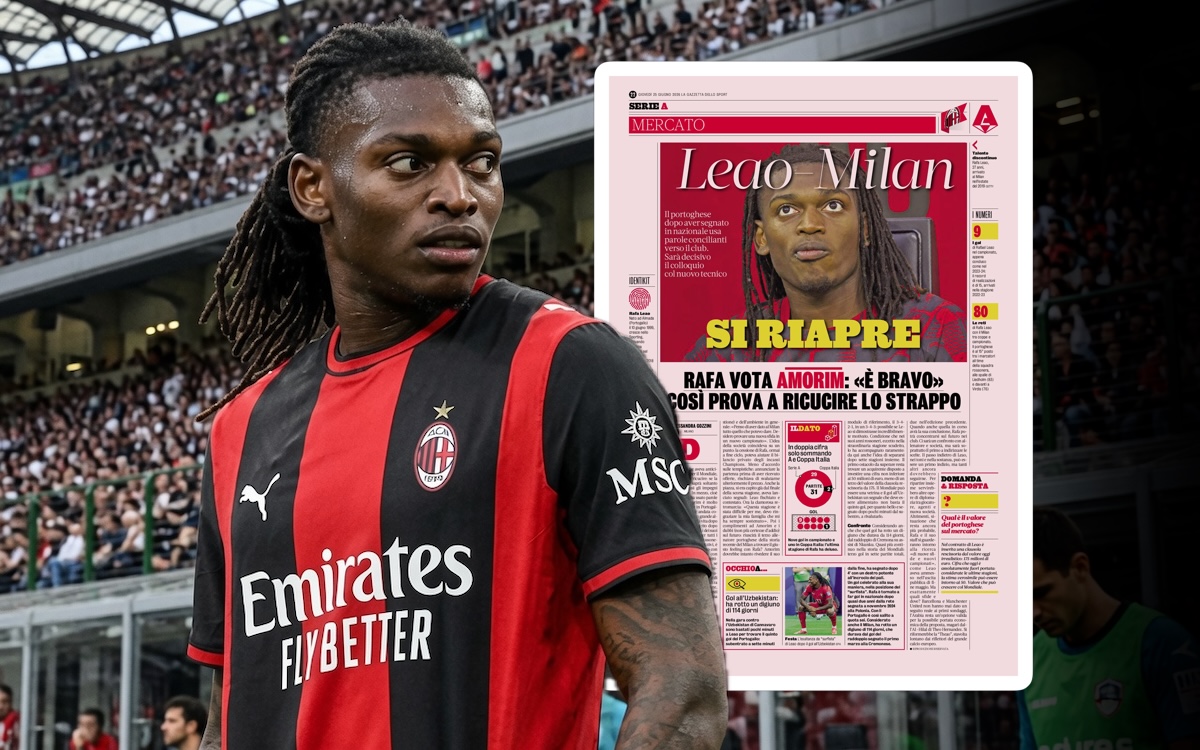
1. Rafael Leao's "Reopening" Saga
Rafael Leao remains the undisputed focal point of AC Milan's project. Any shift in his status reshapes the club's entire sporting ceiling. While transfer rumors consistently swirl, recent reports from Gazzetta dello Sport indicate a potential reopening of talks that could secure his long-term future at San Siro. This development ranks at the very top of our list because losing a player of Leao's caliber would require a complete rebuild of the attack. Retaining him is far more critical than any boardroom appointment or stadium negotiation, suggesting that his commitment to the Rossoneri remains intact despite interest from wealthier clubs willing to meet his €175 million buyout clause.
2. Santiago Gimenez's Future Dilemma
The striker position remains the most volatile component of Milan's squad. Santiago Gimenez is at the center of this storm. The forward recently addressed the rumors by stating he is ignoring the talk of a Milan exit while his agent remains focused on the future. This ranking sits just below Leao because while Gimenez is a vital asset, he does not yet carry the same franchise-altering weight as the Portuguese star. The club must navigate this situation carefully to avoid losing their primary goal threat without a replacement lined up. If his agent pushes for a move, Milan will need to secure a significant fee, likely in the region of €50 million, to reinvest in the squad.
“We’ll see what happens” — Santiago Gimenez on his transfer status
3. The Failed Markus Krösche Boardroom Coup
Milan's boardroom recruitment strategy suffered a public blow when their pursuit of Eintracht Frankfurt sporting director Markus Krösche fell through. According to reports from Bild, details of Krösche's release clause have emerged, revealing that a winter exit from his current club remains a distinct possibility. This failed move ranks third because the sporting director role dictates the club's entire transfer philosophy. The inability to secure Krösche immediately forces Milan to rely on their current management structure, which has faced criticism for lack of direction. If Milan decides to revisit this pursuit in the winter window, they will have to trigger a specific buyout clause, showing how executive instability continues to hinder their long-term planning.
4. Zlatan Ibrahimovic's Shadow Directorship
Zlatan Ibrahimovic has concentrated immense decision-making power in his hands. He is Gerry Cardinale's eyes and ears on the ground. Ibrahimovic has a massive say in both player acquisition and managerial changes, ranking fourth because his recommendations directly shape the sporting project and influence who the club targets. Some critics argue his lack of formal executive experience makes his prominent role a risky experiment, especially during tense transfer windows. Yet, his presence provides a vital buffer between the squad and ownership, ensuring that the dressing room maintains its competitive edge.
5. Gerry Cardinale's Spending Strategy
Gerry Cardinale controls the financial parameters. His commitment to a sustainable, data-driven model often clashes with fan desires for marquee signings, creating a constant tension. We rank Cardinale fifth because his budget restrictions directly cap what the sporting directors can achieve, setting the boundaries for everything below this rank. While his model keeps the club financially healthy, it runs the risk of falling behind rivals who are willing to spend more aggressively. In a sport where success is highly correlated with wage bills, Cardinale's refusal to overspend remains the ultimate bottleneck for Milan's Scudetto ambitions.
6. Theo Hernandez's Contract Standoff
Theo Hernandez is arguably the best left-back in Serie A. His ongoing contract situation is a massive concern. With his current deal expiring soon, Europe's elite clubs are monitoring his situation, hoping to pry him away from Milan. He ranks sixth because while he is a core component of the team's tactical identity, he sits just below the ownership and boardroom figures who determine his contract offer. Losing Hernandez would disrupt the left-sided partnership he shares with Leao, which has been Milan's main attacking weapon for years. The board must prioritize meeting his wage demands to avoid a disastrous departure that would be incredibly difficult to replace.
7. Mike Maignan's Negotiating Power
Mike Maignan is one of the premier goalkeepers in world football. His extension talks are proving to be a complex negotiation. The French shot-stopper demands a salary that reflects his status as an elite player, putting pressure on Milan's strict wage structure. He ranks seventh because goalkeeper contract sagas, while important, are slightly less tactically disruptive than losing an outfield superstar like Hernandez. Maignan's ability to build play from the back and make key saves has saved countless points for the team over the seasons. If negotiations stall, Milan could be forced to consider selling him to avoid losing him on a free, a scenario they must prevent.
8. Alvaro Morata's Tactical Role
Alvaro Morata was brought in to provide experienced leadership and reliable link-up play in the center-forward position. While he is not a prolific 20-goal scorer, his work rate and tactical intelligence help create space for Milan's wingers to exploit. He ranks eighth because his role is established and stable. However, his output remains under constant scrutiny from fans who demand a more clinical finisher to lead the line. Morata must maintain his consistency to justify his place in the starting eleven as younger talents push for playing time.
9. The San Siro Stadium Saga
The San Siro debate continues to linger. A new stadium is seen as essential for generating the matchday revenue needed to compete with Europe's elite clubs. It ranks ninth because while it is a massive structural issue, its resolution will take years. The local council's bureaucracy has repeatedly delayed progress, frustrating both Milan and Inter as they seek a solution. Until a final decision is made, the club's long-term growth potential remains somewhat capped by their current stadium arrangement.
10. The Algorithmic Scouting Network
Milan's heavy reliance on data-driven scouting has defined their recruitment strategy. The club uses advanced analytics to identify undervalued players across Europe. This ranks tenth because it is a continuous underlying process rather than a dynamic summer storyline with an immediate deadline. While this approach yielded success in the past, it also leads to recruitment misses when data fails to account for adaptability and team chemistry. Navigating the balance between statistical profiles and human character remains a key challenge for the technical staff.
Honorable Mentions
Several other storylines merit a brief mention. The integration of youth academy products like Francesco Camarda remains a key focus. Additionally, the coaching staff's tactical adjustments during pre-season will be key for integrating new arrivals and establishing defensive stability.
Read Next
- Spurs signing Victoria Pelova from Arsenal is a North London shocker
- How Tuchel solves England's midfield trap while United chase James Garner
- Arsenal shore up backline with permanent Hincapie deal
- Freya Godfrey locking in with London City is the smart move we ignored
- 🇲🇽 Mexico World Cup 2026 — El Tri Hub