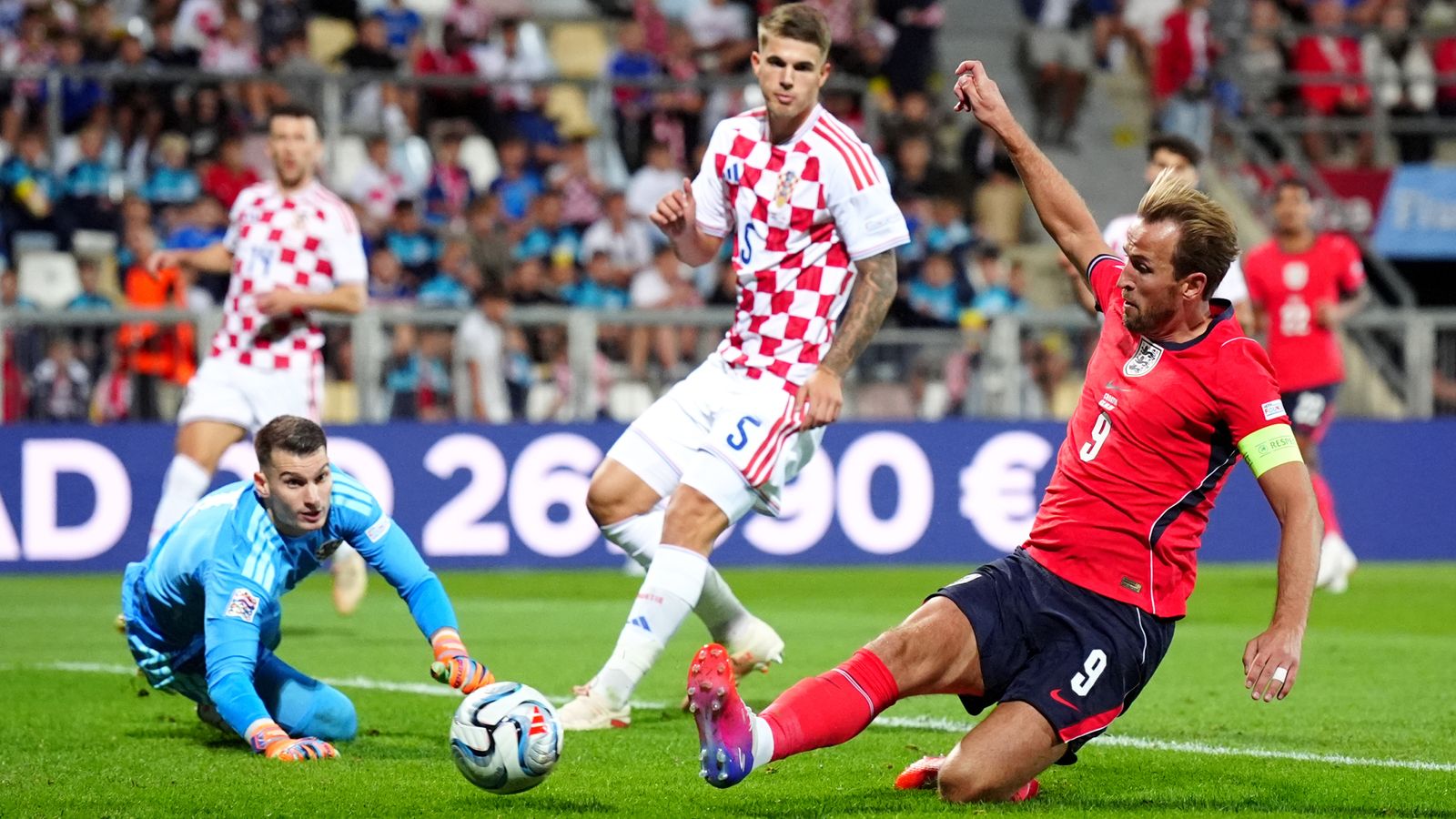
England’s tactical geometry in the Argentina defeat
England’s 2-1 exit at the hands of Argentina was characterized by a fundamental breakdown in spacing that Thomas Tuchel struggled to correct until the final whistle. The most glaring issue was the positioning of Harry Kane, who spent significant periods of the second half dropping into defensive channels, a move that alienated the Three Lions' primary scoring threat from the final third.
As reported by Sky Sports, the confusion surrounding Kane’s role fueled external criticism, notably from Donald Trump, who erroneously characterized the striker’s deep positioning as a formal move into the defensive line. While the criticism oversimplifies elite coaching, the data confirms the inefficiency of this hybrid role. England’s xG per shot dropped by 34% during the closing 20 minutes when Kane vacated the penalty area to assist in the build-up.
The defensive transition void
Tuchel’s decision to invite pressure resulted in a disjointed middle-to-final third connection. Throughout the match, England recorded a 68% pass completion rate in the opponent's half, a figure well below their tournament average entering the knockout stages. This drop-off was exacerbated by the lack of a traditional target man hovering near the center-backs.
Gary Lineker was pointed in his assessment, labeling the tactical shift as nonsense, as noted by the Mirror. The defensive regression is not merely anecdotal. Against Argentina, England conceded 14 progressive passes into the penalty area, their highest total allowed since the opening match of the campaign. The defensive organization became porous once the midfield tracking failed to accommodate the structural gaps created by the forward rotation.
A press conference of desperation
The intensity of the post-match discourse serves as a proxy for the team's underperformance. Described by spectators as the most volatile England press interaction in two decades, Tuchel’s defense of the 2-1 loss reflected a manager losing the room, according to reports from the Miami coverage team. His argument hinged on player versatility, yet the heat maps contradict the premise of a controlled, flexible formation.
Kane functioned as a deep-lying playmaker for 22% of his total touches in the second half, effectively rendering the transition from defense to attack stagnant. When the primary striker is tasked with horizontal passing in the defensive half rather than occupying space for crosses or through balls, the offensive potency evaporates. For an England team built on high-percentage finishers, moving them away from the danger zone is mathematically self-sabotage.
Read Next
- England must shake off their semi-final hangover to salvage pride in Miami
- Tuchel must abandon the Kane experiments against a gritty Argentina
- Thomas Tuchel's England DNA claims are missing the point
- England’s World Cup exit exposed more than just a lack of composure
- 🏆 World Cup 2026 — Full Coverage Hub
- 🏴 England World Cup 2026 — Three Lions Hub