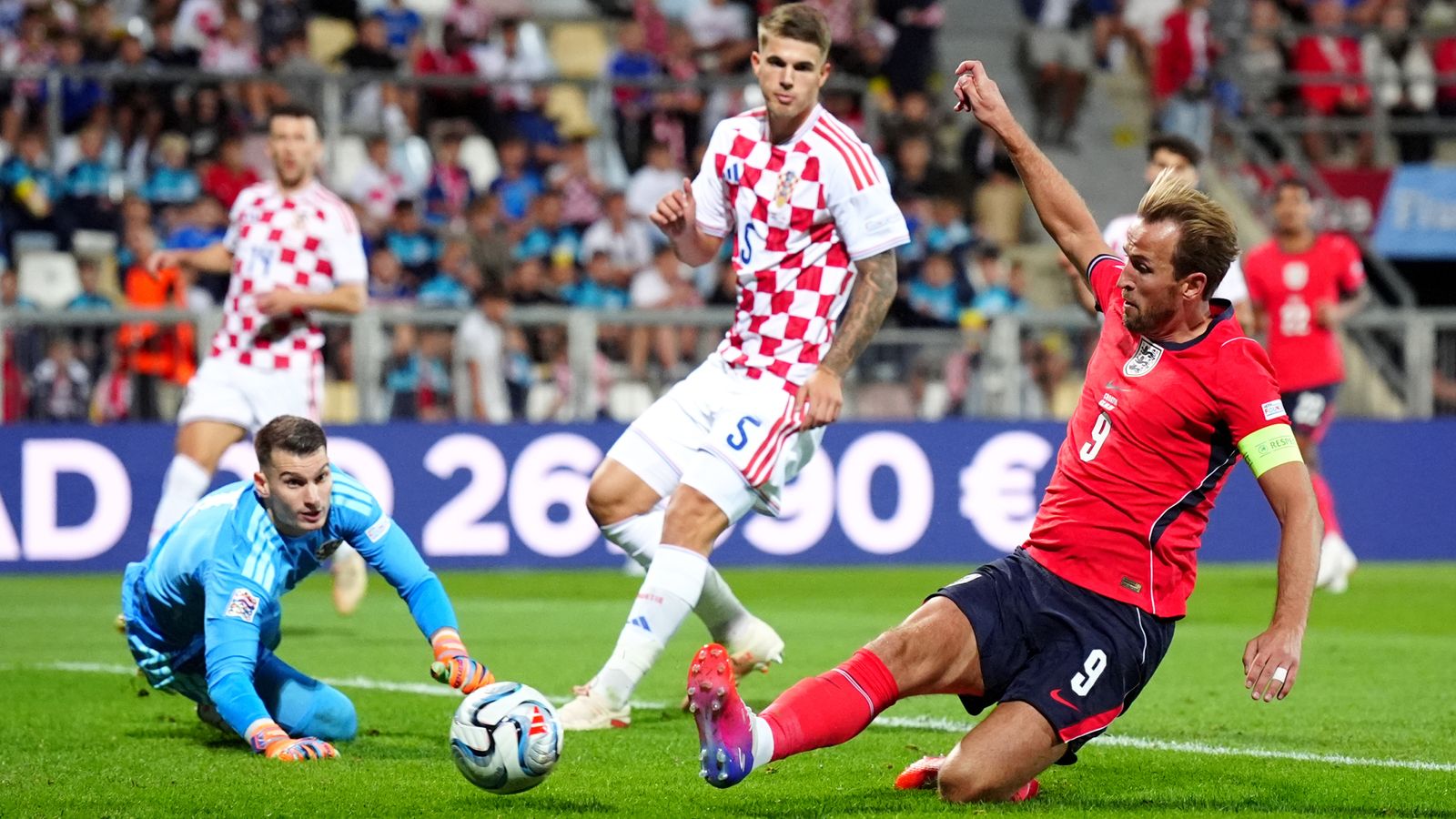
The match nobody wanted
Miami is not where either of these teams wanted to spend their weekend. The Hard Rock Stadium hosts a match that feels less like a contest and more like a tactical wake. England and France, two tournament giants who must play for a bronze medal that feels like lead, are dealing with a sour mood in their camps. The mood around both teams is flat.
In the England camp, the fallout from the semi-final collapse has already turned toxic. Social media has spent the last forty-eight hours fabricating tactical autopsies, prompting a bizarre intervention from the sidelines. Jürgen Klopp was forced to publish an Instagram video to clarify that viral quotes circulating about Thomas Tuchel's tactical decisions were completely false.
"It's not true," Klopp said in his address, warning supporters to "don't believe everything you read." As reported by Mirror Football, the former Liverpool manager felt compelled to set the record straight after being misquoted. He noted he has been on a quiet break, refraining from commenting on any games until his scheduled appearance at the final.
This media noise is the perfect reflection of England's post-defeat chaos. It shows how desperately the English public is looking for answers, even if they have to invent them.
Why Tuchel's deep block collapsed against Argentina
Let us look at the actual football, rather than the internet fiction. England had one foot in the final. Anthony Gordon's goal in the 55th minute put them ahead.
Then, the collective nerve failed. Tuchel retreated. He pulled the midfield lines deeper, inviting Argentina to squeeze the space.
England went from a proactive mid-block to a passive low block. The data reveals the cost of this passivity. England's PPDA (passes allowed per defensive action) jumped from 9.2 in the first half to 18.4 in the final twenty minutes.
You cannot give Lionel Messi that much time on the ball. Argentina began recycling possession with ease, working the ball into the half-spaces.
The equalizing goal in the 85th minute was a direct result of this retreat. Enzo Fernández had ten yards of space at the edge of the area. He took his shot without a challenge.
The winner in stoppage time was even worse. A simple vertical ball dissected England's back three, allowing Lautaro Martínez to finish. Tuchel's substitutions came too late.
He waited until the 86th minute to introduce fresh legs in midfield. By then, the momentum had shifted and the damage was done. The 1-2 scoreline was a fair reflection of the tactical surrender.
France's sterile possession and the Spain autopsy
France's exit was less dramatic but equally damning. Spain dismantled them. A 2-0 defeat in Arlington looked comfortable because it was.
Mikel Oyarzabal scored a penalty in the 22nd minute, and Pedro Porro doubled the lead in the 58th minute. Didier Deschamps' side looked completely out of ideas. They dominated possession in the second half but did nothing with it.
France finished the game with 54% possession but generated a measly 0.45 expected goals (xG). The French midfield was static. Youssouf Fofana and Aurélien Tchouaméni occupied the same vertical lanes.
They rarely looked to break the lines. When Kylian Mbappé received the ball, he was isolated against Spain's low block.
Spain's pressing triggers were well-defined. They allowed France's center-backs to keep the ball, only pressing when the ball moved to the full-backs. France fell into this trap repeatedly.
The lack of verticality was shocking. Deschamps has spent years building a team that relies on individual brilliance, but when that brilliance fails, there is no system to fall back on.
As The Guardian covered in their match report, France looked exhausted and devoid of inspiration. They did not deserve to reach the final.
The tactical battlegrounds in Miami
This brings us to today's game. How do these two flawed systems match up when the stakes are low? We should expect changes.
Both managers will likely rotate their squads, but the tactical ideas will remain. England will try to rebuild their confidence. Tuchel needs to show that he can adapt when his primary plan fails.
The key zone will be the half-spaces. France's narrow midfield tends to leave the flanks exposed. England's wing-backs must exploit this.
Anthony Gordon, if he starts, can pin Jules Koundé back. This will create space for England's attacking midfielders to operate between the lines.
France's main threat remains their transition play. If England turn the ball over in midfield, France will strike. Bradley Barcola's pace on the counter is a weapon.
Kobbie Mainoo must be disciplined. He cannot wander forward and leave Declan Rice isolated.
The battle of the benches will also be interesting. Tuchel has been criticized for his slow substitutions. Deschamps is notoriously conservative.
If the game is tied at sixty minutes, who will blink first? Tuchel must be more proactive. He cannot afford another passive retreat.
Key individual matchups
Let's look at the specific matchups. Cole Palmer against Theo Hernández is a mouth-watering prospect. Palmer wants to drift inside, drawing Hernández out of position.
If Palmer succeeds, it opens space for Bukayo Saka to run behind. Saka must be direct. In the semi-final, he was too hesitant.
He preferred to pass backwards rather than take on his man. He needs to test Hernández early.
For France, Marcus Thuram needs to offer a focal point. He was poor against Spain, winning only 30% of his duels. England's center-backs will look to dominate him physically.
John Stones must step out of the backline to press Thuram, preventing him from turning. If Stones gets dragged out, Marc Guéhi must cover the space behind. This coordination is critical.
The midfield battle is equally tight. England's double pivot must handle the press. In the semi-final, Argentina's high press forced England into long clearances.
France do not press as aggressively, but they are compact. England must move the ball quicker. Two-touch football is necessary. If they take too long, France will squeeze the space.
Prediction: England to edge a flat affair
Third-place play-offs are unpredictable. Players are tired, and the intensity is lower. Motivation is the deciding factor.
England want to prove a point. They want to show that the semi-final collapse was a tactical slip, not a systemic failure. Tuchel is under pressure.
He needs a performance to quiet the critics and justify his decisions. France look like a team that has checked out. Deschamps' cycle feels like it is coming to an end.
The squad looks flat. England will control the game. They will dominate possession and create the better chances.
Gordon's pace will be key. England will secure the bronze. It will not make up for the semi-final heartbreak, but it will offer some comfort.
It will be a tight, scrappy affair in the Miami heat. England will win 2-1.
Read Next
- Tuchel must abandon the Kane experiments against a gritty Argentina
- Thomas Tuchel's England DNA claims are missing the point
- Thomas Tuchel's England project is hitting a chaotic wall
- Thomas Tuchel's England project hits a wall in Miami
- 🏆 World Cup 2026 — Full Coverage Hub
- 🏴 England World Cup 2026 — Three Lions Hub
- ⚡ UCL Semi-Finals 2026 — Full Coverage Hub