Exactly zero fit, natural right-backs remain in Thomas Tuchel's active World Cup squad, and that single statistic explains why England's knockout run is on the verge of collapse. The selection crisis has worsened ahead of the round of 16 clash against Mexico at the Estadio Azteca. Leaked news from the camp, as tracked on the Sky Sports live updates, indicates that Jarell Quansah is slated to start at right-back.
Tuchel is out of options. Quansah is a center-back who has never played at right-back at the senior level and is currently recovering from a twisted ankle. His selection represents a massive tactical gamble that exposes England's absolute lack of defensive depth.
England's right-back issues have been compounding since the group stage. Tino Livramento was forced to withdraw before the tournament, Reece James has missed the last two games with a hamstring issue, and Djed Spence has a sore calf. Asking a central defender to protect the widest channel under these conditions is a recipe for physical disaster.
This defensive emergency is amplified by the brutal environmental factors of Mexico City. Playing at 2,200 metres above sea level forces unadapted athletes to operate under severe hypoxic stress. Visiting players regularly experience rapid lactic acid buildup, with oxygen transport capacity dropping by up to eight percent at this elevation.
Furthermore, the physics of the match ball changes at altitude. The lower air density reduces drag, meaning passes over thirty yards travel faster and float longer. Teams that rely on long diagonal switches will find their passes sailing directly out of play, forcing them into short, ground-based circulation.
The DR Congo Mismatch and Defensive Instability
To understand the scale of England's defensive vulnerability, one must examine the tape from their round of 32 clash. England barely survived a turgid 2-1 victory over the Democratic Republic of Congo in Atlanta on July 1. A loose sideways pass from John Stones in the 9th minute was intercepted by Brian Cipenga to give the Congolese a shock lead.
Stones was pressured easily, panic-passing toward a rusty Declan Rice who was returning from a calf injury. Jordan Pickford, despite holding an impressive record of 46 clean sheets in 87 caps, looked shakier than ever. As detailed in the Guardian's profile of the Everton goalkeeper, his erratic decision-making has repeatedly put the defense under pressure.
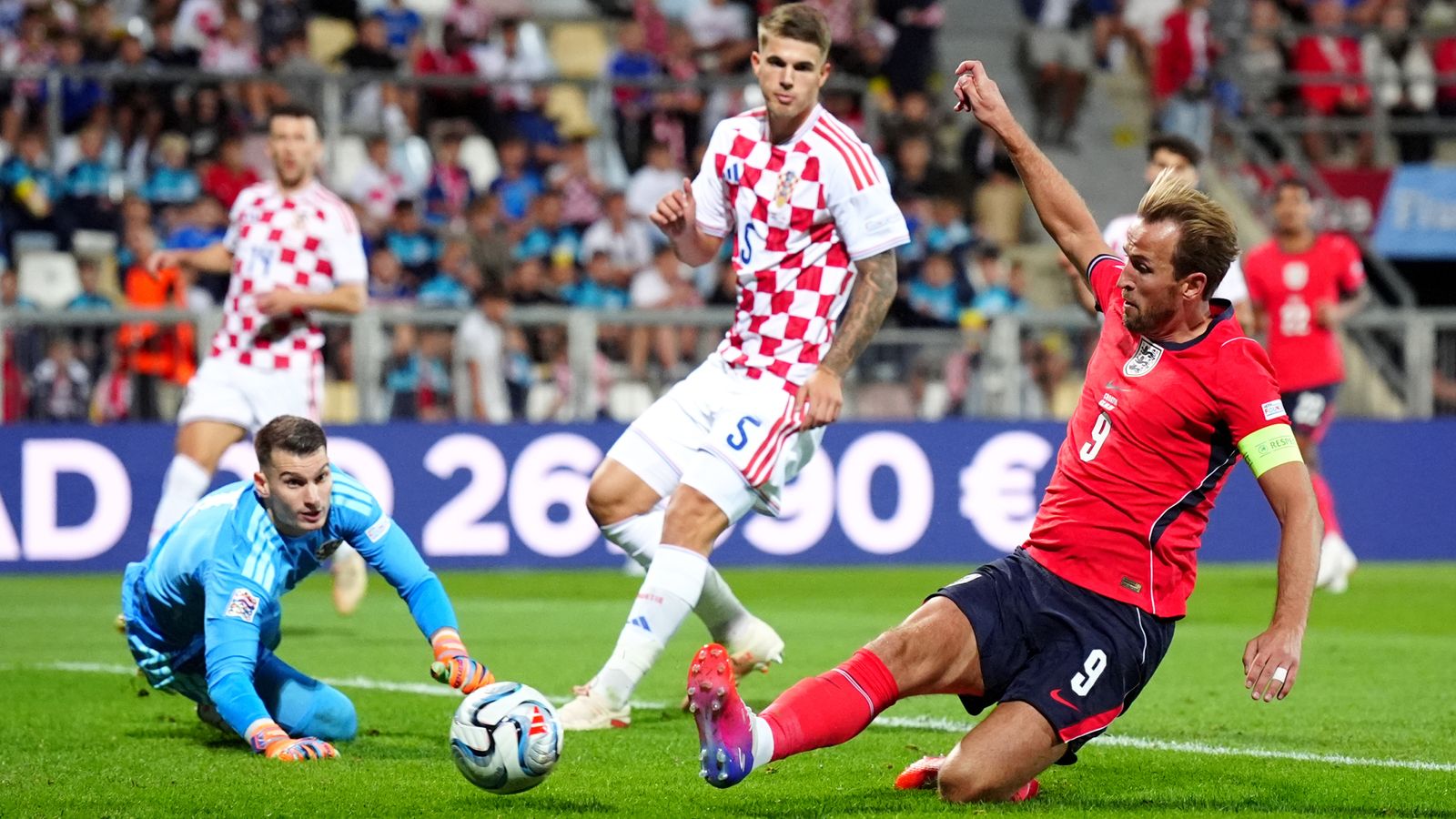
The numbers do not lie. England only progressed because Harry Kane scored two late goals in the 75th and 86th minutes. The victory was an individual rescue job rather than a product of cohesive tactical design.
Tuchel's double pivot of Rice and Elliot Anderson looked entirely disconnected and easily overrun by counter-attacks. Without a natural playmaker to link the lines, Kane was forced to drop deep to receive the ball. This movement congested the midfield, leaving the penalty box empty and rendering England's possession slow, predictable, and harmless.
Meteorological Chaos and the Azteca Trap
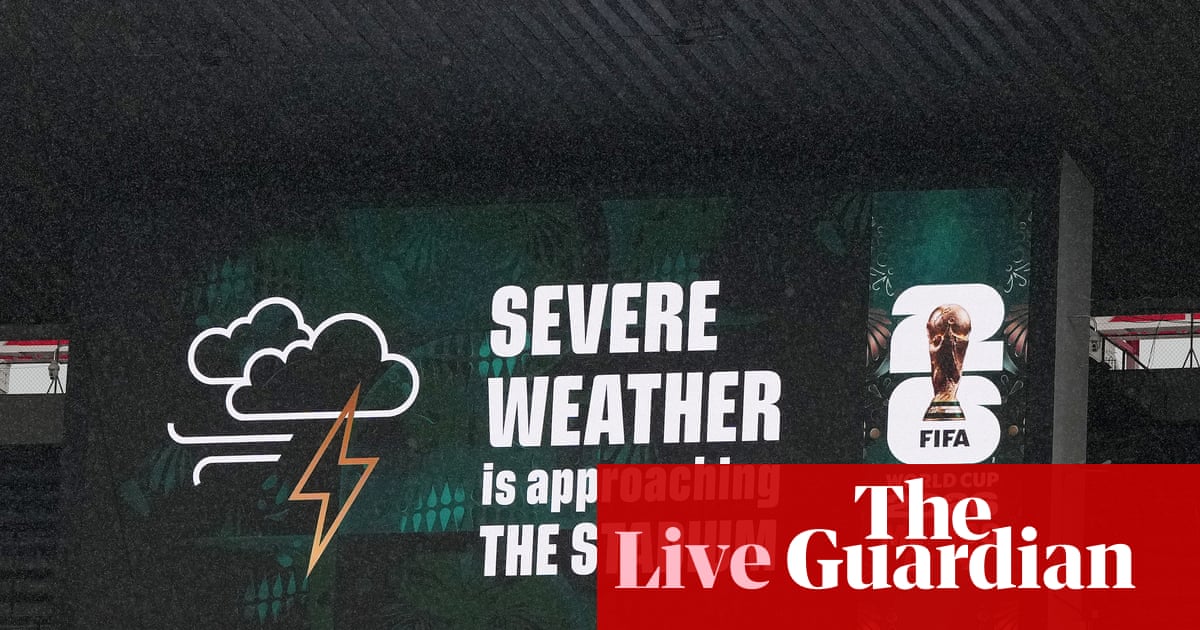
The physical challenge of this tie has been exacerbated by severe weather in the Mexican capital. Loud claps of thunder were heard at the Azteca at 2:40 pm local time, with rain absolutely hosing down the playing surface. The buildup has been chaotic, following FIFA's farcical attempt on Friday to bring the kick-off forward by six hours to avoid the storm.
The scheduling change was kept secret from the Football Association, who only discovered the proposal through media reports. Under NOAA guidelines, play cannot begin or resume until 30 minutes have passed since the last lightning strike within an eight-mile radius. Any electrical storm during the match will force players off the pitch and spectators to seek shelter in a stadium that lacks a retractable roof.
This weather delay creates a logistical nightmare for fans. For viewers in the United Kingdom, where the match is scheduled to kick off at 1:00 am BST, a prolonged delay could push the final whistle past 5:00 am BST. Under local licensing laws, pubs must close at that hour, leaving supporters stranded before the match concludes.
Marcus Rashford described the kickoff chaos as not ideal, reflecting the frustration within the camp. The squad's travel schedule was also disrupted, leaving them with less than 36 hours in the capital before kickoff. This chaotic preparation plays directly into Mexico's hands.
The Tactical Nightmare of Quansah's Positioning
Starting Quansah at right-back completely alters England's defensive geometry. As a natural center-back, Quansah lacks the lateral mobility to track overlapping wingers in isolated wide channels. He will naturally pinch inward to support Stones, leaving a massive vacant space on England's right flank.
This structural narrowness will isolate Bukayo Saka on the right wing. In possession, Saka will not receive overlapping runs to drag defenders away, forcing him into constant 1v2 situations against Mexico's wingback and wide midfielder. England's ball progression will stall, forcing Rice to drop deep and circulate possession in unthreatening horizontal lines.
Tuchel's decision to start Saka and Anthony Gordon on the wings is a desperate search for directness. But without overlapping full-backs, their output will be severely limited. If England cannot progress the ball through the half-spaces, their attacking threat is reduced to set-pieces.
Aguirre's pressing traps will target this exact structural flaw. The moment Stones plays a pass into the central midfield zone, Luis Chavez and Edson Alvarez will jump to press the receiver. Quansah's inability to provide a lateral passing outlet will trap England in central choke points.
Aguirre's Defensive Wall and Mexico's Home Advantage
Javier Aguirre has built a defensive machine that is perfectly suited to exploit England's exhaustion. Mexico reached the round of 16 by defeating Ecuador 2-0 on June 30, with Julian Quiñones opening the scoring in the 22nd minute. El Tri deployed a rigid 5-4-1 low block that restricted space in the half-spaces and forced Ecuador wide.
The Azteca does not forgive. The co-hosts are unbeaten in nine World Cup matches at the stadium, backed by an intimidating wall of noise from ninety thousand local fans. Aguirre's side will cede possession, drop into a compact shape, and wait for England to tire in the thin air.
Even with goalkeeper Luis Angel Malagon out with a ruptured Achilles tendon, Raul Rangel has looked secure in goal. The back four of Jorge Sanchez, Cesar Montes, Johan Vasquez, and Jesus Gallardo has conceded zero goals from open play in this tournament. If Mexico score the opening goal, England's slow ball circulation will not break down this defensive wall.
Ecuador's frustration against this block boiled over, culminating in Piero Hincapie receiving a red card in stoppage time. Sebastian Beccacece stepped down immediately after the defeat, showing the destructive impact of Aguirre's tactics. England must avoid falling into the same emotional trap.
The Tactical Reality of Tournament Attrition
The high physical stakes of this tournament have already claimed several managerial casualties. Carlos Queiroz resigned as Ghana head coach on Sunday after their last-32 elimination, stating that progress must start off the field. Queiroz, who was only appointed in April, recognized that physical preparation is the defining factor in summer tournaments.
England's preparations have lacked this necessary diligence. Arriving in Mexico City less than 36 hours before kickoff is a logistical failure that will have physical consequences on the pitch. Unadapted muscles will fatigue rapidly, leading to late defensive lapses and slow reaction times.
The match, tracked live by the Guardian's live coverage, will test Tuchel's tactical flexibility. Starting an unfit player in a makeshift role in a high-altitude storm is a recipe for capitulation. England's defensive compromises are simply too severe to survive a disciplined opponent.
Ultimately, this match is a test of tactical intelligence and discipline. England have the superior individual talent on paper, but football matches are won on the grass. Aguirre has set his trap, and England have walked right into it.
The statistical reality is that England are entering a tactical bottleneck. Their right-back crisis has destroyed their defensive depth, while the Azteca's altitude will choke their midfield transitions. If Tuchel refuses to adjust his safety-first approach, England's campaign will end in the rain of Mexico City.
Read Next
- Thomas Tuchel's rigid England is walking straight into Mexico's Azteca trap
- Thomas Tuchel faces his first major tactical test as England meet Mexico
- Tuchel's tactical geometry is about to clash with the Azteca heat
- Tuchel must slow the game down if England are to survive the Azteca
- 🏆 World Cup 2026 — Full Coverage Hub
- 🏴 England World Cup 2026 — Three Lions Hub
- 🇲🇽 Mexico World Cup 2026 — El Tri Hub