Spain entered the World Cup final having conceded only one goal in seven matches, but their defensive security was rarely tested during a regulation 90 minutes that redefined one-sided frustration. For the first time in modern World Cup final history, a defending champion was held to zero shots on target over 90 minutes of regulation play while their opponent peppered the goal with 11 shots on target. Yet, as the referee blew the whistle to end regulation time, the scoreboards at the New York New Jersey Stadium still read 0-0.
Outside the stadium, the pre-match narrative was marred by organizational failures as fans faced severe bottlenecks at the turnstiles. The administrative chaos delayed the kickoff by six minutes, leaving the pitch empty while thousands of ticket holders remained stranded outside the gates. Once play finally commenced, the administrative friction was replaced by a tactical gridlock that Spain controlled but could not break.
The Spanish Monopolisation of Spacing
De la Fuente's Positional Structure
Spain’s positional play under Luis de la Fuente stretched Argentina's block as wide as possible. In the first half, Spain dictated the tempo with 65% possession, circulating the ball centrally before launching rapid switches to the flanks. Spain completed 348 passes in the first half compared to Argentina's 196, finishing regulation time with 684 completed passes to Argentina's 362.
Lamine Yamal positioned himself on the extreme right touchline, stretching Tagliafico while Marc Cucurella provided the counterweight on the left. This wide deployment forced Argentina's full-backs to defend in isolated one-on-one scenarios, allowing Yamal to complete 4 of his 7 first-half dribbles. Spain entered the final third 34 times in the first half alone, squeezing Argentina deeper into their own territory.
Pedro Porro's positioning was equally aggressive on the right flank, pushing up as an auxiliary winger to allow Yamal to cut inside. This movement dragged Tagliafico out of position, allowing Dani Olmo to occupy the space behind Mikel Oyarzabal. However, Argentina's central midfielders sat incredibly deep, cutting off passing lanes into Olmo's feet.
The Half-Time Tactical Dilemma
Despite Spain's statistical hegemony, their efficiency in the final third left much to be desired. They recorded seven touches in the opposition penalty box in the first half, while Argentina recorded zero. Spain was dominant on the ball, but their passing often lacked the vertical penetration required to break Lionel Scaloni's defensive lines.
Their ball possession was secure, but it was largely sterile, rotating between the center-backs and wide players. They failed to disrupt the central defensive block.
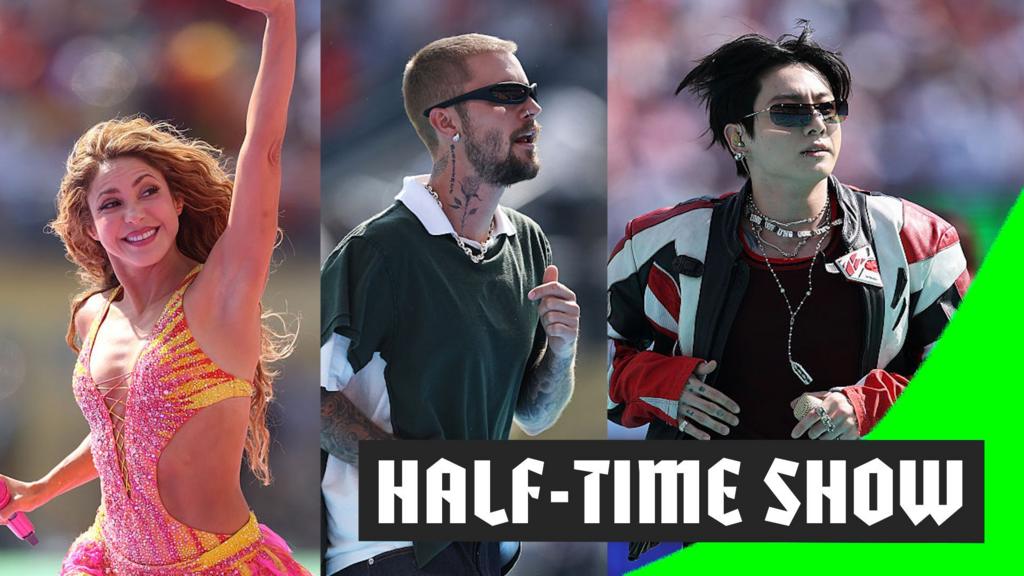
At the interval, the scoreless tactical stalemate was briefly interrupted by a star-studded musical production featuring Madonna, BTS, Justin Bieber, and Shakira, as noted in the BBC video report. The half-time show coverage also featured brief appearances from Ronaldo and Ronaldinho on the pitch. While the stadium was entertained, both managers spent the break addressing structural flaws.
De la Fuente's primary concern was the lack of central penetration. Fabián Ruiz attempted late runs to support Oyarzabal, but Rodrigo De Paul tracked these movements diligently. Spain's second-half possession remained high at 62%, but their wingers received the ball standing still, allowing Argentina's full-backs to recover.
Scaloni's Low Block and the Injury Pivot
The Lisandro Martínez Exit
Argentina’s defensive stability was severely tested in the 41st minute when Lisandro Martínez suffered a muscular injury. His replacement, Nicolás Otamendi, dropped five yards deeper, narrowing the space behind the midfield line. This forced change could have disrupted Argentina's shape, but Otamendi's entry actually solidified their low block.
Otamendi's deep positioning allowed Cristian Romero to act as the aggressive stopper, contesting aerial duels with Oyarzabal. Romero registered four interceptions and three successful tackles, while Otamendi swept up the second balls. This defensive division of labor prevented Spain from exploiting the space behind them.
Goalkeeper Emiliano Martínez was the standout performer for Argentina throughout the match. He made 11 saves in regulation, including a fingertip stop from a Lamine Yamal free kick in the 88th minute. The goalkeeper recorded 0.94 goals prevented according to expected goals models.
His positioning cut off low crosses and collected high aerial balls, neutralizing Spain's wingers. Martínez was especially effective at claiming crosses, catching 5 aerial balls to relieve pressure on his center-backs during the chaotic final 10 minutes of regulation.
The Illusion of Spanish Dominance
A closer inspection of Spain's 16 shots reveals a surprising tactical reality. While Spain registered 11 shots on target, their total expected goals (xG) value was only 1.84. This averages out to a meager 0.115 xG per shot.
Consequently, Spain was forced to shoot from distance or from acute angles. Nico Williams and Mikel Oyarzabal both had efforts saved, but these were low-probability opportunities. Scaloni's setup prioritized central compaction over wing containment.
Argentina accepted Spain's possession, betting that their defensive block could handle the crosses. The strategy was highly negative, but it succeeded in keeping the score level.
Argentina's attacking output was almost non-existent as Lionel Messi and Julián Álvarez were completely isolated, with Messi completing only 12 passes in the opposition half. Álvarez was forced to run the channels to relieve pressure, but he was consistently crowded out by Pau Cubarsí and Aymeric Laporte. The forward won only 2 of his 9 ground duels, highlighting his struggles against Spain's physical center-back pairing.
Argentina's transition game failed to function, registering zero shots on target and only four total shots. All of these efforts flew wide of Unai Simón's post.
The Enzo Fernández Brain-Fade and the Extra-Time Shift
The 93rd-Minute Flashpoint
Argentina's defensive plan was thrown into jeopardy in the 93rd minute of play. Enzo Fernández, who had already been booked for dissent earlier in the second half, committed a reckless tackle on Spanish defender Pau Cubarsí. The referee did not hesitate to issue a second yellow card, sending Fernández to the locker room.
Fernández's dismissal was the culmination of a frustrating night where he completed only 74% of his passes and was targeted by Spain's high press. Spain's press, led by Dani Olmo and Fabián Ruiz, forced 14 turnovers from the midfielder. His final challenge on Cubarsí was born of exhaustion and frustration, leaving his team in a precarious position after covering 11.2 kilometers.
This dismissal left Argentina with 10 men just before the referee blew the whistle for extra time. Fernández's exit stripped Argentina of their main transitions outlet in midfield. His red card was an act of rank indiscipline, a brain-fade that put his team under immense pressure.
The Extra-Time Burden
Playing extra time with 10 men against a team that averages 63.8% possession is a daunting task. Argentina’s defensive workload, which had already seen them cover 104 kilometers in regulation, will now increase. Alexis Mac Allister and Rodrigo De Paul must cover the space vacated by Fernández.
Spain now has a numerical advantage to complement their spatial control. Spain's technical bench will look to exploit the half-spaces that Argentina can no longer cover. The question is whether Spain can convert their possession into high-value scoring chances, or if they will continue to shoot from low-probability zones.
Argentina must now play for a penalty shootout, relying on the heroic presence of Emiliano Martínez to defend their crown.
Read Next
- The World Cup Final hangover is going to hurt for a while
- FIFA turned the World Cup final into a glorified fire drill
- Top 10: The Most Defining Domestic League Rivalries and Shifts
- Power Ranking the Premier League: Post-World Cup Outlook
- 🏆 World Cup 2026 — Full Coverage Hub
- 🇦🇷 Argentina World Cup 2026 — Defending Champions Hub
- 🇪🇸 Spain World Cup 2026 — La Roja Hub
- 🏆 World Cup 2026 Final — MetLife Stadium Hub