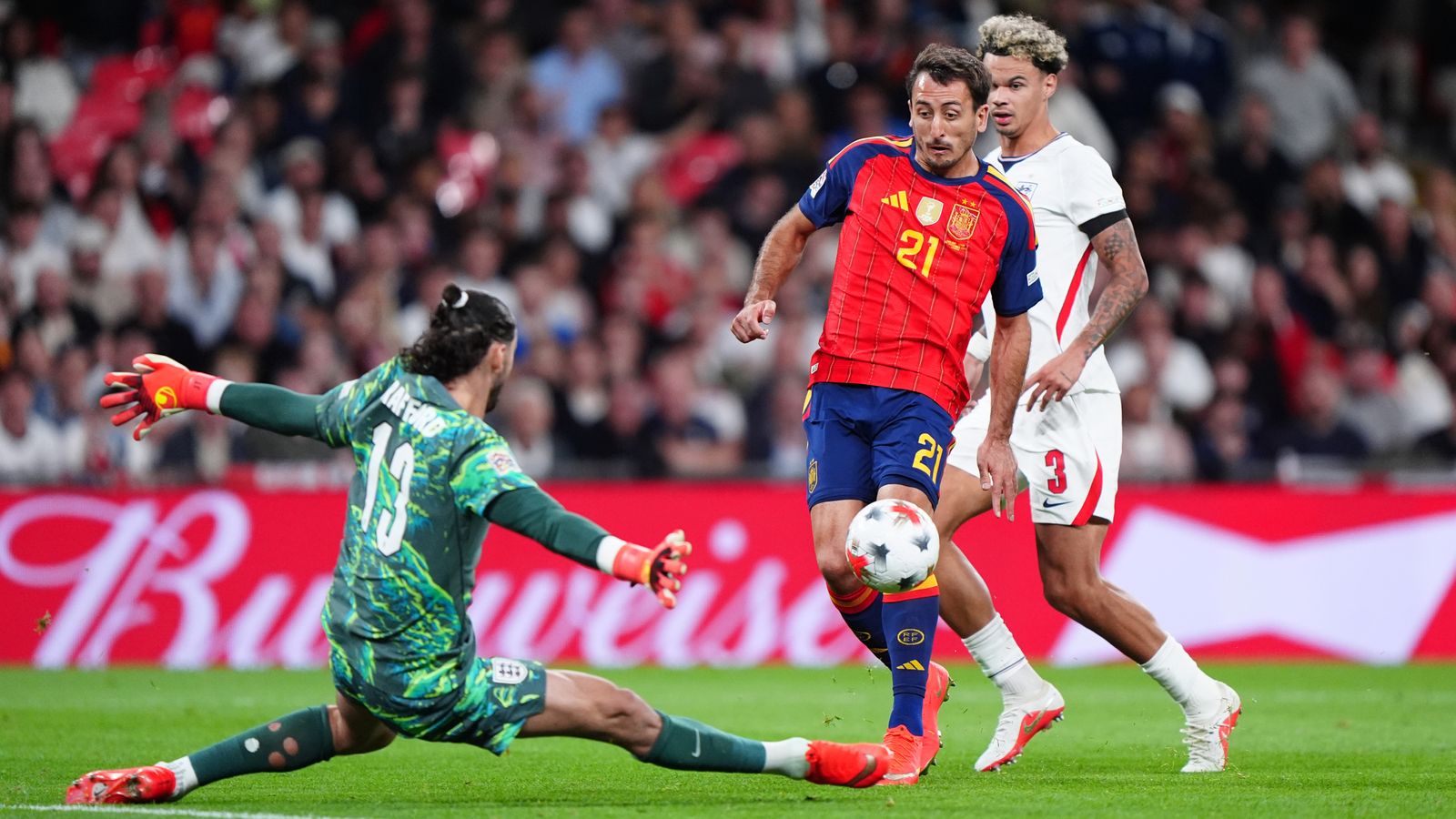
Pull up a chair, grab a cold pint, and let's talk about the absolute revolution happening in Spain's national team. If you had to watch Spain at the last couple of World Cups, you probably fell asleep before the second half. It was death by a million sideways passes, a sterile possession model that felt like watching paint dry on a Sunday afternoon.
But this 2026 group playing across North America is a completely different beast. They aren't passing you into a coma. They are running you into the ground.
This isn't your older brother's Spain, the one that monopolized the ball but forgot that the goal of the game is to actually score. Luis de la Fuente looked at the old, boring tiki-taka playbook and threw it straight into the garbage. He decided that speed, violence, and directness were the new Spanish way.
The result is the most entertaining national team on the planet right now. They play with the kind of chaotic energy that makes you want to double-fist beers and scream at the television.
To understand how far they have come, you have to remember the absolute disaster of Qatar in 2022. Spain went out to Morocco in the Round of 16 after passing the ball over 1,000 passes and failing to score a single goal in 120 minutes. It was the ultimate embarrassment, a team of technical geniuses playing like they were afraid of the penalty box.
Luis Enrique's side had all the ball but zero penetration, leaving fans frustrated and rivals laughing. De la Fuente took over and immediately realized that possession without progression is just a useless stat.
The Wing Wizards Destroying the Traditional Spanish Model
For a decade, Spanish football treated directness like a mortal sin. If you didn't pass the ball twenty times before crossing the halfway line, the football police would come and revoke your license. De la Fuente changed all that by giving the keys of the car to a couple of teenage speed merchants.
Enter Lamine Yamal and Nico Williams, the two guys currently giving opposing fullbacks actual night sweats. Yamal is playing like he is in a schoolyard, nutmegging defenders with the casual arrogance of a kid who knows he is better than you.
When he burst onto the scene at Euro 2024 at just 16 years old, we knew he was special. Now in 2026, he is a certified superstar who makes world-class defenders look like they are running in deep mud.
Remember his goal against France in the Euro 2024 semi-final? That curling effort from twenty-five yards out wasn't just a goal; it was a declaration of independence from the old Spanish style.
He didn't look for a safe pass back to the midfield. He saw a sliver of space, cut inside on his left foot, and bent the ball into the top corner.
On the other flank, Nico Williams is a human turbo button. His decision-making has finally caught up to his raw speed, creating a wing combination that Spain has never seen in its history.
Spain has always produced technical geniuses, but they rarely had guys who could blow past a defender on the outside and whip in a lethal cross.
It is like watching a young Shawn Michaels in his prime, just flying around the ring and hitting superkicks before the opponent even realizes the bell rang.
Fullbacks are backing off them, terrified of the pace, which just opens up space for Spain's midfielders to do damage.
Athletic Bilbao managed to keep Williams for a while, but his rumored 58 million euros release clause now looks like the biggest bargain in modern football history.
The Engine Room That Actually Moves Forward
Of course, you cannot talk about Spain without talking about the midfield. But instead of the tiny, lateral passing orchestrators of the past, this midfield is built on power, verticality, and Rodri. Let's be honest: Rodri is the best midfielder in the world, and it is not even close. He controls games like a chess grandmaster, but he also brings the physical presence of a nightclub bouncer.
Then you have Pedri and Fabian Ruiz, who have been given license to actually enter the penalty box. Under the old system, Spanish midfielders were forbidden from shooting unless they walked the ball into the net. Now, they are arriving late, taking shots from distance, and driving the ball forward with actual speed.
Dani Olmo is another chess piece that De la Fuente uses to devastate opponents between the lines. Olmo doesn't just recycle possession; he turns and runs directly at the center-backs.
His performance in the Euro 2024 final, where Spain defeated England 2-1, showed exactly how lethal this direct approach can be. He was constantly looking for the killer pass, forcing England's backline to drop deeper and deeper until they cracked.
This verticality changes the entire geometry of the pitch. When opponents try to press Spain high, they get bypassed in three quick touches instead of fifteen slow ones.
It is fast, it is vertical, and it is absolutely terrifying for teams that try to sit in a deep block.
They don't care about keeping the ball for the sake of it anymore. They want to hurt you, and they want to do it in under ten seconds.
The Striker Conundrum and the Glass House at the Back
But let's pump the brakes on the parade for a minute, because no team is perfect. We have to talk about Alvaro Morata, a striker who continues to defy the laws of football physics. Morata is the ultimate enigma, capable of scoring a spectacular overhead kick and then missing a three-yard sitter in the very next minute.
He is the guy who looks like a Ballon d'Or contender in one match and then vanishes like a magician's assistant when the pressure rises.
If Morata goes cold, Spain has to rely on backup options that don't carry the same physical presence. That is a massive gamble when you are entering the final rounds of a World Cup.
But the real ticking bomb for this Spanish side is the center-back partnership. Aymeric Laporte and Robin Le Normand have done a decent job, but let's be real: they are not Carles Puyol and Sergio Ramos.
Laporte is currently playing his club football in Saudi Arabia with Al-Nassr, and you have to wonder if playing at that level prepares you for the intensity of a World Cup knockout match against the likes of Vinicius Jr. or Kylian Mbappe.
Le Normand's move to Atletico Madrid has helped, but he still lacks the recovery speed to cover for Spain's ultra-aggressive fullbacks.
They lack that nasty, aggressive edge that wins you international tournaments when the football gets ugly.
When Spain faces teams with physical strikers who can run the channels, the defense starts to look very fragile.
If they get hit on a fast counter-attack, they look like a family sedan trying to drag race a supercar.
Pau Cubarsi is the future, but throwing a teenager into the fire of a World Cup knockout match is a massive risk.
We saw this in their qualifying matches where simple long balls over the top caused absolute panic in the Spanish box. If a team like Argentina or France exploits this weakness, the golden generation's dream will end in tears.
Can This Generation Actually Finish the Job?
This brings us to the ultimate question: can this new golden generation actually win the big one? They have the talent, the swagger, and a manager who trusts them to play direct football.
But winning a World Cup requires a level of defensive steel that this current squad hasn't fully proven they possess.
They won't win it by passing teams to death like the 2010 squad did with those famous one-nil victories. They will have to outscore their problems, which makes for incredible television but terrible blood pressure for Spanish fans.
They are playing in North American summer heat, traveling across different time zones, which will test their depth and physical endurance to the absolute limit.
This isn't a cozy European tournament where you can drive to the next stadium in two hours.
The travel and humidity will take a toll, and that is where a shaky defense can turn a minor mistake into a tournament-ending disaster.
If they can protect their fragile backline, we are looking at the start of a new football dynasty.
If they cannot, they will just be another highly entertaining side that went out in the quarter-finals because they forgot how to defend a simple set piece.
Either way, grab another pint and enjoy the ride, because Spanish football is finally fun again.