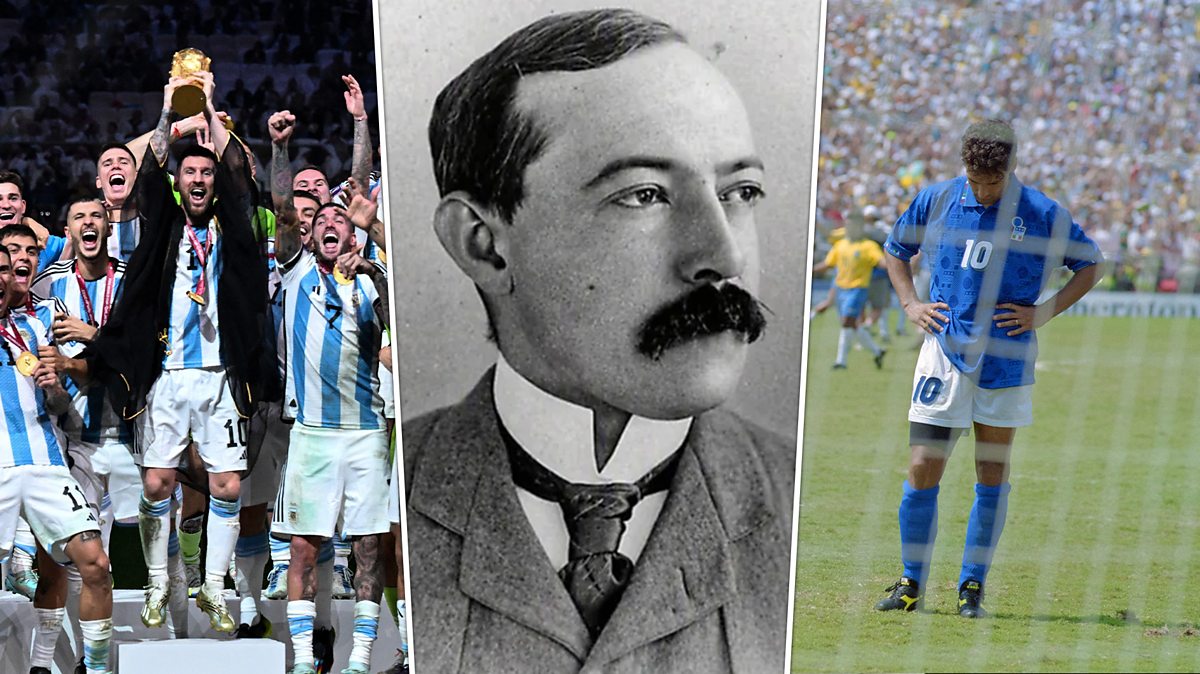
The Ghost of Milford at SoFi Stadium
In 1890, an Irish goalkeeper named William McCrum stood between the posts for Milford Football Club and grew tired of watching defenders trip forwards to deny clear goals. His solution was a twelve-yard direct shot at goal, a concept that was formally codified in 1891 despite traditionalists calling it an insult to the gentlemanly nature of the sport. As the BBC reported in their history of the rule, McCrum wanted to punish dirty play.
Today at the SoFi Stadium in Los Angeles, the specter of that twelve-yard line will dominate the thoughts of two managers. Spain and Belgium meet in a World Cup quarter-final where the margins are so thin that McCrum’s invention might decide the winner. A single clumsy challenge in the box could undo years of tactical preparation in a second.
Knockout football has a habit of distilling ninety minutes of complex tactical planning into a singular moment of individual panic. Both Luis de la Fuente and Rudi Garcia know that the stakes are absolute. The pressure on these benches is immense.
The post-tournament coaching carousel is already spinning. As The Guardian reported, national team jobs are increasingly precarious. One mistake here, and a manager will be packing his bags before the semi-finals in Dallas even kick off.
The Suffocating Rest Defense vs. Tactical Chaos
Spain enters this match having achieved something remarkable in modern tournament history. They have conceded zero goals in their four matches leading up to this quarter-final. That defensive record is not a product of luck or heroic goal-line clearances.
It is a mathematical consequence of possession dominance and structured rest defense. Under Luis de la Fuente, Spain does not defend by retreating into a low block. Instead, they defend by suffocating the opponent's midfield before transitions can even develop.
Rodri acts as the central anchor of this system. In this tournament, he has completed 93.4% of his passes and won 72% of his ground duels. He is flanked by Pedri and Dani Olmo, who work to compress the space in the center of the pitch.
When Spain loses the ball, Pau Cubarsí and Aymeric Laporte immediately step forward. This high line prevents opponents from launching clean counter-attacks. Spain’s opponents have averaged an xG of just 0.42 per ninety minutes, reflecting complete territorial dominance.
Yet, this defensive structure is not without its flaws. In their round-of-16 victory against Portugal, Spain struggled to handle diagonal runs behind Pedro Porro. If Spain’s counter-press fails by even a fraction of a second, their high defensive line becomes a massive gamble.
Laporte lacks the recovery speed to chase down elite wingers in open space. A single quick pass over his head could expose Unai Simón to a direct duel. Belgium has the exact tools to test this vulnerability.
Belgium’s path to the quarter-finals has been the polar opposite of Spain's smooth journey. Rudi Garcia’s side sputtered through the group stage, scraping through Group G with just five points. They looked slow, disjointed, and vulnerable to direct transitions.
Then came the knockouts. A dramatic comeback against Senegal was followed by a 4-1 dismantling of the United States in the Round of 16. The catalyst for this transformation has been the deployment of Charles De Ketelaere in a hybrid second-striker role.
De Ketelaere’s movements drag opposing center-backs out of position. This opens up massive gaps for Jérémy Doku to exploit on the left wing. Doku is currently averaging 6.8 successful dribbles per ninety minutes, the highest rate of any winger remaining in the tournament.
But Belgium’s defense remains a major concern. The partnership of Brandon Mechele and Zeno Ngoy has looked shaky when pressed high. Mechele lacks the lateral quickness to match elite wingers, and Ngoy is prone to positional lapses when tracking runners.
If Spain can bypass Belgium's initial mid-block, their attackers will find plenty of space to exploit. Alex Baena and Mikel Oyarzabal are masters at exploiting half-spaces. If Belgium's defensive midfielders do not track back, their center-backs will be left completely exposed.
Belgium's defense has conceded goals in almost every match. Their group stage campaign showed they struggle against quick, vertical passing combinations. Spain will look to exploit this with rapid triangles on the edge of the penalty area.
The Key Tactical Battlegrounds
The most intriguing battle will take place on Spain's right flank. Pedro Porro will have the unenviable task of stopping Jérémy Doku in one-on-one situations. If Porro is left isolated, Doku has the explosive acceleration to bypass him and cut back to the edge of the area.
To mitigate this threat, Rodri will need to shift laterally to provide cover. This, however, will open up space in the center of the pitch. Youri Tielemans or Hans Vanaken could exploit these central spaces if they make late runs from deep.
Another key matchup is the pressing trigger on Spain's build-up. Belgium will likely deploy Romelu Lukaku as a late substitute, using Charles De Ketelaere to lead the press early on. If Belgium can force Pau Cubarsí into making rushed decisions, they can disrupt Spain's possession cycle.
Spain’s build-up relies on Cubarsí's ability to find Pedri between the lines. If Belgium's midfield block can cut off these passing lanes, Spain may find themselves passing sideways without penetration. This would force them to play long balls, which suits Belgium's tall defenders.
Spain will also look to exploit Lamine Yamal’s matchups. The young winger has been Spain's main outlet for vertical progression. Against Maxim De Cuyper, Yamal will look to cut inside on his favored left foot.
If De Cuyper does not receive help from Hans Vanaken, Yamal will have free rein to curl shots toward Thibaut Courtois's far post. This matchup favors Spain's starlet, who has already registered three assists in the tournament.
Belgium will need to be disciplined in their defensive transitions. Spain's counter-press is designed to win the ball back within six seconds of losing it. If Belgium can play out of this press, they will find acres of space behind Marc Cucurella.
Cucurella's aggressive positioning often leaves Spain's left flank exposed. Jérémy Doku could swap flanks to exploit this space, or Belgium could use Leandro Trossard to make diagonal runs into that channel.
The Penalty Drama and the Verdict
If the tactical deadlock cannot be broken after one hundred and twenty minutes, the match will be decided by the penalty kick. This is where McCrum's legacy becomes a psychological thriller. In Thibaut Courtois, Belgium possesses a goalkeeper who stands two meters tall and has a reputation for saving penalties in major finals.
His reach and anticipation make the goal look tiny for opposing penalty takers. Courtois has saved 31.8% of the penalties he has faced in his career. That is an elite statistic that will weigh heavily on the minds of Spain's takers.
Spain, on the other hand, relies on Unai Simón, who has his own history of shootout heroics. Simón’s approach is more analytical, relying on pre-match study and explosive lateral movement. He has saved key penalties in previous European Championship shootouts.
Spain's penalty takers will need to be precise. A shootout would favor Belgium's experience, especially with veteran takers like Kevin De Bruyne and Lukaku. Spain’s younger squad might struggle under the intense pressure of a shootout at SoFi Stadium.
Luis de la Fuente will want to avoid a shootout at all costs. His team has struggled from the spot in recent tournaments. Spain's converting rate in competitive shootouts is below fifty percent over the last decade.
Belgium's takers are calmer under pressure. Romelu Lukaku has a near-perfect record from the penalty spot. If this match goes the distance, Belgium's mental edge could prove decisive.
Despite Belgium's offensive resurgence, Spain's tactical discipline will be too much for Rudi Garcia's side to overcome. Spain will dominate possession, forcing Belgium into a defensive shell. While Doku will pose a threat on the counter, Spain's rest defense will contain him.
Expect Spain to find the breakthrough in the second half. Lamine Yamal will find space on the right wing and deliver a low cross for Mikel Oyarzabal to tap in. Spain will then control the tempo, refusing to give Belgium any opportunities to equalize.
As Belgium pushes forward for an equalizer, Spain will exploit the space behind Brandon Mechele. A late counter-attack finished by Dani Olmo will seal a 2-0 victory for Spain, sending them to the semi-finals in Dallas. The tactical discipline of Luis de la Fuente’s side will triumph over Belgium’s individual brilliance.
Read Next
- Belgium's luck runs out against Spain's brick wall tonight
- Haaland's 'stay humble' jibe is the ultimate trap for Thomas Tuchel's England
- England are running on empty while Spain's fresh machine marches on
- Newcastle United eye major defensive reinforcement with £50m move
- 🏆 World Cup 2026 — Full Coverage Hub
- 🇪🇸 Spain World Cup 2026 — La Roja Hub
- 🇧🇪 Belgium World Cup 2026 — Red Devils Hub