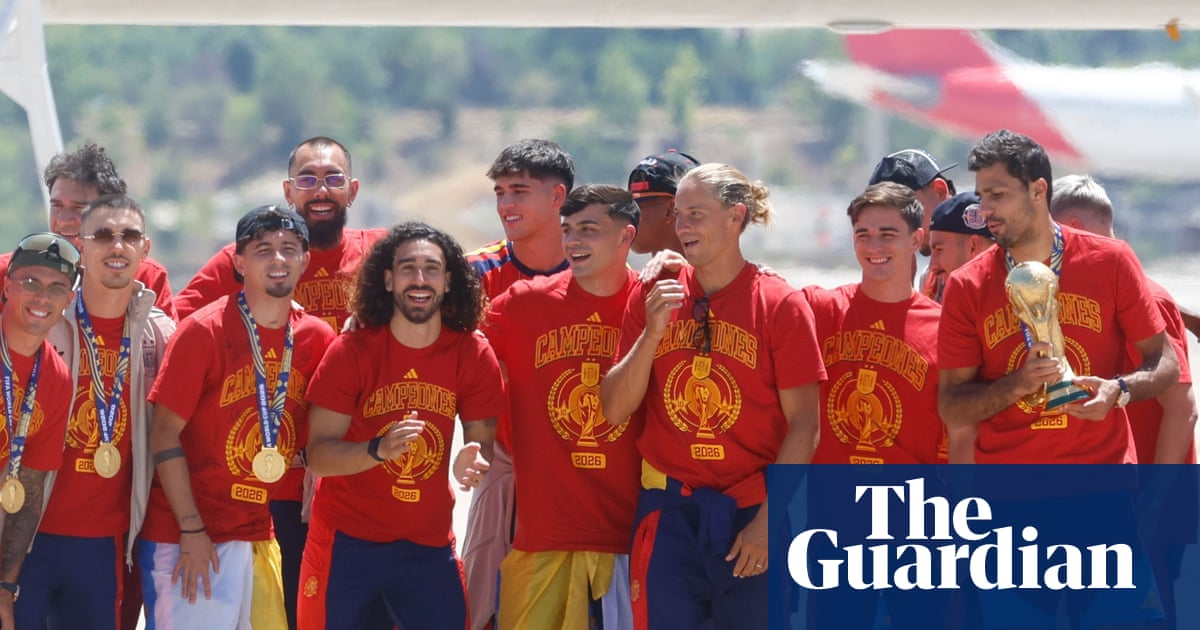
England are running on empty while Spain's fresh machine marches on
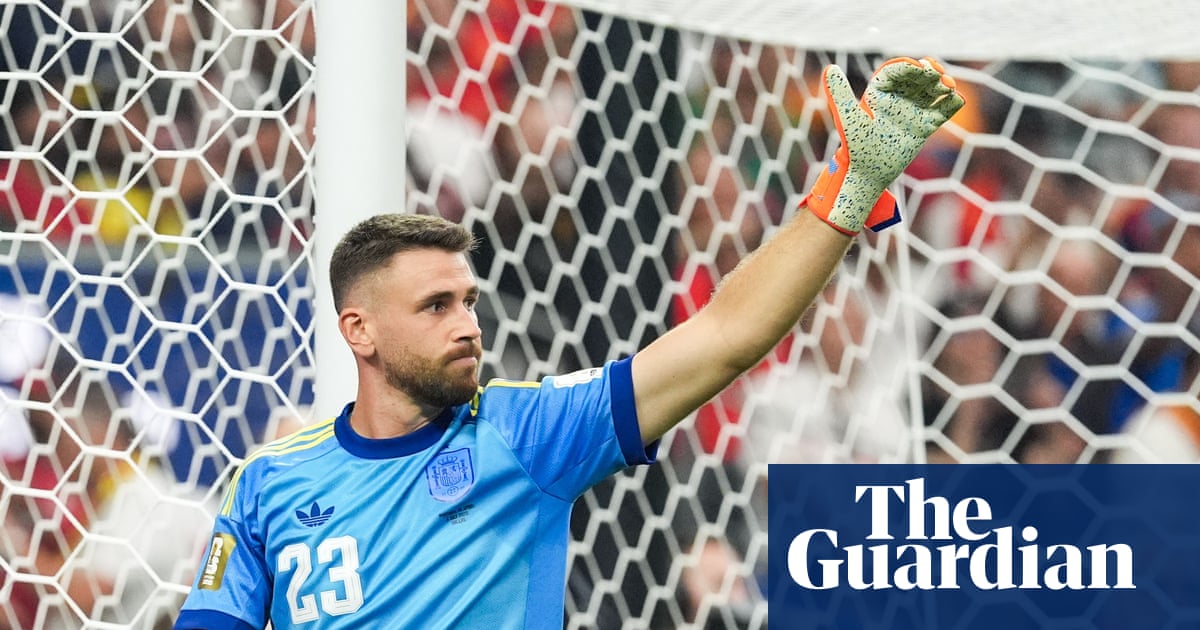
The contrast of physical preservation in tournament football
On Wednesday, Declan Rice sat out England's training session in Kansas City, nursing a lower back and hamstring issue. As the Daily Mail reported, Rice has spent his downtime in America wrapped in ice packs. It is a portrait of physical exhaustion.
The Arsenal midfielder is nursing chronic nerve pain born of pure overplaying. Treatment cannot cure this specific irritation; only rest can. But in English football, that rest is a luxury players simply do not receive.
Rice logged 3,099 league minutes for Arsenal last term. He started all but three matches, pushed to the limit as Mikel Arteta chased the title. Only goalkeeper David Raya played more minutes for the champions.
Contrast this with Spain’s midfield linchpin, Rodri, who enters today's quarter-final against Belgium looking remarkably fresh. The difference in their physical state is obvious. Spain’s midfield rotates and controls; England’s midfield merely survives.
This physical disparity is the defining factor of this World Cup. England’s players are dragging themselves through games on pure adrenaline. Spain’s players are operating with the technical precision of a fresh machine.
It is a simple, mathematical reality. The national teams are now paying the bill for the structural decisions of their domestic leagues. Those who managed their minutes are thriving, while those who ran hot are breaking.
The Bundesliga sun lounger and the Premier League tax
Consider the minutes played by England’s two standout performers in North America. Harry Kane finished his Bundesliga campaign with 2,382 league minutes. Jude Bellingham completed his La Liga season with 1,917 minutes.
Both players operate outside the English domestic calendar. Both have looked significantly sharper than their Premier League counterparts. They possess the physical capacity to execute tactical instructions in the final third.
Kane played about one thousand fewer league minutes than Rice last season. He started 25 league games compared to his final year at Tottenham, where he was forced to play 38. That reduction has saved his tournament.
The Bayern Munich forward has never looked fitter or more mobile in an England shirt. Bellingham, too, benefited from Real Madrid’s league security, allowing Carlo Ancelotti to rotate his squad. In contrast, Premier League players look entirely spent.
They are paying a heavy tax for a division that refuses to implement a winter break. The high-intensity demands of the English game leave players bent out of shape by June. The national team is left to paper over the cracks.
Thomas Tuchel has tried to bypass the fatigue conversation. When asked about the calendar last season, he flatly stated that talking about it was pointless. He knows the situation will not change.
But the tactical consequences are visible in every England match. They played well for only a single half against Croatia. They showed brief flashes of quality for 20 minutes against Panama and 25 against DR Congo.
Last Sunday’s victory over Mexico at the Azteca was a heroic survival effort. England survived the final 20 minutes with 10 men because they retreated into a deep low block. They simply lacked the energy to press high at altitude.
Tuchel has experimented with fresh options to inject energy. Nico O'Reilly and Elliot Anderson have both featured off the bench. Anderson, a recent signing for Manchester City, has looked particularly sharp.
But these are temporary fixes for a structural problem. Without a fit Declan Rice, England's midfield lack control. They are vulnerable to any team capable of sustaining possession.
Spain's rest-defence and structural security
While England suffer, Spain are rewriting the defensive record books. Goalkeeper Unai Simón has now gone 609 minutes without conceding a goal in tournament football. He broke Walter Zenga’s long-standing 1990 record of 517 minutes during the victory over Portugal.
This record is not merely down to Simón's shot-stopping. As Sid Lowe's analysis in The Guardian highlighted, Simón has faced very few shots. The real secret lies in Spain’s magnificent defensive balance.
Luis de la Fuente has discarded the old tiki-taka philosophy of endless, possession-for-possession's-sake passing. Instead, he has installed a rigid, structured back line. He is more wedded to defensive security than fluid rotation.
De la Fuente has stated that he does not like players changing roles or turning up in foreign positions. This commitment to structure makes Spain incredibly difficult to break down. They have recorded six consecutive clean sheets in this tournament.
The heart of this defence is the partnership between Aymeric Laporte and Pau Cubarsí. Cubarsí, still only 19, has played with a composure that belies his age. He makes decisions split seconds faster than his peers.
Albert Puig, who coached him from age 12, noted that Cubarsí possesses a rare ability to anticipate play. Xavi echoed this sentiment during his time at Barcelona. He remarked that his own heart rate did not increase when the teenager had the ball.
In their 1-0 victory over Portugal in Dallas, the technical security of the back line was clear. Laporte brings the physical presence and aerial dominance. Cubarsí acts as the composed coordinator, reading the game from deep.
Santi Ovalle noted that while Laporte has the experience, Cubarsí acts as the true defensive leader. They are supported by Rodri, who sits just ahead of them. The Manchester City midfielder is the central coordinator of Spain's rest-defence.
Rodri drops between the center-backs to form a temporary back three during possession. This ensures Spain are never caught open on the counter-attack. Rodri completed 499 accurate passes before the quarter-finals, more than anyone else in the tournament.
Cubarsí was second with 432 accurate passes, and Laporte fifth with 397. This passing is highly functional, designed to pin opponents back. It is possession as a defensive shield.
An analytical breakdown by Ian Herbert noted that Cubarsí sent more passes into the final third after the group stage than Bruno Fernandes. When they lost the ball against Portugal, Rodri was there to shut down the counter-attack. He celebrated Bernardo Silva's miss with an intensity that later required a post-match apology.
This defensive focus is a reaction to a wider shift in European football. The UEFA technical observers’ report on the Champions League final between Arsenal and PSG recently highlighted this trend. The technical observers praised the Premier League club’s superb defensive organization.
The report noted that modern academies often neglect box-to-box defensive principles in favor of possession play. It is hard for defenders in dominant youth teams to get regular exposure to defensive principles. Spain’s defenders, however, are comfortable with physical contact and box protection.
The attacking deficit in De la Fuente's side
Yet, Spain are not entirely flawless. Their primary weakness is the lack of a clinical finisher. De la Fuente chose to omit Alvaro Morata from the squad after the striker failed to score a single league goal for Como 1907 by March.
While the decision was justified, his replacements have struggled to fill the void. Mikel Oyarzabal rolled a golden chance wide against Portugal. The team regularly wastes the opportunities created by Lamine Yamal.
Yamal is also carrying a hamstring problem. He missed the final month of Barcelona's season, and his physical output has been compromised. Without a reliable scorer, Spain risk dominant performances going unrewarded.
Simón himself remains pragmatic about his role. He recently joked that goalkeepers are the villains of the game, there to stop the goals that football lives off. Spain may be the villains of this tournament, choking the life out of games with defensive perfection.
But without a clinical striker, they are vulnerable to a single defensive lapse. A single defensive error could undo all their structural work. The margin between glory and elimination is razor-thin.
The contrast between England and Spain is clear. England possess the attacking talent in Kane and Bellingham but lack the physical structure to support them. Spain possess the defensive structure but lack the clinical finisher to finish games quickly.
In Miami and Los Angeles, these tactical models will be tested. The team that manages its physical and tactical limitations best will lift the trophy. The notebook is open, and the patterns are set.
Read Next
- Newcastle United eye major defensive reinforcement with £50m move
- Newcastle move for World Cup breakout star in £50m deal
- Liverpool’s pursuit of Bradley Barcola signals a shift in transfer strategy
- Belgium's luck runs out against Spain's brick wall tonight
- 🏆 World Cup 2026 — Full Coverage Hub
- 🏴 England World Cup 2026 — Three Lions Hub
- 🇪🇸 Spain World Cup 2026 — La Roja Hub
The Mixer: The History of Premier League Tactics, from Route One to False Nines
The ultimate deep dive into how the Premier League was won and lost.
Frequently Asked Questions
Why is Declan Rice struggling with injuries during the tournament?
How does Harry Kane's playing time compare to his time at Tottenham?
What is the primary difference between England and Spain's midfields?
How do domestic league structures impact national team performance?
Why are Jude Bellingham and Harry Kane sharper than other England players?
More Coverage

Arsenal face Leeds with Arteta locked in and a point to prove
1 day, 11 hours ago
Why Tottenham Are Screwed and Man City's Perfect Start Means Nothing
1 day, 11 hours ago
Tottenham are stuck at the bottom and history says they should panic
1 day, 11 hours ago
Top 10: World Football's Biggest Storylines, Scandals, and Shocks of 2026
2 days, 11 hours ago
Why Martin Odegaard and Premier League Stars Are Obsessed With VR
2 days, 18 hours ago
Portugal are finally better off without Cristiano Ronaldo
2 days, 18 hours agoMore Analysis

Thomas Tuchel is playing with fire after England's Wembley disaster
1 week, 2 days agoSpain Are Going to Steamroll Everyone at the 2026 World Cup
2 weeks, 4 days agoIvan Toney's Soho brawl is the ultimate self-inflicted disaster
2 months ago
England U16 hotel fight is a massive embarrassment for the FA
2 months, 2 weeks ago
Pep Guardiola is teasing England fans again and everyone is losing their minds
2 months, 2 weeks ago